 Pin This
 My neighbor stopped by on a chilly October afternoon with a bag of smoked ham hocks she'd picked up at the farmer's market, insisting I'd know exactly what to do with them. I didn't, not really, but something about the way she described her grandmother's stew—how it filled the whole house with this deep, savory warmth—made me want to try. That first batch wasn't perfect, but the moment my partner walked in and just stood there breathing in the aroma, I knew I was onto something worth repeating.
Last New Year's, I made this for a small dinner with friends who'd all been having rough weeks, and watching them go quiet as they tasted it felt like a small victory. Someone asked for seconds before finishing their first bowl, and another friend immediately asked for the recipe—but I knew they really wanted the feeling it created, the kind of meal that makes you slow down and actually be present.
Ingredients
- Smoked ham hocks (about 1.5 lbs): These are the backbone of the stew, releasing deep, smoky flavor into the broth as they simmer—don't skip them, but do look for them at a good butcher counter where they're fresher.
- Black-eyed peas (2 cups dried or 4 cups canned): Soaking them overnight makes a real difference in texture, though canned works in a pinch if you rinse them well.
- Onion, carrots, and celery (1 large onion, 2 carrots, 2 celery stalks): This holy trinity is the flavor foundation—dice them roughly the same size so they cook evenly.
- Potatoes (2 medium, cut into 1-inch cubes): They'll soften and thicken the stew naturally, so don't cut them too small or they'll disappear.
- Diced tomatoes (1 can with juice): The acidity brightens everything and adds a subtle tang that keeps the stew from feeling heavy.
- Garlic (3 cloves, minced): Add it after the soffritto so it doesn't burn—raw garlic can turn bitter if you're not careful.
- Broth (6 cups): Chicken or vegetable both work, but use low-sodium so you can control the salt as you taste.
- Bay leaves, thyme, smoked paprika, black pepper, and cayenne: These spices build layers—the smoked paprika is what gives it that authentic Southern depth, so don't substitute it lightly.
Tired of Takeout? 🥡
Get 10 meals you can make faster than delivery arrives. Seriously.
One email. No spam. Unsubscribe anytime.
Instructions
- Soak your peas the night before:
- If you're using dried peas, cover them with plenty of water and let them sit overnight—they'll cook faster and have a better texture. If you forget, a quick soak of an hour or two helps, though overnight is ideal.
- Build your flavor base:
- Heat a splash of oil in your Dutch oven and sauté the onion, carrots, and celery until they're soft and starting to smell amazing. This takes about 5 minutes and is worth every second.
- Wake up the garlic:
- Stir in your minced garlic and let it cook for just a minute until fragrant—you want to smell it, not brown it.
- Bring everything together:
- Add the ham hocks, drained peas, potatoes, canned tomatoes, broth, and all your seasonings. Stir it once so nothing sticks to the bottom, then let it come to a boil.
- Let it simmer low and slow:
- Drop the heat to low, cover the pot, and let it bubble gently for about 2 hours, stirring now and then. The peas will get tender and the ham will start falling off the bone—that's when you know you're close.
- Shred and return the ham:
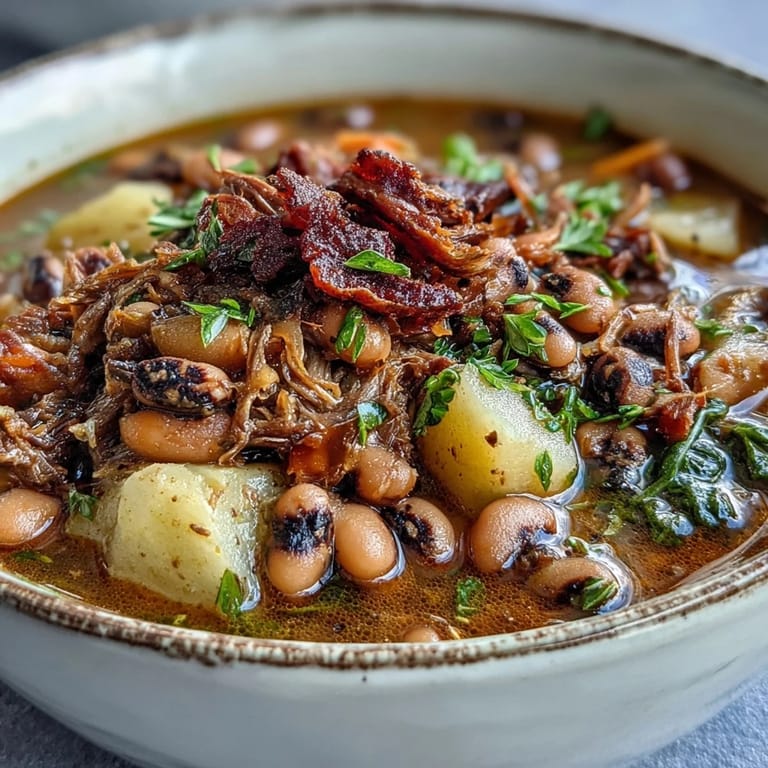
- Fish out the ham hocks and let them cool just enough to handle, then pull the meat from the bone and shred it. Discard the skin and bone, then return the shredded meat to the pot—it should be fall-apart tender.
- Taste and adjust:
- Remove the bay leaves and taste the stew. Add salt to taste, and if you want it thicker, simmer uncovered for 10 to 15 minutes longer.
- Serve with joy:
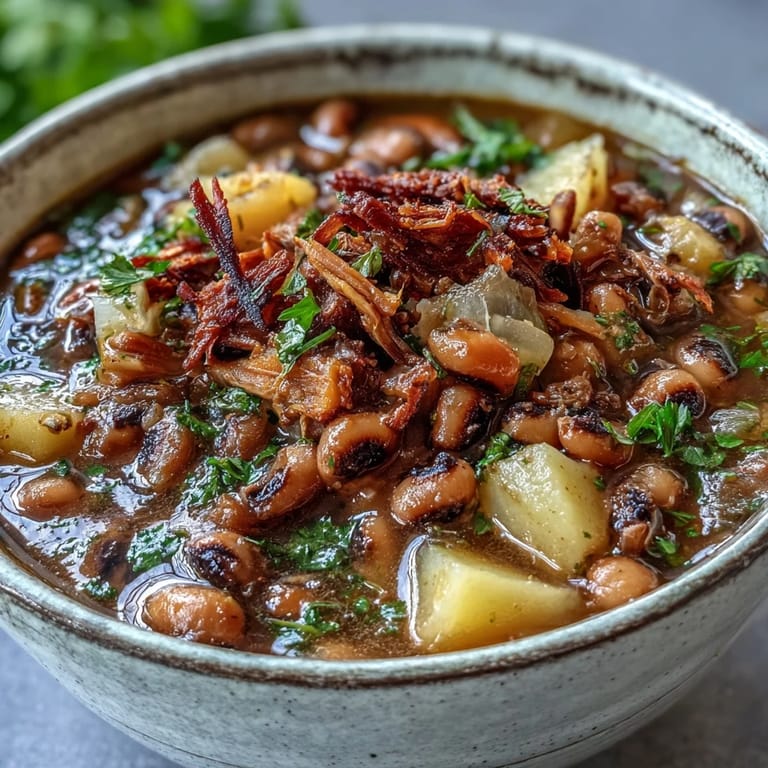
- Ladle into bowls, top with fresh parsley if you have it, and set out hot sauce for anyone who wants to add a kick.
 Pin This
 There's something about a stew that fills the house with smell long before anyone takes a bite—it's like the food is announcing itself, warming everyone up before they even sit down. That's when this dish stopped being about the ingredients and started being about creating a moment.
Why This Stew Works Year-Round
I used to think stew was strictly a winter thing, but I've made this in spring for Easter gatherings and even late summer when the evenings cool down. The beauty is that it doesn't feel heavy no matter the season—the bright tomatoes and fresh parsley keep it light enough to enjoy year-round, and it's naturally gluten-free if you need it to be.
Stretching Your Batch
The first time I made a full pot, I thought surely it would be too much, but leftovers actually get better as they sit. The flavors meld overnight, and suddenly day-two tastes richer and more developed than day one. I've learned to make extra now, knowing the freezer stash will save me on nights when I don't feel like cooking.
Playing with Variations
Once you know this recipe by heart, it becomes a canvas. I've added diced bell peppers, thrown in collard greens at the last minute, even swapped in white beans when I didn't have black-eyed peas on hand. The backbone is strong enough to handle experimentation, and that's what makes it a go-to recipe instead of a one-time thing.
- For vegetarian versions, skip the ham and add a teaspoon of liquid smoke or extra smoked paprika for that depth you'd miss otherwise.
- Serve it over rice, with cornbread, or even with crusty bread for soaking up every last bit of broth.
- Double the batch and freeze half for nights when you need comfort food but no effort at all.
 Pin This
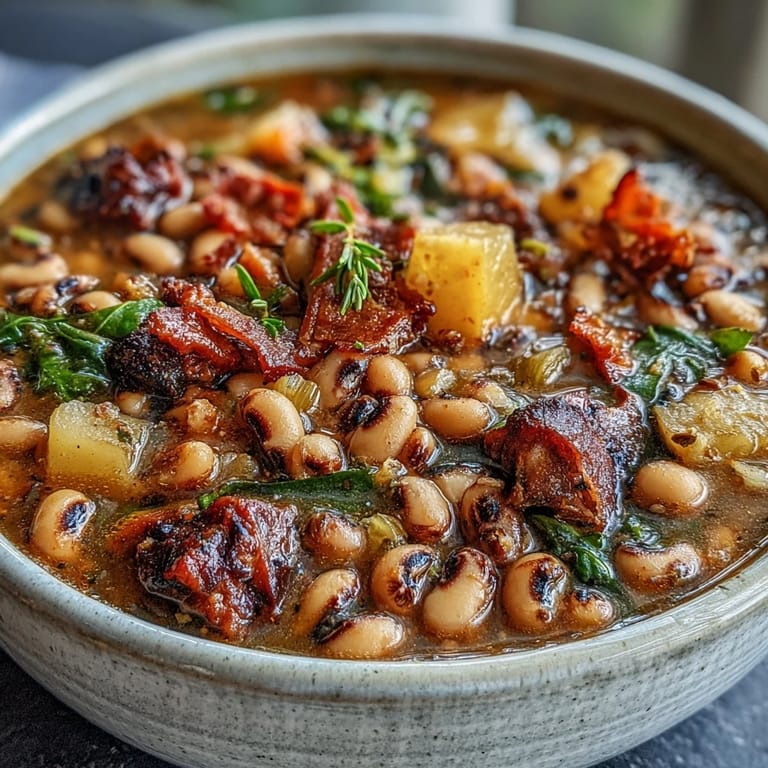
 This stew taught me that some of the best meals aren't about impressive techniques—they're about honoring simple ingredients and giving them time to become something greater than themselves. Make this once, and I promise it'll become a regular in your kitchen.
Recipe Q&A
- → Can I use canned black-eyed peas instead of dried?
Yes, you can substitute canned black-eyed peas. Use two 15-ounce cans, rinsed and drained, which equals about 4 cups. Reduce the simmering time to 45-60 minutes since the peas are already tender. Add them when you would add soaked dried peas.
- → What can I substitute for ham hocks to make it vegetarian?
Replace ham hocks with extra smoked paprika, liquid smoke, or smoked salt to maintain the smoky flavor profile. You can also add vegetarian sausage or mushrooms for umami depth. Increase the vegetables and consider adding a can of drained rinsed beans for protein.
- → How should I store and reheat leftovers?
Refrigerate in an airtight container for up to 3 days. The flavors actually improve overnight as the ingredients meld. Reheat gently on the stovetop over medium-low heat, adding a splash of broth or water if it's too thick. You can also freeze portions for up to 3 months.
- → Do I need to soak the black-eyed peas overnight?
Soaking dried black-eyed peas overnight helps them cook evenly and reduces simmering time. If you forget, use the quick-soak method: boil peas for 2 minutes, remove from heat, cover, and let soak for 1 hour before draining and proceeding with the dish.
- → What's the best way to serve this stew?
This stew is traditionally served ladled over steamed white rice, which soaks up the flavorful broth. Warm cornbread makes an excellent side for dipping. You can also serve it in bowls as-is, topped with fresh parsley and a few dashes of hot sauce for those who enjoy extra heat.