 Pin This
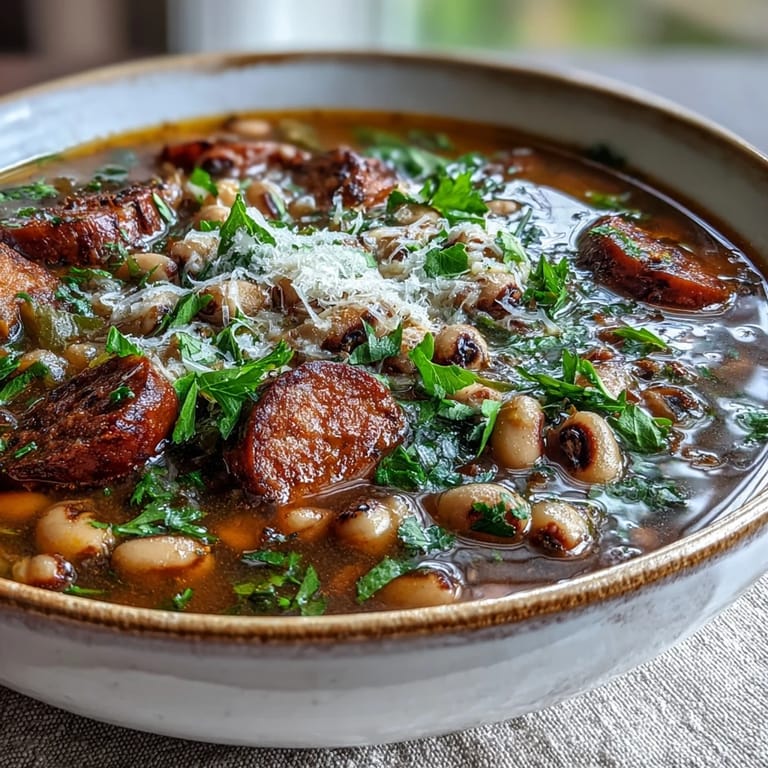
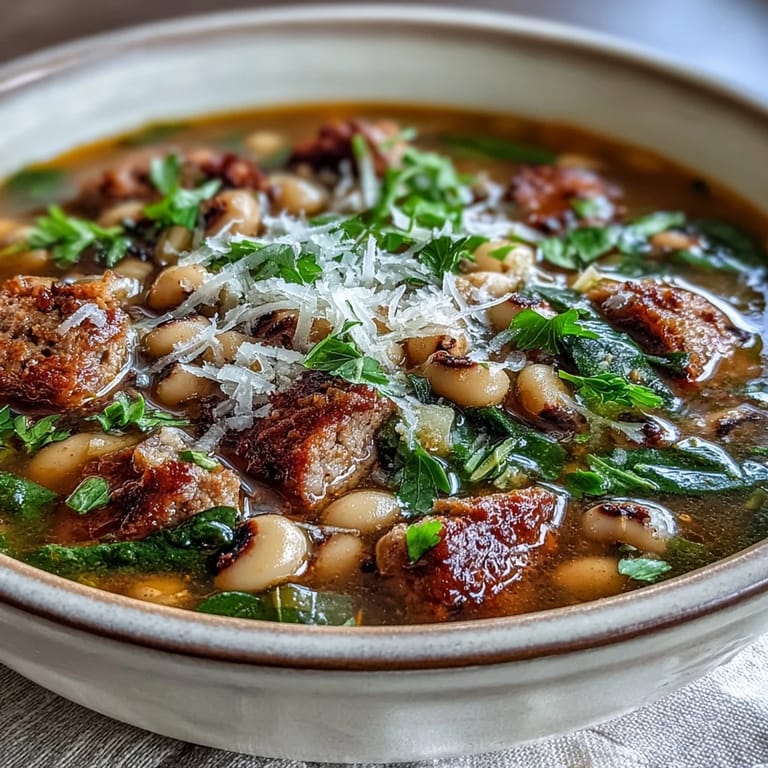
 There's something about the first cold snap that makes me crave a soup that sticks to your ribs, and this black-eyed peas and sausage soup has become my go-to comfort in a bowl. My neighbor handed me a spoonful one October evening, and I was sold by the smell alone—savory sausage mingling with garlic and herbs, all grounding these tender little peas. I went home and made my own version that night, adjusting the spice level and vegetables to match what I had on hand. What started as a quick weeknight dinner has somehow become the soup I make whenever someone needs feeding or I need feeding myself.
I made this soup for my sister when she moved into her new place, showing up with a pot of it and some bread because I knew unpacking boxes would leave her too tired to cook. She ate it straight from the container while sitting on her kitchen floor, and somehow it made the empty space feel less overwhelming. That's when I realized this soup isn't just about feeding people—it's about the quiet comfort of knowing someone cares enough to show up with something warm.
Ingredients
- Italian sausage (450 g / 1 lb): The backbone of this soup; remove the casings and let it brown until it breaks into small pieces that distribute flavor throughout every spoonful.
- Yellow onion (1 medium): Dice it fine so it nearly disappears into the broth, becoming the sweet foundation that everything else builds on.
- Carrots (2): Slice them thin enough to cook through but thick enough to hold their shape, adding natural sweetness and color.
- Celery (2 stalks): This is your secret aromatic trio member—it adds depth that people taste but rarely identify.
- Garlic (3 cloves): Mince it small and watch for the moment it becomes fragrant; that's when you know your soup is already becoming something special.
- Red bell pepper (1): Adds brightness and a slight sweetness that balances the earthiness of the peas and the richness of the sausage.
- Diced tomatoes (1 can, 400 g): Keep the juices—they're liquid gold for building the soup's body and acidity.
- Black-eyed peas (2 cans, 800 g total): Drain and rinse them well; this removes excess starch and prevents the soup from becoming gluey.
- Chicken broth (1.25 liters / 5 cups): Use low-sodium so you control the saltiness as the soup simmers and reduces.
- Dried thyme and oregano (1 tsp each): These Mediterranean herbs bridge the gap between Southern and Italian flavors perfectly.
- Bay leaf (1): Adds subtle earthy notes; don't skip it, but remember to fish it out before serving.
- Red pepper flakes (½ tsp, optional): A small amount gives warmth without overwhelming; add more if you like heat.
- Fresh parsley (2 tbsp): Stir most of it in at the end to brighten the flavors; save some for garnish to catch light in the bowl.
- Parmesan cheese (optional): A light sprinkle adds umami and a creamy richness that makes people ask for seconds.
Tired of Takeout? 🥡
Get 10 meals you can make faster than delivery arrives. Seriously.
One email. No spam. Unsubscribe anytime.
Instructions
- Brown your sausage foundation:
- Heat your pot over medium and crumble the sausage in, breaking it into small pieces as it cooks—about 5 to 7 minutes until no pink remains. You're not looking for a golden crust here, just cooked through and starting to render its fat, which becomes your cooking base.
- Build the flavor base:
- Tip in your onion, carrots, celery, bell pepper, and garlic, letting them soften for about 5 minutes while you stir occasionally. This is when your kitchen will start smelling genuinely alive—that's the aromatics waking up.
- Combine everything into one pot:
- Add the tomatoes with their juices, the rinsed black-eyed peas, broth, thyme, oregano, bay leaf, and red pepper flakes if you want heat. Stir well, making sure nothing gets stuck to the bottom.
- Simmer gently until the flavors marry:
- Bring it to a gentle boil, then drop the heat to low, cover, and let it bubble softly for 20 minutes, stirring every few minutes. The peas will soften further, the vegetables will become tender, and everything will taste like it knew each other all along.
- Taste and adjust for balance:
- Remove the bay leaf and taste carefully, adding salt and pepper until it feels right to you. This is your moment to make it your own.
- Serve with care and garnish:
- Ladle into bowls and top with fresh parsley and Parmesan if you're using it, letting the warmth release their aromas right into your face.
 Pin This
 My kitchen filled with steam and warmth one evening while this soup simmered, and my teenage nephew wandered in asking what smelled so good. He sat down at the counter uninvited, and we talked about everything except the soup while it cooked—school, girls, his worries—and somehow the simple ritual of a shared meal made space for a conversation we'd been avoiding. That's when I understood that the best soups aren't memorable because of their ingredients; they're memorable because of who's sitting across from you while you eat them.
How to Make It Your Own
This soup is flexible enough to adjust based on what's in your kitchen or what your body is craving. I've made it with spicy sausage when I wanted more kick, swapped the red pepper for yellow when that's what was at the market, and even added a splash of red wine one winter evening because the bottle was open. The bones of the recipe stay solid—sausage, peas, vegetables, broth, heat—but the details are always up to you.
Vegetarian and Dietary Swaps
If you're making this for someone without meat, pull the sausage entirely and substitute vegetable broth, then add extra vegetables—maybe diced zucchini, mushrooms, or spinach—to maintain heartiness and depth. For smokiness without meat, a pinch of smoked paprika does wonders. If gluten is a concern, check your sausage and broth labels carefully; many good brands make reliable gluten-free versions that won't compromise flavor.
Storing, Reheating, and Serving Ideas
This soup actually tastes better the next day once the flavors have settled and mingled overnight in the refrigerator; store it in an airtight container for up to four days. Reheat gently on the stove over medium-low heat, adding a splash of broth or water if it's thickened too much. Serve it alone if you want the soup to be the star, or pair it with crusty bread for soaking up every drop, or ladle it over steamed rice if you want something more substantial.
- A glass of light Chianti or Pinot Noir alongside this soup feels like you're treating yourself better than you deserve.
- Leftover soup freezes beautifully for up to three months—portion it into containers so you have emergency comfort on hand.
- Fresh herbs scattered on top right before serving always feel like a small luxury, even when you're eating alone.
 Pin This
 This soup has become the recipe I reach for when I want to feed people without fanfare or pretense—just something honest and warm. Make it once, and I promise you'll find yourself returning to it again and again, each time understanding it a little differently.
Recipe Q&A
- → Can I make this dish vegetarian?
Yes, substitute sausage with smoked paprika and use vegetable broth to maintain depth while keeping it vegetarian.
- → What type of sausage works best?
Italian sausage, either mild or spicy, brings robust flavor; remove casings before cooking for best texture.
- → How can I thicken the stew?
Mash some black-eyed peas before serving to create a thicker, creamier texture without adding starch.
- → What sides pair well with this dish?
Crusty bread or steamed rice are excellent companions, complementing the savory broth and hearty ingredients.
- → How long does the cooking take?
Preparation typically takes 15 minutes, with about 35 minutes simmering for flavors to meld thoroughly.
- → Is this meal suitable for gluten-free diets?
Yes, provided gluten-free sausage and broth are used. Always double-check labels to ensure no gluten content.