 Pin This
 The first time I made bulgogi at home, I was chasing that exact moment from a Korean restaurant where the server brought the sizzling platter tableside and the whole room seemed to pause for that smell. I realized I could capture that magic in my own kitchen with just a sharp knife and a hot pan. What surprised me most was how the marinade's sweetness—that grated pear doing the real work—transformed simple beef into something that tasted like it had been tended for hours.
I made this for my partner on a random Thursday when I wanted to prove that restaurant-quality food wasn't some locked secret. The way they kept going back for another bite, the sesame seeds catching the light in their bowl—that's when I knew this recipe had become my go-to for impressing someone without actually stressing myself out.
Ingredients
- Beef sirloin or ribeye, thinly sliced: Slice against the grain so every bite is tender, and ask your butcher to do it if you're not confident with a knife—it makes all the difference.
- Soy sauce: This is your umami anchor, but taste as you go because different brands can vary wildly in saltiness.
- Brown sugar and grated pear: Together they create a subtle sweetness that balances the salt and soy, plus the pear's enzymes help tenderize the beef naturally.
- Sesame oil: Use the toasted kind for depth, but add it at the end of your marinade so the heat doesn't cook off its fragrant oils.
- Rice vinegar: Just a tablespoon keeps everything from feeling heavy or one-note.
- Ginger and garlic: Fresh and minced fine so they dissolve into the marinade rather than getting stuck between your teeth.
- Gochujang: Korean chili paste brings gentle heat—start with just a teaspoon if you're unsure, because you can always add more next time.
- Jasmine or short-grain rice: Short-grain holds onto the sauce better and feels more satisfying in a bowl than long-grain ever could.
- Fresh vegetables (carrots, cucumber, bean sprouts): The crunch is essential—it's your contrast to the soft, glossy beef and keeps every spoonful interesting.
- Toasted sesame seeds: Buy them already toasted, or toast your own in a dry pan for 2 minutes until fragrant, because raw sesame seeds taste like nothing.
Tired of Takeout? 🥡
Get 10 meals you can make faster than delivery arrives. Seriously.
One email. No spam. Unsubscribe anytime.
Instructions
- Build your marinade:
- Pour soy sauce, brown sugar, sesame oil, and rice vinegar into a bowl, then stir in the minced garlic, ginger, grated pear, gochujang if you're using it, scallions, and sesame seeds. The mixture should smell sweet and funky and alive—that's how you know it's working.
- Coat the beef:
- Add your thinly sliced beef to the marinade and toss it gently so every strand gets coated. Let it sit for at least 15 minutes, but if you have time, let it marinate for up to an hour while you prep your vegetables—the longer it sits, the deeper the flavor becomes.
- Get your pan screaming hot:
- Set a large skillet or wok over high heat and let it get almost too hot to touch—you want it smoking slightly. Add the beef in batches so you're not crowding the pan, because crowded beef steams instead of sears, and sear is what you want here.
- Stir-fry until just set:
- Cook each batch for just 2 to 3 minutes, tossing constantly so the edges caramelize and the meat stays tender. Don't walk away from the pan during this part—it happens fast and you don't want to miss the moment it goes from raw to perfect.
- Assemble with intention:
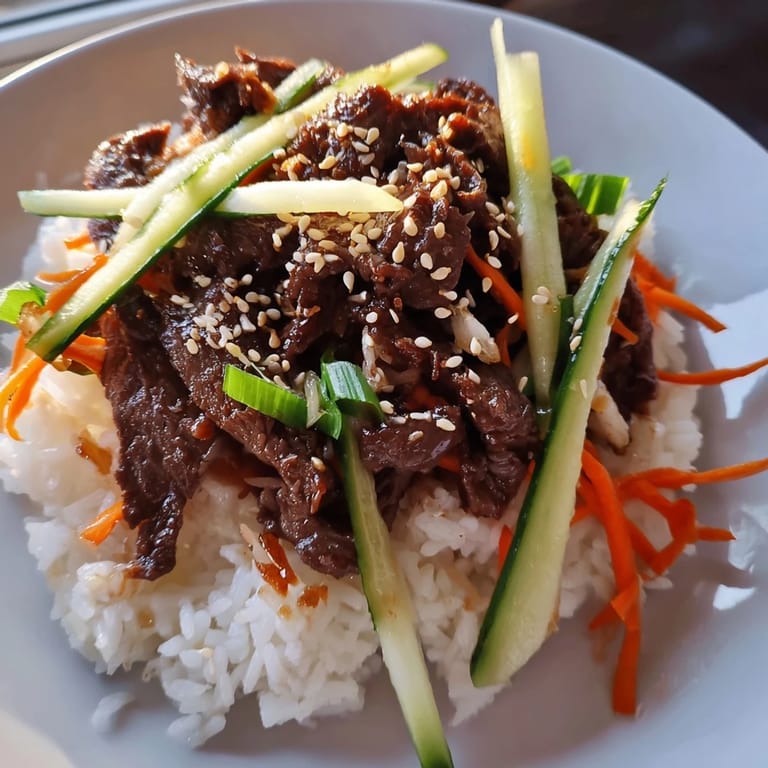
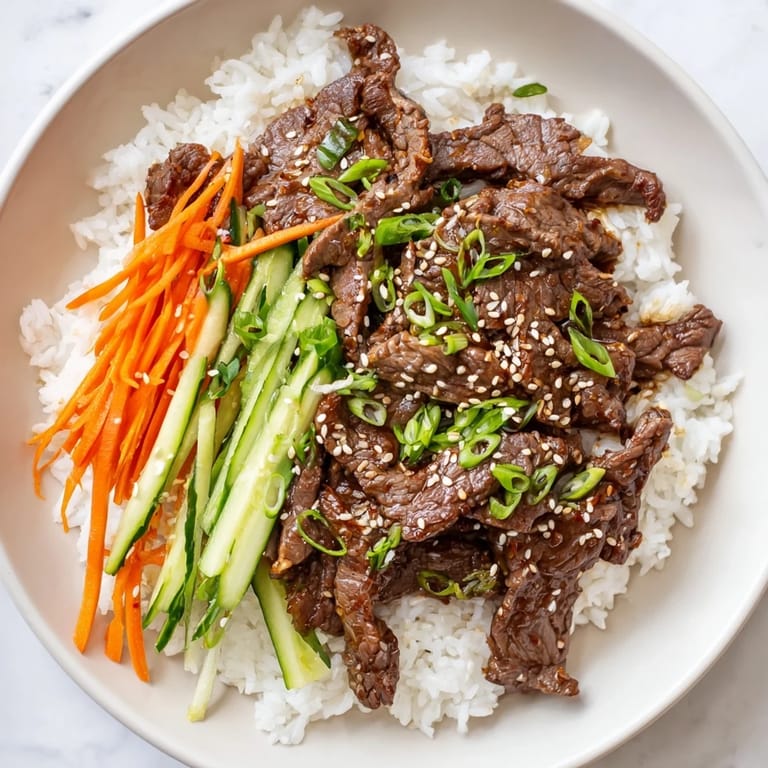
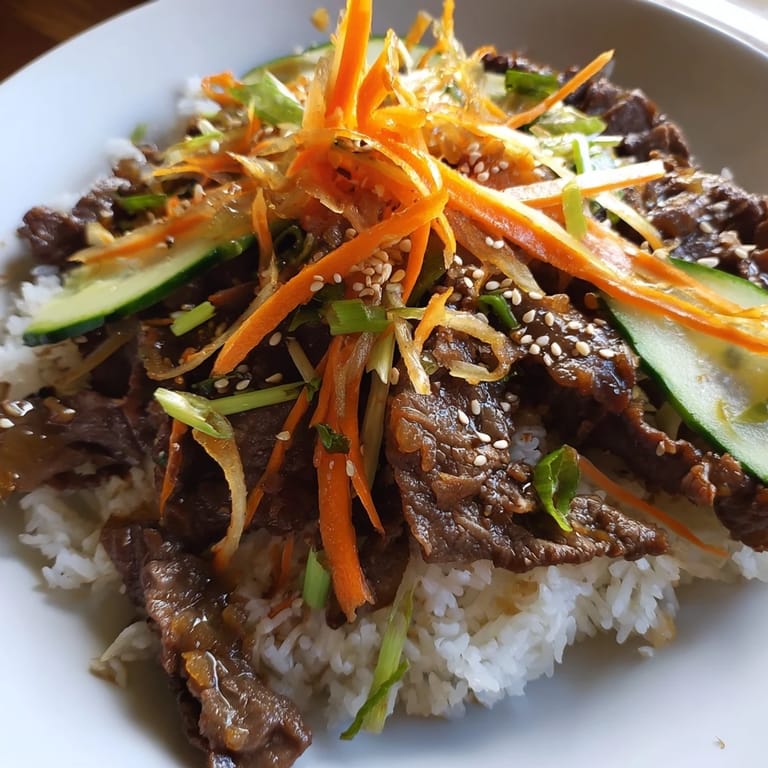
- Divide warm rice among bowls, then arrange the beef, carrot, cucumber, bean sprouts, and kimchi if you're using it in clusters so everything looks deliberate. Top with fresh scallions and sesame seeds right before serving so they stay crisp.
 Pin This
 One evening, I realized my mom had been watching me make this from across the kitchen, and without saying anything, she asked if she could learn it. We made it together the next afternoon, and I watched her taste it and nod—that small nod that meant I'd created something that mattered beyond just being dinner.
The Marinade Is Everything
The reason this dish works is because the marinade does almost all the heavy lifting. It's a balance of sweet (sugar and pear), salty (soy sauce), acidic (rice vinegar), and rich (sesame oil), and once you understand how those four elements play together, you can adjust them to your taste. I like mine slightly sweeter, so I sometimes add a quarter teaspoon more brown sugar, but if you want it savory and spicy, dial back the sugar and increase the gochujang.
Building Your Perfect Bowl
The vegetables aren't just toppings—they're the whole point of eating it this way. The cold, crisp cucumber cools down the richness of the beef, the carrots add a gentle sweetness that echoes the marinade, and the blanched bean sprouts bring this delicate, almost grassy freshness that keeps the bowl from feeling heavy. If you have kimchi in your fridge, add it—the fermented kick is the final argument that this meal is intentional and complete.
Simple Variations That Work
Once you've made this a few times, you'll start seeing where you can play. Swap the beef for thinly sliced pork tenderloin or even tofu if you want something lighter. Add a fried egg on top for richness, or stir a spoonful of gochujang mayo into the rice before assembling for creaminess. Some nights I use cauliflower rice instead of regular rice when I want to feel lighter, and it honestly tastes just as satisfying.
- A soft-boiled egg added to each bowl brings richness and makes it feel more luxurious.
- Extra gochujang mixed with a little mayo on the side turns it into a spicy mayo dip for the meat.
- Toast your own sesame seeds in a dry pan right before serving for the most explosive flavor.
 Pin This
 This recipe became my answer to the question I ask myself most nights: what can I make that feels special but doesn't ask too much of me? It's the kind of meal that tastes like you tried, that looks beautiful in a bowl, and that you'll want to make again as soon as you finish it.
Recipe Q&A
- → What cut of beef works best for this dish?
Use tender, thinly sliced ribeye or sirloin for quick cooking and a juicy texture.
- → Can I adjust the spice level?
Yes, adding or omitting gochujang controls the heat; start with less and increase to taste.
- → What can I use instead of white rice?
Cauliflower rice is a low-carb substitute that pairs well with the marinated beef and vegetables.
- → How long should the beef marinate?
At least 15 minutes for flavor absorption, up to one hour for deeper taste.
- → What garnishes enhance the dish?
Toasted sesame seeds and sliced scallions add texture and a fresh, nutty finish.
- → Is kimchi necessary for authenticity?
Kimchi adds a traditional tangy note but is optional based on preference.