 Pin This
 My grandmother used to say that black-eyed peas on New Year's Day weren't just dinner—they were insurance against a hard year. I didn't really believe in the superstition until I started making this dish myself, and somewhere between the first whiff of smoked pork hitting the onions and watching the peas finally soften into something creamy, I understood what she meant. There's something about a pot this humble that feels like home cooking at its most honest.
I made this for the first time on a freezing January morning when my upstairs neighbor knocked on my door asking what smelled so good. We ended up talking for twenty minutes about her childhood in Louisiana, and she stayed for a bowl. That's when I realized this dish is one of those rare foods that bridges strangers—it has a way of making people feel welcome before they even taste it.
Ingredients
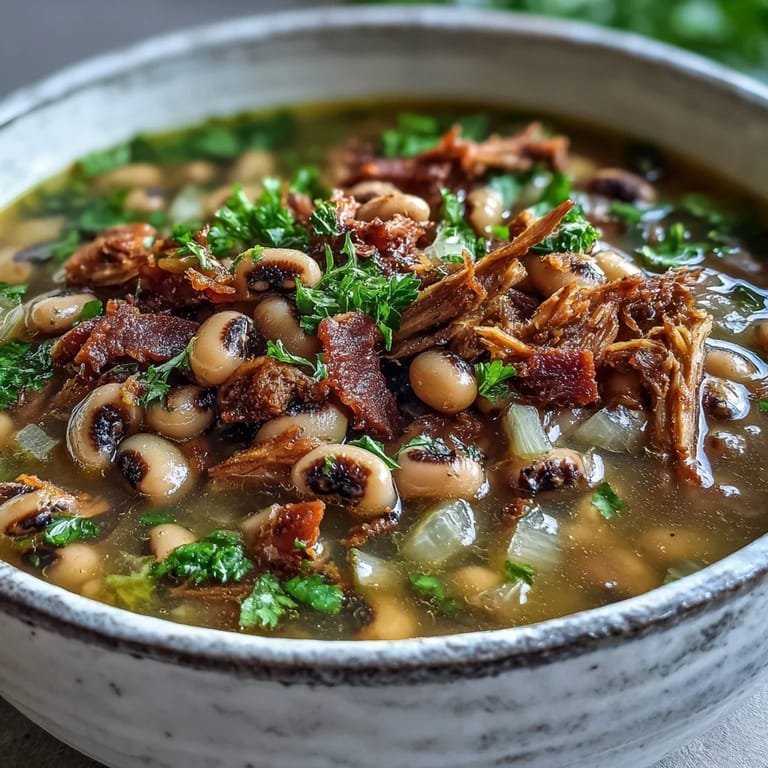
- Black-eyed peas (1 pound): These little legumes are the soul of the dish—rinsing and sorting them is worth the two minutes it takes, as you'll occasionally find a stone hiding in there.
- Smoked pork neck bones (1½ pounds): This is non-negotiable for authentic flavor; the smoke and gelatin from the bones create a broth that no vegetable stock can replicate.
- Onion, celery, and bell pepper (1 large onion, 1 celery stalk, 1 green bell pepper): This holy trinity builds a flavor base that feels Southern in its bones—don't skip sautéing them first.
- Garlic (4 cloves, minced): Add this after the vegetables soften, or it'll turn bitter and regretful in your pot.
- Water or chicken broth (7 cups): Broth adds another layer of depth, but water works perfectly fine and lets the pork shine.
- Creole seasoning (1½ teaspoons): This is your shortcut to complexity—it brings paprika, cayenne, garlic, and oregano all at once, though you can adjust the amount if you prefer milder heat.
- Bay leaf, thyme, smoked paprika, and black pepper: These spices build warmth without overpowering; they're the quiet background singers that make the pork feel special.
- Salt (1 teaspoon): Always taste before adding salt—the pork and broth already contribute salty notes.
- Fresh parsley and hot sauce (optional garnish): The parsley adds a fresh finish that cuts through the richness, and hot sauce lets everyone customize their own heat level.
Tired of Takeout? 🥡
Get 10 meals you can make faster than delivery arrives. Seriously.
One email. No spam. Unsubscribe anytime.
Instructions
- Soak your peas the night before:
- Cover them generously with cold water and let them sit overnight—they'll plump up and cook more evenly. If you're short on time, the quick soak with boiling water works too, though overnight is gentler on the peas.
- Build your flavor base:
- Heat a splash of oil in your Dutch oven and sauté the onion, celery, and bell pepper for about 5 minutes until they're soft and fragrant. This takes the edge off the raw vegetables and creates a sweet, savory foundation.
- Toast the garlic:
- Add your minced garlic and cook for just 1 minute—you want it fragrant but not browned. The smell alone tells you you're on the right track.
- Bring everything together:
- Add the drained peas, smoked pork, broth, and all your spices at once. The pot will look full and slightly chaotic—that's exactly right.
- Simmer low and slow:
- Bring the pot to a boil first, then drop the heat to low, cover it, and let it bubble gently for about 1 hour and 45 minutes. Stir every 20 minutes or so and listen—you'll hear the peas softening and the pork beginning to surrender its flavor to the broth.
- Shred and return the pork:
- When everything is tender, pull out the pork bones and pick any meat from them, discarding the bones themselves. Stir that shredded pork back into the pot—it adds texture and ensures every spoonful has something to chew on.
- Taste and adjust:
- Remove the bay leaf and taste carefully. Add salt in small pinches until the flavors bloom; you want each ingredient to sing, not shout.
- Serve with ceremony:
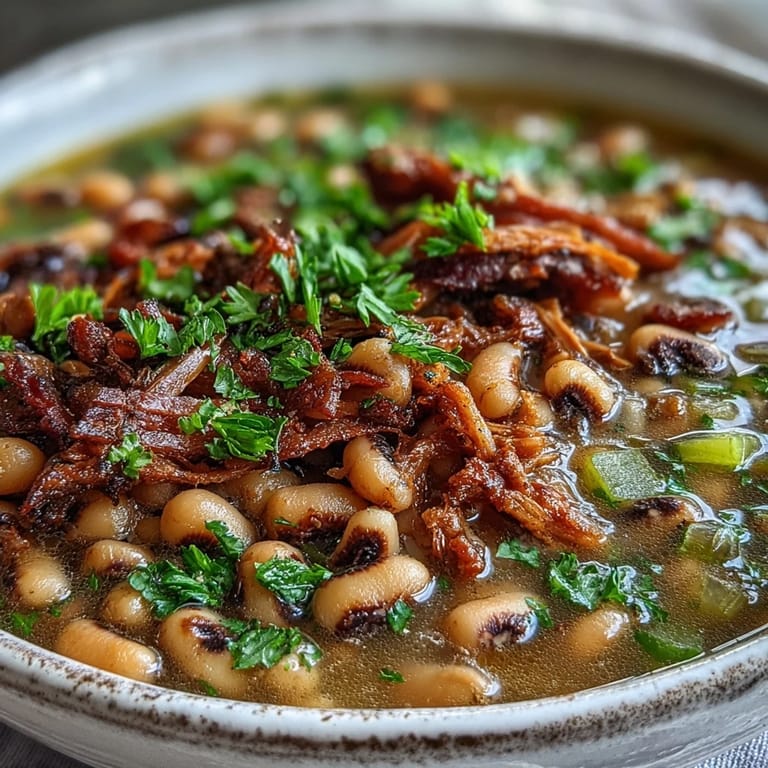
- Ladle into bowls and garnish with fresh parsley, a crack of black pepper, and hot sauce on the side. Serve over rice or with warm cornbread if you're feeling traditional.
 Pin This
 Years later, I made this dish during a difficult week when a friend was going through something heavy. We didn't talk much while eating—just sat at the table with bowls of peas, cornbread, and the kind of quiet that only real friends understand. Food like this reminds you that some of the most meaningful conversations happen when nobody's trying to fill the silence.
Why This Matters on New Year's Day
The tradition of eating black-eyed peas on January 1st comes from African American and Southern cooking, rooted in resilience and abundance. Whether you believe in the luck or not, there's something grounding about starting the year with food that takes real time and effort—it sets an intention that good things are worth the wait. I've noticed that the friends I've fed this to over the years tend to remember it as the meal they came home to, not just another dish.
Making It Your Own
This recipe is sturdy enough to handle your changes—add diced tomatoes in the last 30 minutes if you want brightness, or a splash of vinegar at the end for tang. Some people swear by a ham hock instead of neck bones, and that works beautifully too. The Creole seasoning is strong, so if you're sensitive to spice, start with 1 teaspoon and taste before adding more.
Storage and Serving Suggestions
This dish is one of those rare recipes that tastes better the next day—the flavors settle and deepen overnight, so don't hesitate to make it ahead. Leftovers keep in the fridge for up to 4 days and freeze beautifully for up to 3 months; I always portion mine into single servings for easy weeknight dinners. Reheat gently on the stovetop with a splash of water to restore the broth's silky texture.
- Serve over white or brown rice, with a side of buttered cornbread and collard greens for the full Southern New Year's spread.
- Top with a fried egg for breakfast leftovers—it sounds unconventional but transforms the peas into something entirely new.
- Make a vegetarian version by omitting the pork and adding a teaspoon of liquid smoke plus extra smoked paprika to keep that essential depth of flavor.
 Pin This
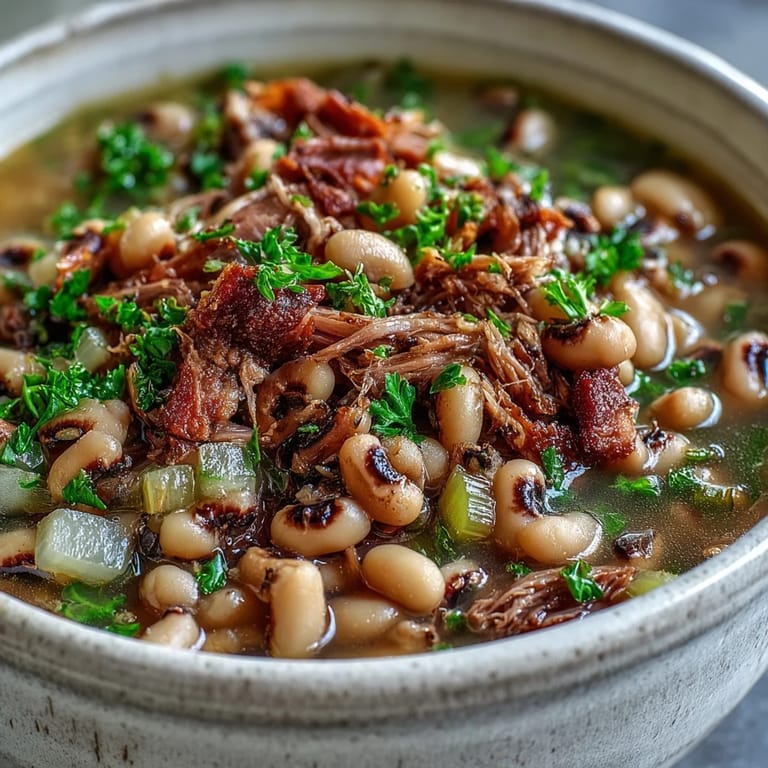
 Make this dish not because you need luck, but because you deserve to sit down to something that tastes like it came from someone's kitchen who genuinely cared. That's the real magic.
Recipe Q&A
- → Do I need to soak black-eyed peas before cooking?
Yes, soaking dried black-eyed peas overnight helps them cook evenly and tenderly. For a quicker option, cover with boiling water and let sit for 1 hour before draining.
- → Can I make this vegetarian?
Absolutely. Omit the smoked pork and add extra smoked paprika along with a splash of liquid smoke to maintain that smoky depth of flavor.
- → What's traditionally served with black-eyed peas?
Collard greens and cornbread make up the classic Southern New Years trio. Many also serve over steamed white rice for a hearty meal.
- → How long do leftovers last?
Leftovers keep well in the refrigerator for 4-5 days and freeze excellently for up to 3 months. The flavors often deepen after sitting.
- → Can I use canned black-eyed peas instead?
You can substitute canned peas, but reduce the cooking time to about 30 minutes and add them during the last 15 minutes to prevent mushiness. Dried peas yield better texture.