 Pin This
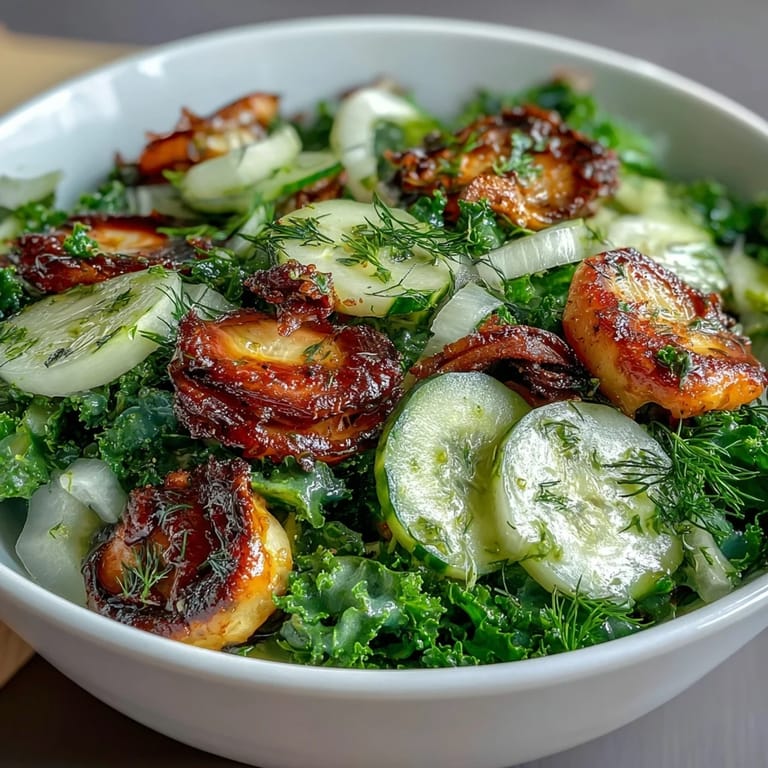
 My neighbor showed up at the garden gate one June afternoon with an armful of radishes she'd pulled that morning, their green tops still attached. I had no idea what to do with them beyond roasting, so she stayed for an hour and we built this salad together, slicing everything paper-thin while she told me about her grandmother's kitchen in Provence. That vinaigrette—bright with dill and mustard—became the thing I made every spring after that, even when the radishes came from the farmer's market instead of the garden.
I served this at a potluck where everyone brought something heavy and warm, and watching people come back for thirds of something so simple and cold felt like a small victory. One guest asked for the recipe before even finishing her plate, which almost never happens at those gatherings where people are too polite to ask for more of anything.
Ingredients
- Cucumbers: Use ones that feel firm and heavy for their size—they'll have fewer watery seeds and stay crunchy longer after slicing.
- Radishes: The peppery heat depends on freshness, so buy them within a few days of making this salad.
- Scallions: The white and pale green parts give you onion flavor without overwhelming the delicate vegetables.
- Extra virgin olive oil: The quality matters here since there's nowhere to hide a mediocre oil—taste it first if you're unsure about a bottle.
- White wine vinegar: This keeps the salad tasting bright and European rather than sweet or heavy.
- Dijon mustard: Just a teaspoon acts like an invisible hand, binding the vinaigrette together so it doesn't separate.
- Honey: A tiny amount rounds out the sharp edges without making anything taste like dessert.
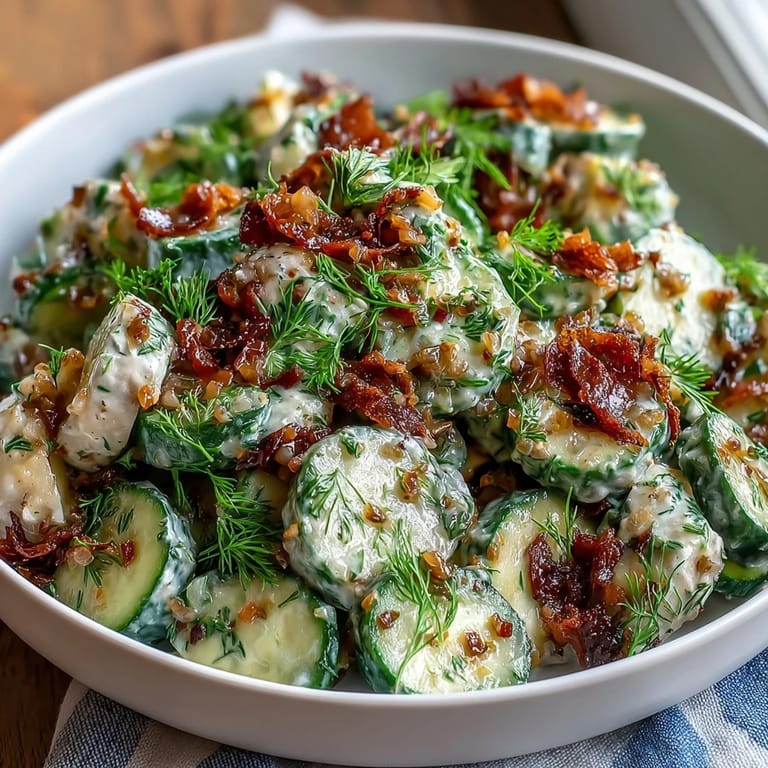
- Fresh dill: Dried dill will taste like hay in comparison—use fresh or don't bother with dill at all.
- Salt and pepper: Always taste and adjust before serving, because vegetables vary in how much seasoning they need.
Tired of Takeout? 🥡
Get 10 meals you can make faster than delivery arrives. Seriously.
One email. No spam. Unsubscribe anytime.
Instructions
- Slice everything thin:
- A sharp knife and a steady hand matter here—you want the cucumbers and radishes translucent enough to see light through them. Thin slices also mean the vinaigrette soaks in instead of sitting on top.
- Build the vegetable base:
- Toss the sliced cucumbers, radishes, and scallions together in a large bowl so they're evenly mixed. This takes about a minute.
- Make the vinaigrette:
- In a separate small bowl, whisk the oil and vinegar first, then add the mustard and honey so they dissolve into the liquid rather than sitting at the bottom. Add the chopped dill last, right before you dress the salad.
- Emulsify and season:
- Whisking with real intention for about thirty seconds makes the vinaigrette creamy and thick enough to coat vegetables instead of pooling at the bottom. Taste it before it meets the salad—this is your only chance to fix the balance.
- Dress and let it rest:
- Pour the vinaigrette over the vegetables and toss gently so everything gets coated without breaking apart. Five to ten minutes of resting lets the flavors meld and the vegetables soften just slightly while staying crisp.
- Serve with intention:
- Whether you chill it or serve at room temperature, a final garnish of fresh dill right before serving keeps it looking alive and bright.
 Pin This
 My daughter once refused to eat radishes on principle, then tried one from this salad and asked why they tasted nothing like the raw radishes she'd rejected. That moment taught me that context and seasoning change everything—a vegetable isn't just itself, it's what you do with it.
When to Make This Salad
Spring and early summer are obvious choices when everything feels fresh and new, but I've found myself making this in winter too, when the vegetables come from the root cellar instead of the garden. It's the kind of salad that works as a palate cleanser after rich food, a light lunch on its own, or a supporting player next to grilled fish or roasted chicken. The dill vinaigrette works so well with almost everything that it's become my automatic reach when I'm cooking something that needs brightness rather than heaviness.
The Dill Vinaigrette as Its Own Thing
Once you understand how this vinaigrette works, you'll start seeing it on everything—roasted vegetables, grilled salmon, even spooned over soft cheese at the end of a meal. The secret is that the mustard and honey aren't there to announce themselves; they're there to make the dill sing and keep the oil from separating. I've made it with tarragon when I couldn't find fresh dill, and with apple cider vinegar instead of white wine vinegar when that's what I had, and it transforms each time without losing its essential character.
Variations Worth Trying
The beauty of this salad is its openness to small changes depending on what's in your kitchen or what you're craving. Add thinly sliced celery or fennel for even more crunch and a subtle licorice note that plays with the dill. Try shaved apple or pear if you want something slightly sweet and soft against the crisp vegetables. A handful of tender herbs—parsley, chervil, or even young tarragon leaves—will make it feel like a different salad entirely while keeping the same structure and soul.
- Fresh mint brings coolness and a slight sweetness that works beautifully with cucumber and radish.
- A sprinkle of toasted sunflower seeds or pumpkin seeds adds texture and a hint of nuttiness without overwhelming the delicate flavors.
- Crumbled feta cheese turns this from a side into something hearty enough for lunch, especially if you add a few olives.
 Pin This
 This salad taught me that sometimes the most elegant food comes from respecting simplicity rather than chasing complexity. Keep making it, keep tasting it, and let your own kitchen moments become part of how you understand it.
Recipe Q&A
- → What makes the vinaigrette flavorful?
The vinaigrette combines olive oil, white wine vinegar, Dijon mustard, honey, and fresh dill, balancing tangy, sweet, and herbal notes.
- → Can I substitute ingredients in the dressing?
Yes, white wine vinegar can be replaced with apple cider vinegar for a tangier taste, and adjustments can be made to mustard or honey levels based on preference.
- → How long should the salad sit before serving?
Letting the salad rest for 5 to 10 minutes allows the flavors to meld and enhances the overall taste.
- → What additional vegetables can I add for crunch?
Thinly sliced celery or fennel can be added to increase the salad's crunch and complexity.
- → Is this suitable for special diets?
Yes, the salad is vegetarian and gluten-free, but ensure all packaged ingredients are certified gluten-free.