 Pin This
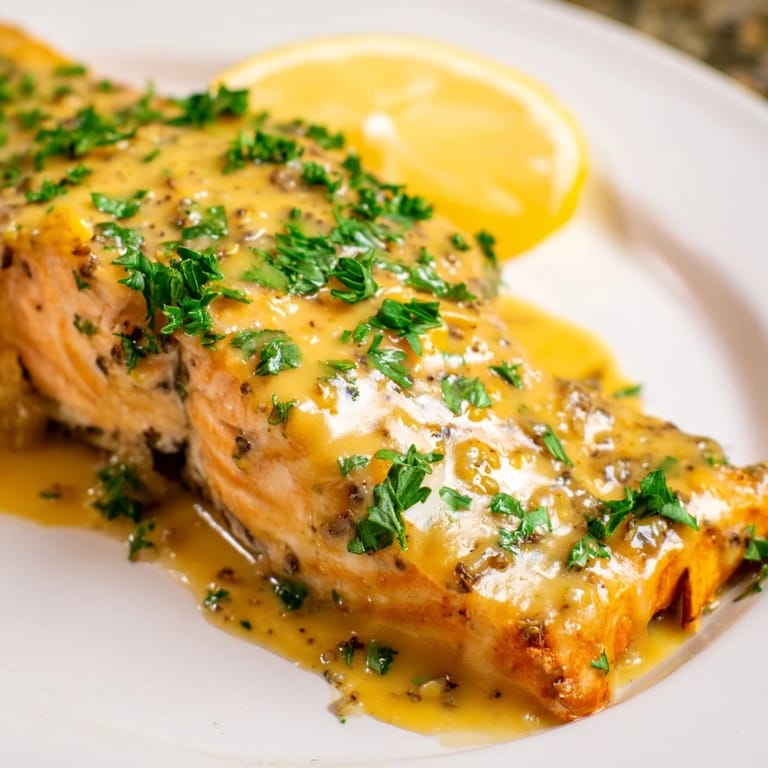
 My best friend texted me on a Tuesday afternoon asking what I was making for dinner, and I realized I had salmon thawing on the counter with absolutely no plan. I rummaged through the fridge, found a jar of Dijon mustard and honey, and thought, why not? Twenty minutes later, she was at my door following the smell of caramelizing sauce, and by the time we sat down to eat, she was already asking for the recipe. That was three years ago, and I've made this honey mustard salmon more times than I can count since then.
I remember bringing this to a potluck once, nervous that it wouldn't reheat well, but it was gone within minutes. Someone even asked if I'd catered it. The funny part? I'd almost skipped the potluck entirely because I thought my contribution wasn't fancy enough. Sometimes the simplest dishes are the ones people remember.
Ingredients
- Salmon fillets (4, 6 oz each, skin-on or skinless): Look for fillets that smell fresh and have firm, glistening flesh—avoid anything that smells fishy or looks dull.
- Dijon mustard (3 tbsp): This is the backbone of your sauce, so don't skip it or swap for the yellow stuff unless you're going for mild.
- Whole grain mustard (2 tbsp): The seeds add texture and keep the sauce from tasting one-note.
- Honey (3 tbsp): Use real honey, not the squeeze bottle kind, if you can—it makes a difference in the final caramelization.
- Olive oil (1 tbsp): Helps the sauce coat the fish evenly and adds richness.
- Lemon juice (1 tbsp): Fresh squeezed is always worth the extra 30 seconds of work.
- Garlic (2 cloves, minced): Mince it fine so it distributes evenly and doesn't leave big chunks.
- Salt and black pepper (½ tsp salt, ¼ tsp pepper): Taste as you go—you can always add more.
- Fresh parsley (1 tbsp, chopped) and lemon wedges (optional): The garnish is what makes people think you actually tried.
Tired of Takeout? 🥡
Get 10 meals you can make faster than delivery arrives. Seriously.
One email. No spam. Unsubscribe anytime.
Instructions
- Get your oven ready:
- Preheat to 400°F and line your baking sheet with parchment paper or a light coating of oil. This takes about 5 minutes and saves you from scrubbing stuck-on sauce later.
- Make the sauce:
- Whisk together the Dijon, whole grain mustard, honey, olive oil, lemon juice, minced garlic, salt, and pepper in a small bowl until it's smooth and golden. Taste it—if it's too tangy, add a touch more honey; too sweet, a squeeze more lemon.
- Prep the salmon:
- Pat your fillets completely dry with paper towels and arrange them on the sheet, skin-side down if they have skin. Dry fish is happy fish.
- Coat generously:
- Spoon the sauce over each fillet, spreading it to cover the top and letting some pool around the edges. Don't be shy—this is where the magic happens.
- Bake until golden:
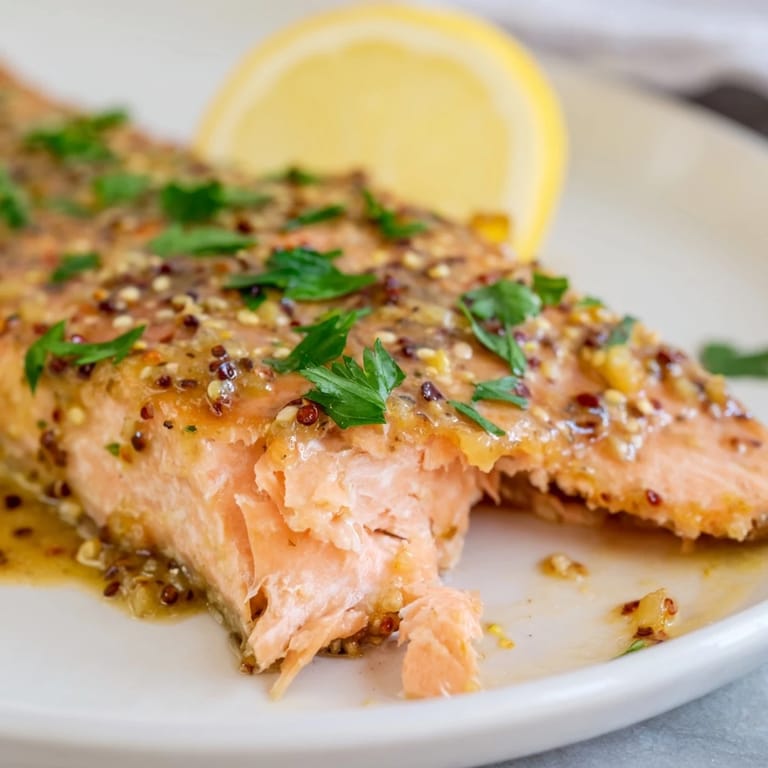
- Pop it in for 15 to 20 minutes, watching for the edges to get slightly caramelized and the fish to flake easily when you press it with a fork. The center should be opaque but still moist.
- Finish and serve:
- Remove from the oven, scatter parsley over the top if you're feeling fancy, and squeeze those lemon wedges right over it. Serve immediately while the sauce is still warm.
 Pin This
 The best moment with this recipe came when my son, who claimed he didn't like fish, asked for thirds. We locked eyes over the dinner table, and I could see him realizing that salmon wasn't the enemy—it was just that nobody had made it right for him before.
The Honey Mustard Magic
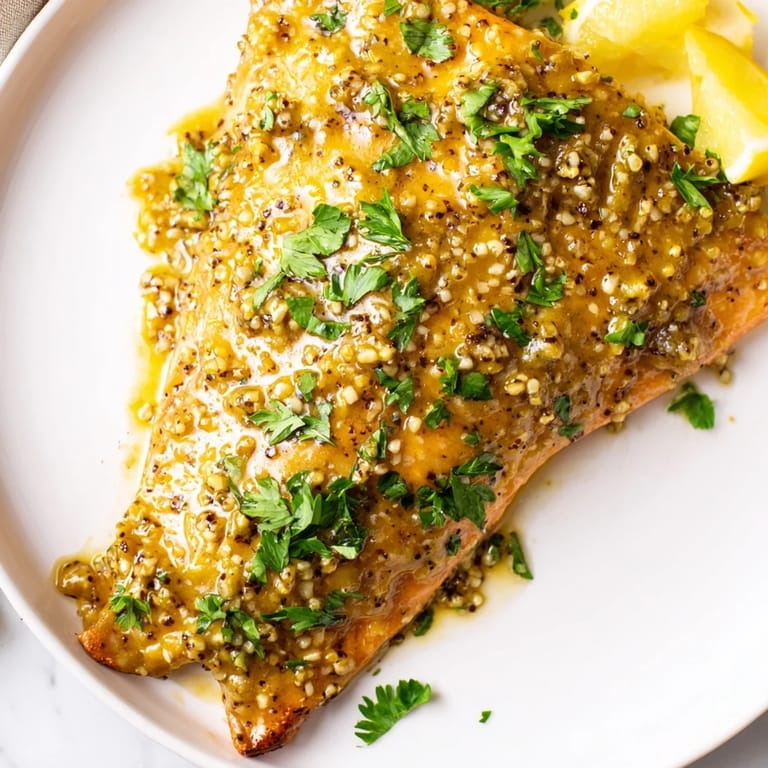
There's something about the combination of Dijon and whole grain mustard that just works with salmon. The Dijon brings sophistication and a slight bite, while the whole grain adds texture and keeps things interesting. When you add honey to the mix, you're not just sweetening—you're creating a sauce that caramelizes slightly in the oven, forming a thin, glossy crust on top of the fish. The lemon juice keeps it from becoming cloying, and the garlic ties everything together so it feels intentional and seasoned, not accidental.
When You Want to Push It Further
If you want a little extra drama, turn on the broiler for the last two minutes of cooking. You'll see the sauce bubble and brown at the edges, and it'll taste almost caramelized. Just watch it like a hawk because broilers are merciless—blink and your dinner goes from beautiful to burnt. Another trick: if you're serving this to people you really want to impress, slice a lemon thin, lay a couple slices right on top of the fish before you spoon on the sauce, and let them roast in there. It looks elegant and adds a subtle, sophisticated flavor that guests always wonder about.
What to Serve Beside It
This salmon pairs beautifully with anything that can stand up to the sauce without competing with it. Roasted vegetables like asparagus, green beans, or broccoli are natural choices because they're sturdy and won't get overwhelmed. Rice or quinoa soaks up the extra sauce that pools on the plate, which is never a bad thing. I've also made a fresh arugula salad with a light vinaigrette on the side, and the peppery greens cut through the richness perfectly.
- Roasted asparagus or green beans take 15 minutes in the oven alongside the salmon.
- A simple lemon rice or quinoa pilaf made while the salmon bakes means everything finishes at the same time.
- A cold salad is great if you want texture contrast and something refreshing on the plate.
 Pin This
 This recipe has become my go-to when I need to feel like I'm cooking something special without the stress. It never lets me down.
Recipe Q&A
- → What type of salmon works best for this dish?
Both skin-on and skinless salmon fillets can be used, depending on personal preference. Skin-on adds extra moisture during baking.
- → Can I prepare the honey mustard sauce ahead of time?
Yes, the sauce can be whisked together in advance and stored refrigerated for up to 24 hours for convenience.
- → How do I know when the salmon is perfectly cooked?
The salmon flakes easily with a fork and appears opaque in the center when fully cooked, usually after 15–20 minutes baking.
- → What sides pair well with the honey mustard salmon?
Roasted vegetables, rice, quinoa, or fresh salads complement the flavors and textures of the salmon beautifully.
- → Can I use a different type of mustard in the sauce?
Yes, swapping dijon for regular yellow mustard provides a milder, less tangy flavor while maintaining richness.
- → Is broiling the salmon at the end necessary?
Broiling for 2 minutes enhances caramelization and adds a subtle crispness, but it’s optional based on preference.