 Pin This
 My first Korean beef bowl happened almost by accident—I'd grabbed a jar of gochujang at the market without really knowing what to do with it, and a friend casually mentioned throwing it in with ground beef and rice. What I didn't expect was how the spicy, umami-rich sauce would transform something so simple into something I'd crave constantly. The pickled vegetables add this bright, sharp counterpoint that makes every bite feel balanced and alive. Now I make it on nights when I need something fast but don't want to feel like I'm settling for ordinary.
I made this for my sister during a random weeknight visit, and she ate two full bowls before asking for the recipe—which is always the best compliment. What struck me was watching her layer everything herself, arranging the pickled vegetables and kimchi like she was building something intentional. That's when I realized this dish works because it respects your preferences; you control how much heat, tang, and crunch goes into each spoonful.
Ingredients
- Ground beef (1 lb): Lean meat works best here so the sauce clings to it without swimming in grease, but don't go so lean that it tastes dry and sad.
- Gochujang (3 tbsp): This Korean chili paste is the soul of the dish—it brings heat, depth, and a complexity you can't replicate with hot sauce, so it's worth tracking down at any Asian market.
- Soy sauce (2 tbsp): Use regular soy sauce unless you need gluten-free, in which case tamari is your friend and works just as well.
- Fresh ginger and garlic (1 tbsp ginger, 3 cloves): These two don't just add flavor; they wake up your palate and make the whole bowl feel fresher and less heavy.
- Brown sugar and rice vinegar (1 tbsp each): Sugar rounds out the spice with subtle sweetness, while vinegar keeps everything from feeling one-note and adds that signature tang.
- Toasted sesame oil (1 tsp): A little goes a long way—this stuff is liquid gold and transforms the entire dish with its nutty, toasted richness.
- Rice vinegar for pickling (1/2 cup): Don't skip making the pickled vegetables from scratch; they add a brightness and crunch that jarred versions can't quite capture.
- Cucumber, radish, and kimchi: These toppings aren't afterthoughts—they're what make each bowl feel complete and give you texture contrast that keeps things interesting.
- Toasted sesame seeds (1 tbsp): These seeds add visual appeal and a subtle nuttiness that ties everything together in the final bite.
Tired of Takeout? 🥡
Get 10 meals you can make faster than delivery arrives. Seriously.
One email. No spam. Unsubscribe anytime.
Instructions
- Start with the pickled vegetables first:
- Whisk together rice vinegar, sugar, and salt in a small bowl until the sugar dissolves—you'll know it's right when you taste it and it's both tangy and slightly sweet. Add your julienned carrots and daikon, toss them around, and let them sit while you handle the beef; they'll soften slightly and brighten as they pickle.
- Get your pan hot and sauté the aromatics:
- Pour vegetable oil into a large skillet over medium-high heat and wait until it shimmers before adding minced garlic and ginger. You want to hear them sizzle and smell that incredible fragrance after just a minute—that's when you know it's time to add the beef.
- Brown the beef properly:
- Add your ground beef to the hot pan and resist the urge to stir it constantly; let it sit for a minute or two so it browns instead of just cooking through gray and sad. Break it up with a spoon as it cooks, and once it's no longer pink, drain any excess fat if there's a pool of it.
- Build the sauce:
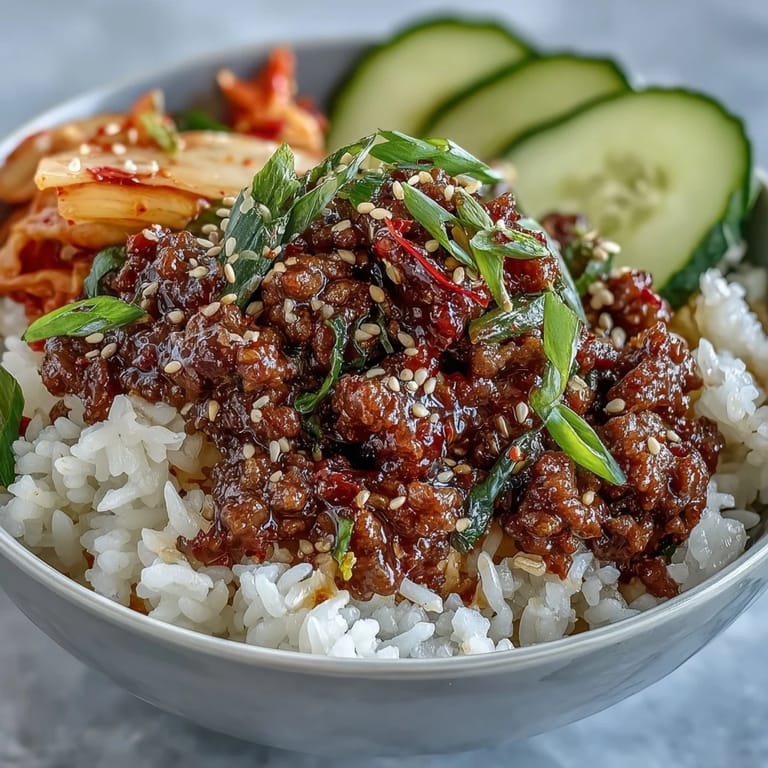
- This is where the magic happens—stir in gochujang, soy sauce, brown sugar, rice vinegar, and sesame oil all at once. Watch as the beef gets coated in this glossy, deeply colored sauce, and let it bubble gently for 2 to 3 minutes so the flavors meld and the sauce reduces slightly.
- Assemble your bowls with intention:
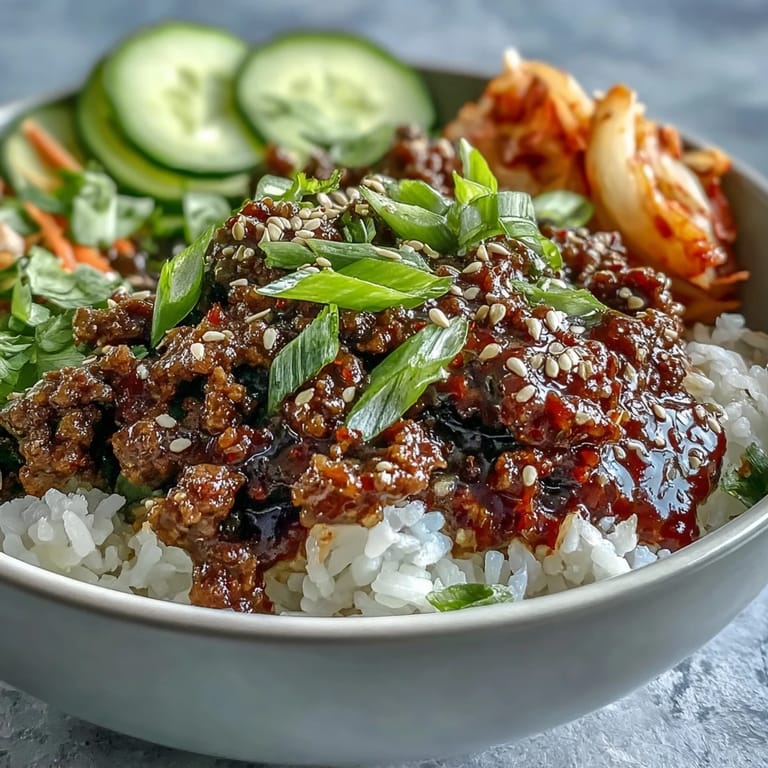
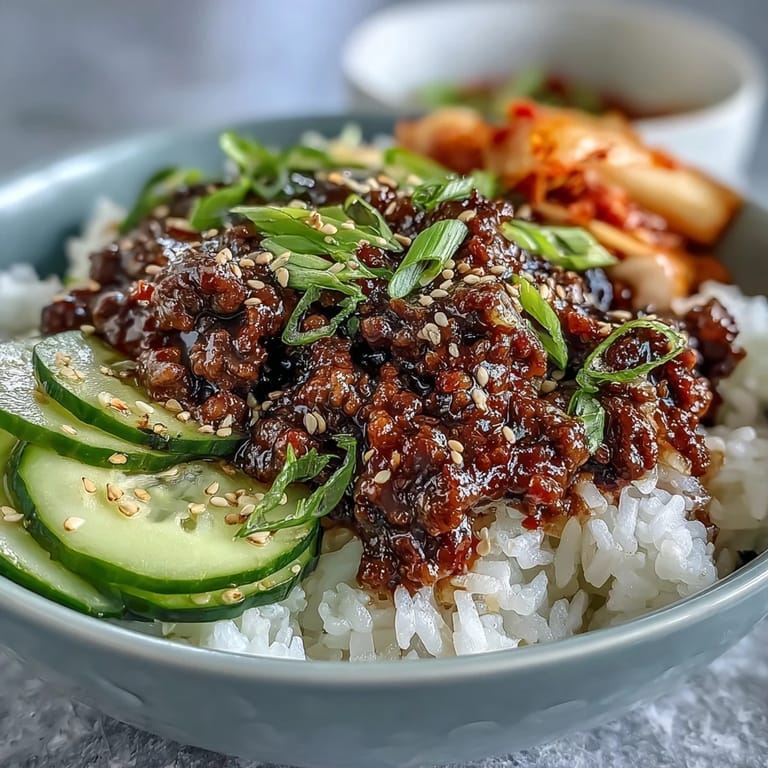
- Start with a mound of steaming white or brown rice as your base, top it generously with the beef and its sauce, then arrange your pickled vegetables, fresh cucumber, radish, and kimchi around it like you're plating something special. Finish with a scatter of sesame seeds and the remaining green onions for that final pop of color and freshness.
 Pin This
 There's something about this bowl that makes people slow down and actually taste their food instead of just eating it quickly. A friend once described it as feeling like a small celebration in a bowl, and that stuck with me.
Why Gochujang Is Worth Seeking Out
Gochujang isn't just spicy—it's fermented, which means it carries this deep, almost savory complexity that regular hot sauce simply cannot match. The first time I understood this difference was when I tried a shortcut version with sriracha instead, and the whole dish tasted flat and one-dimensional. Once you stock your pantry with a good gochujang, you'll find yourself reaching for it in soups, marinades, and mayo for sandwiches because it genuinely elevates everything it touches.
The Perfect Rice Base Matters More Than You Think
Whether you use white rice or brown rice is entirely up to you, but make sure it's fluffy and freshly cooked—day-old, dried-out rice will absorb all that beautiful sauce and turn mushy instead of letting it coat the grains. I learned this the hard way when I tried stretching old rice and the whole bowl felt sad and heavy. The contrast between tender rice and the vibrant toppings is where this dish shines.
Make It Your Own
This recipe is a foundation, not a rulebook, so feel free to adjust the heat level, swap in ground chicken or turkey if beef isn't your thing, or add a fried egg on top if you're feeling fancy. I once made this with leftover shredded chicken from a roasted bird I'd made earlier, and honestly, it was even better because the meat had more flavor already built in.
- For extra heat, drizzle in some sriracha or add an extra tablespoon of gochujang to the sauce while it's cooking.
- A crisp lager or cold green tea pairs beautifully with this bowl and cuts through the richness perfectly.
- Leftover beef sauce keeps in the fridge for three days and tastes incredible over rice the next morning.
 Pin This
 This bowl has become my answer to weeknight cooking because it delivers restaurant-quality flavor without the fuss or the price tag. Make it once and you'll understand why it's so craveable.
Recipe Q&A
- → Can I make this dish ahead of time?
The seasoned beef and pickled vegetables both store well for up to 3 days in the refrigerator. Reheat the beef gently and assemble bowls fresh with warm rice for best results.
- → What can I substitute for gochujang?
Sriracha mixed with a small amount of miso paste or red pepper flakes work as alternatives. However, gochujang provides a unique fermented flavor worth seeking out at Asian markets.
- → Is this dish very spicy?
The spice level is moderate and adjustable. Start with the specified amount of gochujang, then add more if desired. The pickled vegetables and rice help balance the heat.
- → Can I use different proteins?
Ground chicken, turkey, or even crumbled tofu work beautifully with these flavors. Adjust cooking time slightly—poultry may need an extra minute or two to cook through.
- → How do I quick-pickle vegetables?
Simply julienne carrots and daikon, then submerge them in a mixture of rice vinegar, sugar, and salt. Let sit for at least 15 minutes while preparing the beef. The longer they pickle, the more tangy they become.