 Pin This
 My coworker Sarah showed up to our lunch break with this bowl one day, and the aroma alone had everyone crowding around her desk before she could even sit down. She'd learned to make it from her Korean neighbor who lived upstairs, and one taste explained why they'd become such good friends. The gochujang-beef had this deep savory heat that made you want another spoonful immediately, while the fresh vegetables and kimchi kept everything feeling bright and alive. I went home that afternoon and built my own version, tweaking the spice level until it matched what I remembered tasting.
I made this for my roommate after she'd had a rough day at work, and watching her face shift from tired to genuinely happy the moment she took a bite felt like a small victory. She cleaned the whole bowl and asked if I could teach her to make it, which meant we spent the following Saturday afternoon cooking together in our tiny kitchen, laughing when I overfilled the rice cooker and talking through why the sesame oil mattered more than we expected.
Ingredients
- Lean ground beef: One pound gives you enough richly flavored meat to distribute across four generous bowls without feeling heavy, and the sauce clings beautifully to the crumbled texture.
- Gochujang: This fermented chili paste brings depth and complexity beyond just heat, so don't skip it or substitute with regular chili powder.
- Soy sauce: Use full-sodium soy sauce here because it carries the umami that makes each bite taste intentional and complete.
- Brown sugar: Just a tablespoon balances the heat and saltiness, creating this almost glossy finish on the beef that makes people ask what your secret ingredient is.
- Garlic and ginger: Fresh minced versions matter because they release their oils when the sesame oil hits the pan, filling your kitchen with a smell that promises something delicious is coming.
- Toasted sesame oil: The nuttiness here is non-negotiable and transforms the dish from good to memorable.
- Green onions: Split them between the beef and the final garnish so you get brightness in every layer.
- Short-grain rice: This starch has just enough stickiness to hold the sauce without becoming gummy.
- Edamame: Cooked and cooled, these add protein and a pleasant firm texture against the soft rice and beef.
- Cucumber and carrot: Keep them fresh and crisp, sliced thin so they stay cool against the warm beef.
- Kimchi: The funky fermented kick here prevents the bowl from feeling one-dimensional, and its sourness cuts through the richness of the beef sauce.
- Toasted sesame seeds: These add crunch and a toasty nuttiness that ties the whole thing together.
Tired of Takeout? 🥡
Get 10 meals you can make faster than delivery arrives. Seriously.
One email. No spam. Unsubscribe anytime.
Instructions
- Get your pan singing:
- Heat your large skillet over medium and let the sesame oil warm through until it's fragrant and shimmering. Add your minced garlic and ginger and listen for that gentle sizzle, stirring constantly for just a minute so they soften but don't burn.
- Brown the beef with intention:
- Add your ground beef to the aromatic oil and use your spatula to break it up into small, crumbly pieces as it cooks. Let it sit undisturbed for a minute or two between stirs so the edges brown properly, creating those little caramelized bits that taste incredible. This takes about five to six minutes total.
- Build the sauce:
- Once the beef is cooked through and no pink remains, stir in your gochujang, soy sauce, and brown sugar all at once. The mixture will seem a bit dry at first, but as it heats through it becomes this glossy, clingy sauce that coats every piece of meat. Keep stirring gently for two to three minutes until the sauce thickens slightly and darkens.
- Finish the beef:
- Remove from heat and stir in half your sliced green onions, reserving the rest for assembly. Taste here and adjust the heat or saltiness if you want to.
- Build your bowls:
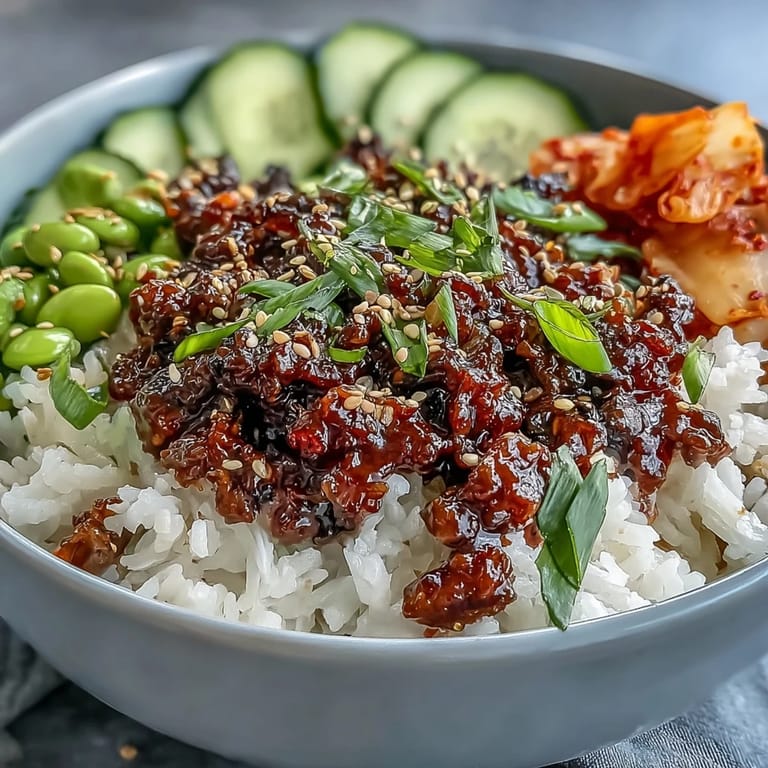
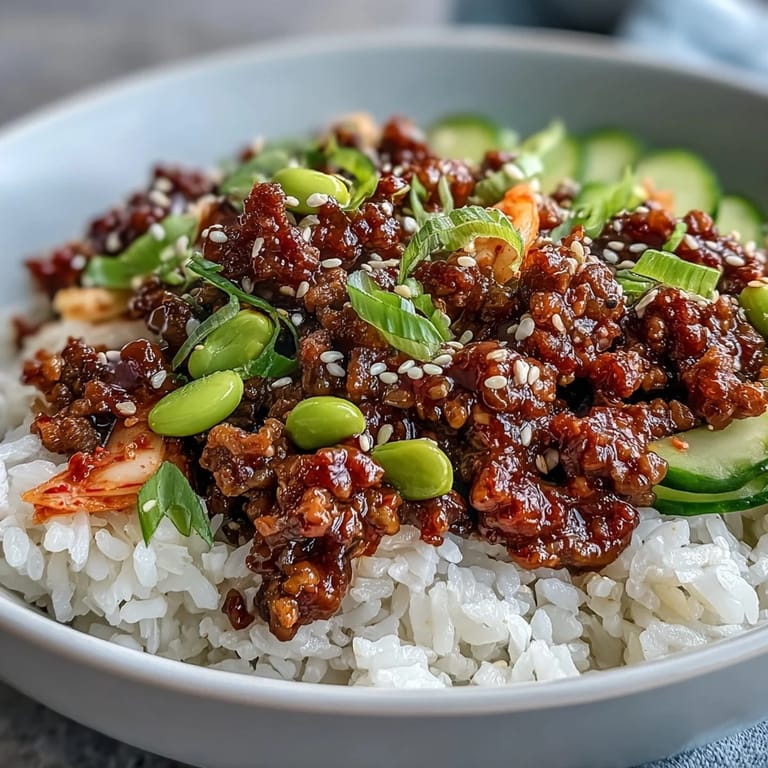
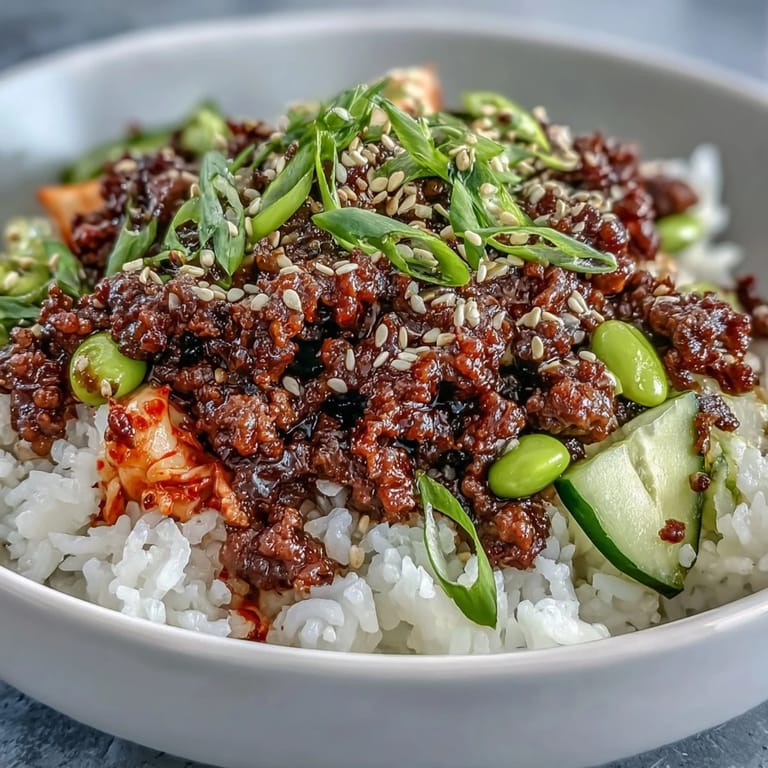
- Divide your warm rice among four bowls, creating a shallow well in the center of each. Layer the gochujang beef on top, then arrange your edamame, cucumber, carrot, and kimchi around the rice like you're creating a little edible landscape.
- Finish and serve:
- Sprinkle the reserved green onions and your toasted sesame seeds over everything, then bring the bowls immediately to the table while the rice is still warm and the vegetables still have their crispness.
 Pin This
 My friend's eight-year-old daughter tried this bowl at our dinner party without realizing it had ginger in it, and instead of pushing it away she asked why it made her mouth feel tingly and wanted to know if she could have more. There's something about a dish that makes vegetables exciting and convinces a kid that ginger is interesting rather than scary that feels like a small kind of magic.
Why This Bowl Works as Weeknight Dinner
The beauty of this recipe is that nothing requires special technique or timing precision, so even if you're cooking after work when your energy is low, you can have four satisfying bowls on the table in less than half an hour. The vegetables come together while your rice cooks and your beef finishes, which means there's no frantic scrambling at the end. Most importantly, it tastes intentional and restaurant-quality despite being genuinely simple.
Making It Your Own
Once you've made this once, you'll realize there's a lot of room for customization based on what you have and what you're craving that day. Ground turkey or chicken works beautifully if you want something lighter, though you might need to add a touch more sesame oil since poultry is leaner. The vegetables are suggestions rather than requirements, so if you have leftover roasted broccoli or some shredded cabbage, that belongs in your bowl.
Small Moments That Matter
There's something grounding about assembling these bowls by hand rather than everything coming mixed together from a pot. You notice the colors shifting from warm to cool as you layer, you can taste the ginger on your fingertips from slicing it, and somehow the act of building something with your hands makes you appreciate it more than if it arrived fully formed. This is the kind of meal that starts conversations at the dinner table because everyone's bowl looks slightly different based on how they built it.
- Toast your sesame seeds in a dry pan for two minutes right before serving so they're maximum fragrant and nutty.
- If your gochujang paste seems very thick, thin it slightly with a splash of water before adding it to the beef so it distributes evenly.
- Leftover beef keeps well in the fridge and actually tastes better the next day once the flavors have had time to deepen and meld.
 Pin This
 This bowl has become my answer when someone asks what I want to cook but I'm not sure what will satisfy everyone at the table. It's flexible enough to work around allergies and preferences, delicious enough that nobody feels like they're missing out, and easy enough that you can actually enjoy the process instead of stressing through it.
Recipe Q&A
- → What is gochujang and where can I buy it?
Gochujang is a Korean fermented chili paste that adds sweet, spicy, and umami flavors to dishes. You can find it in Asian grocery stores, the international aisle of major supermarkets, or online. Look for it in red tubs or jars.
- → Can I make this bowl spicier or milder?
Absolutely. Adjust the gochujang quantity to your taste—reduce it for a milder dish or increase it for more heat. You can also add Korean chili flakes or sriracha if you want extra spice without changing the sauce consistency.
- → What rice works best for this bowl?
Short-grain white or brown rice is traditional and provides a sticky texture that holds everything together. However, jasmine rice or even quinoa work well as alternatives. Just ensure whatever grain you choose is fully cooked and fluffy before assembling.
- → How long does the cooked beef keep in the refrigerator?
The cooked gochujang beef will stay fresh in an airtight container for 3-4 days. Reheat gently in a skillet or microwave, adding a splash of water if needed to loosen the sauce. Store the rice and vegetables separately for best texture.
- → Can I prepare components ahead of time?
Yes. The beef mixture can be cooked up to 2 days ahead and reheated before serving. Vegetables can be sliced and stored in the refrigerator. Rice tastes best when freshly made, but you can reheat cold rice with a sprinkle of water to restore moisture.
- → What makes a good substitute for kimchi?
If you don't enjoy kimchi or can't find it, try quick-pickled vegetables, sauerkraut for a similar fermented tang, or simply add more fresh vegetables like shredded cabbage or radish for crunch without the fermentation.