 Pin This
 The first time I really understood what simplicity meant in cooking was standing in a tiny Roman kitchen on a sweltering August evening, watching a neighbor slide a wooden spoon through a pot of tomatoes so red they practically glowed. She barely glanced at what she was doing—just garlic, chili, tomatoes, and maybe thirty seconds of attention—yet somehow it tasted like the whole city had been condensed into that one pan. I've chased that feeling ever since, and this is the dish that taught me that the best recipes don't need to try hard.
I made this for someone who claimed to hate spicy food, fully expecting them to push their bowl away halfway through. Instead, they sat there quietly, working through the whole plate with this small, satisfied smile, and afterward said it was the first time they'd understood why people actually seek out heat. That's when I realized this dish isn't really about the chili—it's about letting one good flavor shine so bright that everything else falls away.
Ingredients
- 400 g penne rigate: The ridges catch sauce like little hands, so don't swap this for smooth pasta unless you want the sauce to slide right off.
- Extra virgin olive oil (3 tbsp, plus more for finishing): This is where you taste the difference between good and mediocre—use something you'd drizzle on bread without hesitation.
- 4 large garlic cloves, thinly sliced: Slice them yourself; pre-minced garlic turns bitter before you realize it's happening.
- Red chili flakes (1–2 tsp): Start with 1 teaspoon and taste as you go—heat preference is personal, and you can always add more.
- 800 g whole peeled tomatoes (two 400 g cans): Crush them by hand just before adding to the pan; it takes maybe a minute and changes everything about texture.
- Sea salt and freshly ground black pepper: Measure the salt going in, then taste and adjust after the sauce thickens—salt behaves differently when liquid reduces.
- Fresh flat-leaf parsley (2 tbsp, chopped): Add this at the very end so it stays bright and doesn't cook down to nothing.
Tired of Takeout? 🥡
Get 10 meals you can make faster than delivery arrives. Seriously.
One email. No spam. Unsubscribe anytime.
Instructions
- Set up your water:
- Bring a large pot of salted water to a rolling boil—it should taste almost like the sea. This is your only chance to season the pasta itself, so don't skimp on the salt.
- Cook the pasta:
- Add penne and stir it immediately so nothing sticks. Before you drain it, scoop out about half a cup of that starchy water and set it aside; it's liquid gold for loosening the sauce later.
- Make the flavor base:
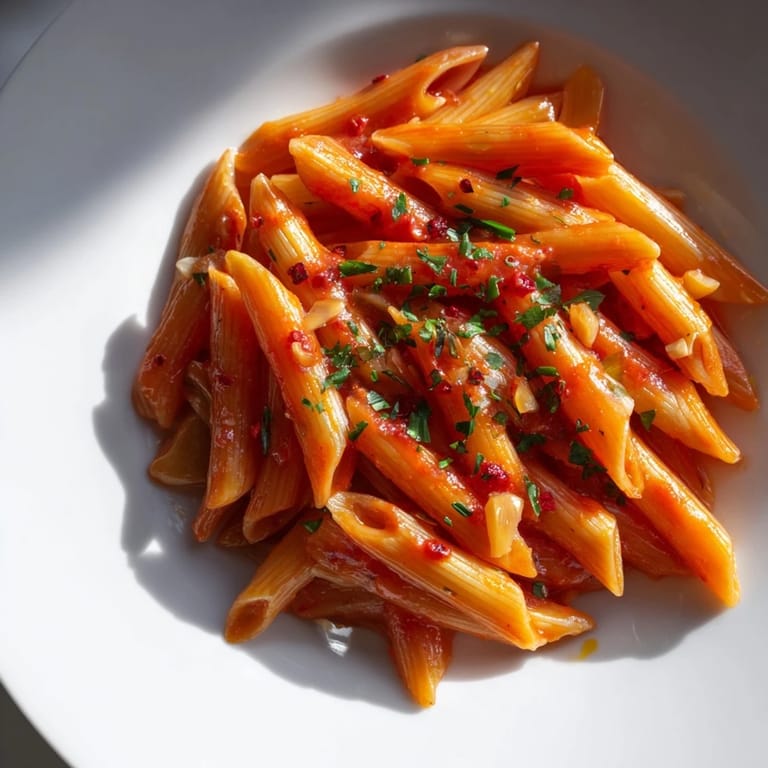
- While pasta cooks, warm olive oil in a large skillet over medium heat. The moment it shimmers, add your garlic slices and chili flakes at the same time—they'll wake each other up. You're listening for a gentle sizzle and watching for the garlic to turn golden at the edges, which takes about a minute. The second it smells amazing, you're done; any longer and bitterness creeps in.
- Build the sauce:
- Crush your tomatoes by hand right into the pan—let them break down naturally as you add them. Stir in salt and pepper, then let it all bubble gently uncovered for 12 to 15 minutes. You're not trying to reduce it to nothing; just let it thicken enough that a spoon dragged through leaves a slight trail.
- Bring it together:
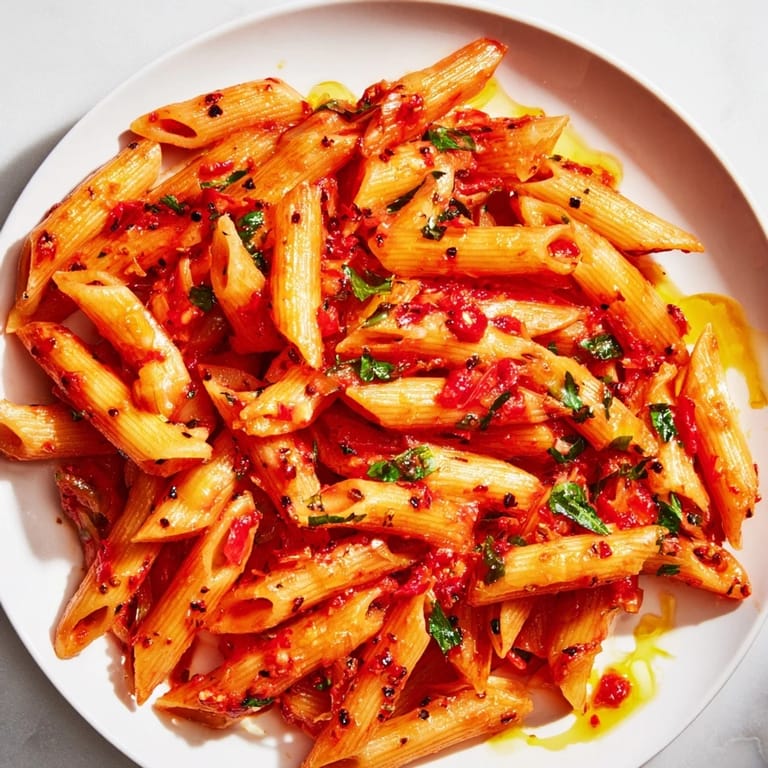
- Drain your pasta and add it straight to the sauce. Toss everything together, then taste a piece of pasta coated in sauce. If it feels dry, splash in some of that reserved pasta water a little at a time until the sauce coats each piece evenly without pooling at the bottom.
- Finish with intention:
- Take the pan off the heat, stir in your chopped parsley, and drizzle a bit more olive oil across the top. This last oil isn't decoration; it smooths out the heat and brings all the flavors forward.
 Pin This
 I once served this to someone on the day they'd decided to stop cooking altogether, convinced they'd never get anything right in a kitchen. Watching them taste it and then immediately check the pot to see if there was more—that was the moment I understood this dish as a kind of proof. Sometimes the simplest thing you can make becomes the thing that changes someone's mind.
The Art of Restraint
This dish thrives on the idea that less is more, which sounds like a cliché until you actually feel it on your tongue. Every ingredient here has a reason to exist; nothing is background noise. The garlic doesn't compete with the tomatoes, the heat doesn't obliterate the brightness—they all just occupy their own space and somehow make each other taste better. Once you feel how that works, you start seeing it everywhere in cooking.
Heat Without Apology
The chili flakes in this sauce aren't trying to be subtle or sophisticated—they're honest and direct, which is partly why this dish became so iconic in Rome. The heat arrives gradually as you eat, building with each bite, and it lingers in a way that makes you reach for water and then immediately take another forkful anyway. This is what I love about cooking without restraint sometimes; it feels like the food is having a conversation with you.
Serving and Enjoying
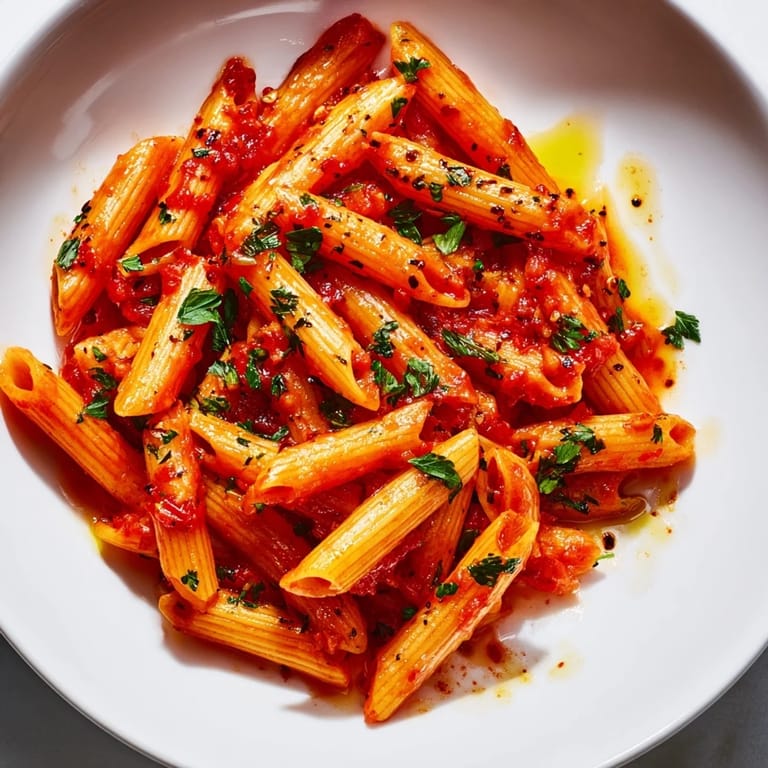
Pour this into a bowl while it's still steaming and eat it right away—the whole magic of the dish lives in that first few minutes when everything is hot and the flavors haven't started to settle and flatten. Traditionally in Rome, you won't see Parmesan on this table, but if that's what brings you joy, then that's what belongs on your plate.
- A crisp white wine like Verdicchio cuts through the heat and brightness perfectly if you're looking to drink alongside.
- Serve with good bread for soaking up the sauce at the end, when the bowl gets quiet and there's just a little pool of red liquid left.
- Make this for someone you want to impress without any fuss; simplicity this good speaks for itself.
 Pin This
 This is the recipe I return to when I want to remember why I love cooking in the first place. It asks almost nothing of you except attention and good ingredients, and somehow gives back so much more.
Recipe Q&A
- → How do I adjust the spiciness level?
Modify the amount of red chili flakes according to your heat preference, reducing for milder or increasing for extra spice.
- → Can I make this dish gluten-free?
Yes, substitute regular penne with gluten-free pasta options while keeping the rest of the ingredients unchanged.
- → What type of tomatoes work best?
Use peeled whole canned tomatoes crushed by hand or fork for a fresh, rustic sauce texture.
- → How do I prevent garlic from burning?
Sauté garlic gently over medium heat, stirring frequently until fragrant but not browned, about one minute.
- → What wine pairs well with this dish?
Pair this spicy pasta with a crisp Italian white like Verdicchio or a light red such as Chianti for balance.
- → Is it possible to add cheese alternatives?
While traditionally served without cheese, a sprinkle of vegan Parmesan or regular Parmesan can be added as preferred.