 Pin This
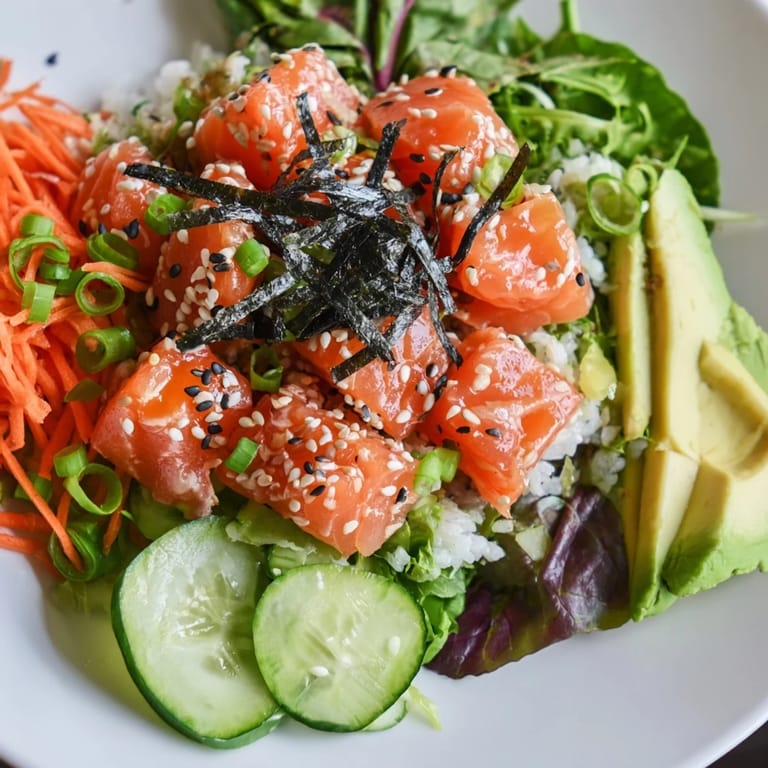
 I discovered poke bowls on a humid afternoon in a tiny restaurant tucked between palm trees, watching the chef slice translucent salmon with the kind of precision that made it look effortless. The bowl arrived with everything arranged like edible artwork, but what caught me was how the fish had absorbed the ginger-soy marinade, becoming something both delicate and bold at once. I spent the next week trying to recreate that magic in my own kitchen, learning that the best versions aren't complicated—they're just honest ingredients treated with care.
There's a moment I treasure when my neighbor tasted this for the first time and went completely quiet—then asked if I'd really made it myself. That silence before the compliment felt better than any elaborate dessert ever could. Now whenever I make these bowls, I'm chasing that same reaction, that instant where fresh fish, crisp vegetables, and a whisper of ginger align perfectly on someone's tongue.
Ingredients
- Sushi-grade salmon or tuna (400 g): The quality of your fish makes everything else matter less—seek out a fishmonger you trust and ask about what came in that morning.
- Soy sauce (2 tbsp): This is your umami anchor, so don't rush past it; use tamari if you need gluten-free.
- Sesame oil (1 tbsp): A little goes far, and toasted sesame oil has a warmth that pushes the flavor in exactly the right direction.
- Rice vinegar (1 tbsp): It adds brightness without harshness, cutting through the richness of the fish and sesame.
- Fresh ginger (1 tsp grated): Grate it just before using—the difference between that and pre-minced is everything.
- Honey or maple syrup (1 tsp): This balances the saltiness and adds a subtle sweetness that makes the marinade memorable.
- Garlic (1 small clove, minced): One clove is enough; garlic can overpower if you're not careful with raw fish.
- Mixed salad greens (120 g): Use whatever is freshest at your market—romaine, arugula, and baby spinach each bring their own personality.
- Cucumber (1 medium), sliced: The watery crispness is essential for balance; slice it just before assembly so it stays crunchy.
- Avocado (1 large), sliced: Choose one that's ripe but still firm—if it's mushy, the whole bowl suffers.
- Carrots (2 small), julienned: The sweetness and color matter more than you'd think; they make the bowl feel alive.
- Cooked sushi rice or brown rice (120 g, optional): Rice makes this more substantial, but the bowl is equally beautiful without it.
- Toasted sesame seeds (2 tbsp): Toast them yourself if you have time; the aroma alone is worth it.
- Scallions (2 tbsp sliced): They add a gentle onion sharpness that wakes everything up.
- Nori (1 sheet, cut into strips): This tastes better than it looks, adding umami and a subtle ocean note.
- Pickled ginger: A small amount on the side cleanses your palate between bites.
- Red chili (1 small, sliced, optional): Only if you want heat—a thin slice is all you need.
Tired of Takeout? 🥡
Get 10 meals you can make faster than delivery arrives. Seriously.
One email. No spam. Unsubscribe anytime.
Instructions
- Build your marinade:
- Whisk together the soy sauce, sesame oil, rice vinegar, ginger, honey, and garlic in a small bowl until the honey dissolves completely. The mixture should smell balanced—not too salty, not too sweet, with ginger cutting through everything.
- Marinate the fish:
- Add your cubed fish to the marinade and toss gently so every piece gets coated without breaking apart. Cover and refrigerate for at least 10 minutes while you prep the vegetables—this gives the fish time to absorb the flavors and become something special.
- Prepare your vegetables:
- While the fish sits, arrange your greens in individual bowls and layer on the cucumber, avocado, carrots, and rice if using. This is where the bowl comes together visually, so take a moment to make it look like something you'd want to eat.
- Compose each bowl:
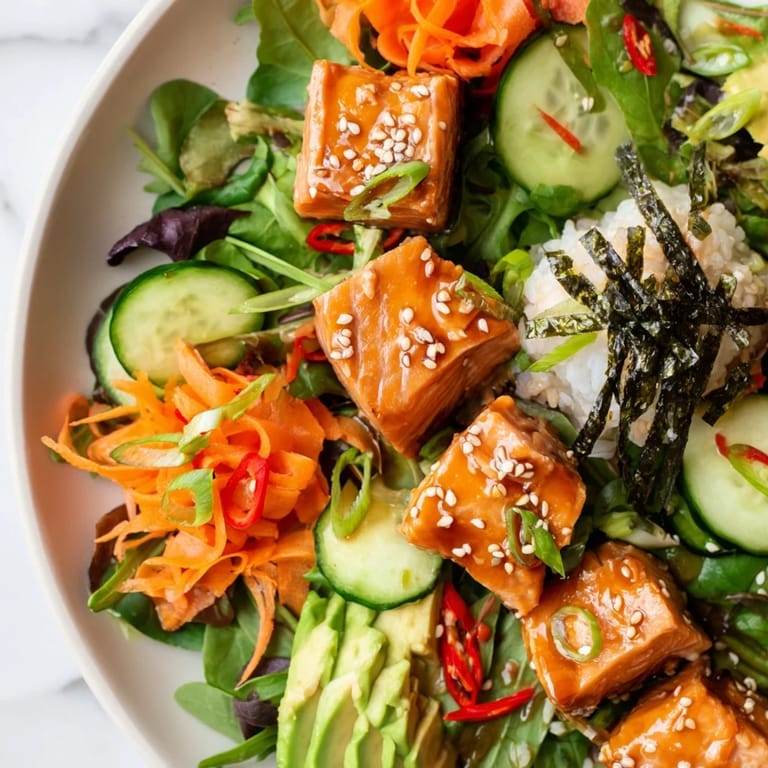
- Spoon the marinated fish over the salad base, pouring a little of that glossy marinade over everything—it's liquid gold. The warmth of the fish against the cool greens creates a perfect temperature contrast that makes eating it feel like a small celebration.
- Garnish and serve:
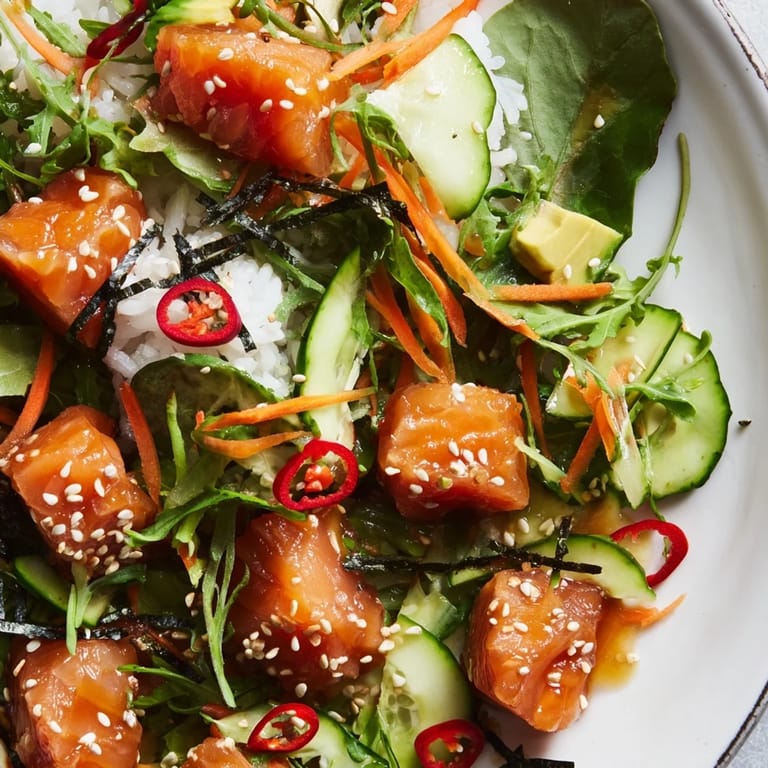
- Top with sesame seeds, scallions, nori strips, pickled ginger, and chili slices. Serve immediately while the greens are still cold and crisp.
 Pin This
 I remember making this for my sister on a day when neither of us felt like cooking, but we wanted something that tasted like we actually cared. We sat outside with our bowls, the sun hitting the sesame seeds so they glowed golden, and somehow a simple lunch became a moment worth remembering. That's what this dish does—it elevates an ordinary afternoon without pretending to be something it's not.
Why This Bowl Works as a Meal
The genius of a poke bowl is that it feels indulgent while being completely honest food. You get protein from the fish, healthy fats from the avocado and sesame oil, vegetables for crunch and nutrients, and that marinade ties everything into something cohesive. The ratio of fish to greens to toppings means you're never bored—each bite is slightly different depending on what you pick up first. If you add rice, you've made a complete meal that sits perfectly between sushi and salad, satisfying without being heavy.
Building Flavor Layers
What makes a poke bowl memorable is that it's not one-note. The salty-savory from soy and sesame plays against the vinegar's brightness, ginger's warmth, and honey's subtle sweetness. Then the vegetables add their own voices—cucumber's coolness, avocado's creaminess, carrot's gentle sweetness. The nori brings umami from a different angle, and pickled ginger cleanses your palate between bites. It's like an orchestra where everything has its moment and nothing overpowers anything else.
Making It Your Own
The beauty of this recipe is that it's more of a framework than a rigid set of rules. Once you understand the core—marinated fish, fresh vegetables, balanced flavor—you can adapt it endlessly based on what's in your kitchen or what you're craving. I've made it with different fish, added edamame for crunch, used brown rice instead of white, even swapped in tempeh when I was cooking for vegetarian friends and they loved it just as much.
- Try adding edamame, radish slices, or crispy wonton strips for different textures.
- Experiment with fish varieties—tuna is more traditional, but salmon brings sweetness that some people prefer.
- If you want more substance, add that rice; if you want lighter, skip it entirely.
 Pin This
 This bowl has become my answer to so many situations—when I want something healthy but delicious, when I'm cooking for people I want to impress, when I need dinner to be beautiful and ready in 20 minutes. It's proof that you don't need complicated techniques or hard-to-find ingredients to make something memorable; you just need good ingredients treated with respect.
Recipe Q&A
- → Can I use tofu instead of fish?
Yes, substituting diced marinated tofu or tempeh provides a plant-based alternative with great texture and flavor.
- → How long should the fish marinate?
Allow the fish to marinate for at least 10 minutes for optimal flavor absorption without overpowering its freshness.
- → What type of rice works best here?
Cooked sushi rice adds authenticity and texture, but brown rice can be used for a nuttier taste and extra fiber.
- → Can I make this dish gluten-free?
Yes, choose certified gluten-free soy sauce (tamari) to keep the dish gluten-free without sacrificing flavor.
- → What are some good garnishes for extra flavor?
Toasted sesame seeds, sliced scallions, nori strips, pickled ginger, and thinly sliced chili add texture and a burst of flavor.