 Pin This
 My neighbor María taught me this soup on a Saturday afternoon when the kitchen filled with smoke from toasting chiles. She moved through the steps like a ritual, never measuring anything precisely, just tasting and adjusting as she went. The broth came together like magic, all those layers of heat and earth transforming into something that tasted like home, even though it wasn't mine. She ladled it into bowls and topped each one differently, letting everyone customize their own experience. That's when I understood sopa azteca isn't just a recipe; it's an invitation to play.
I made this for my roommate on a cold Tuesday when she'd had a rough day at work. She walked in skeptical, still wearing her coat, but the smell of toasted chiles stopped her mid-step. Watching her face change from tired to curious to genuinely happy as she ate—fork clinking against the bowl, cilantro stuck to her lip, asking for seconds—reminded me why cooking for others matters.
Ingredients
- Vegetable oil: Neutral heat carrier that lets the chile and tomato flavors shine without competing; I learned this matters more than people think.
- White onion: The foundation of flavor that shouldn't be skipped even if you're tempted to rush; it builds the savory backbone.
- Garlic cloves: Adds sweetness and depth after cooking; never brown it aggressively or it turns bitter.
- Roma tomatoes: Their lower water content means a concentrated flavor that won't dilute the broth like larger varieties.
- Dried pasilla and guajillo chiles: Pasilla brings deep, almost chocolate-like notes while guajillo adds gentle fruity heat; together they create complexity.
- Vegetable broth: Quality matters here since it's the canvas everything else paints on; homemade is lovely if you have it.
- Dried oregano: A small amount adds Mediterranean warmth that tricks your brain into tasting something familiar yet exotic.
- Ground cumin: One half-teaspoon is the difference between a soup and a fully realized dish; don't skip the measuring.
- Corn tortillas: Fresh ones fry best, but week-old ones work beautifully too since they're already slightly drier.
- Panela cheese: Creamy and mild, it doesn't fight the broth; crumbles easily when warm, creating pockets of richness.
- Ripe avocado: Add it just before serving so it stays vibrant and doesn't brown; the creaminess balances the heat perfectly.
- Fresh cilantro: More than garnish; it's a flavor anchor that ties everything together with fresh, peppery brightness.
Tired of Takeout? 🥡
Get 10 meals you can make faster than delivery arrives. Seriously.
One email. No spam. Unsubscribe anytime.
Instructions
- Build your aromatic base:
- Heat oil over medium heat and coax the onion into translucency—this takes patience, about three minutes, and you'll smell when it's ready. Add garlic and let it wake up the kitchen for just a minute before tomatoes join the party.
- Soften the tomatoes:
- Let them cook down for five minutes until their edges start to break apart and release their juice. This step concentrates flavor instead of diluting it.
- Toast the chiles:
- In a separate dry skillet over medium heat, wave the chiles around for one to two minutes—you want fragrant, not charred. The smell will tell you exactly when to stop.
- Blend into smoothness:
- Transfer cooked vegetables and toasted chiles to a blender with one cup of broth and blend until completely smooth; this creates the soup's essential texture. Let it cool slightly first if you're worried about splashing.
- Simmer and marry flavors:
- Return the blend to the pot with remaining broth and seasonings, bring to a boil, then reduce heat and let it bubble gently for fifteen minutes. Taste it twice during this time—soups keep developing as they sit.
- Fry tortilla strips until golden:
- Heat about an inch of oil until it shimmers, then fry strips in batches so they don't crowd and steam instead of crisp. One to two minutes per batch; drain on paper towels and they'll stay crispy for several minutes.
- Assemble with intention:
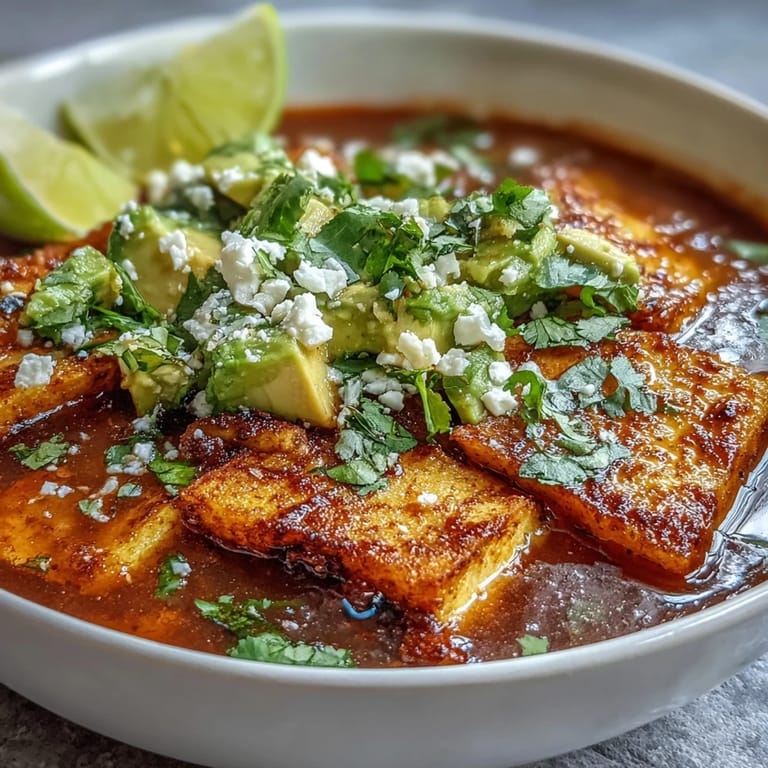
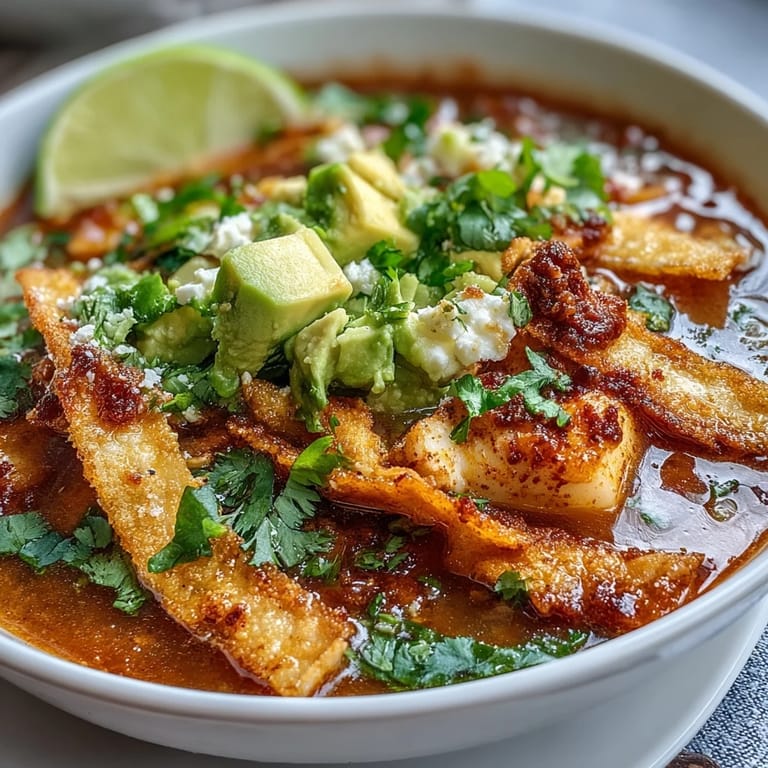
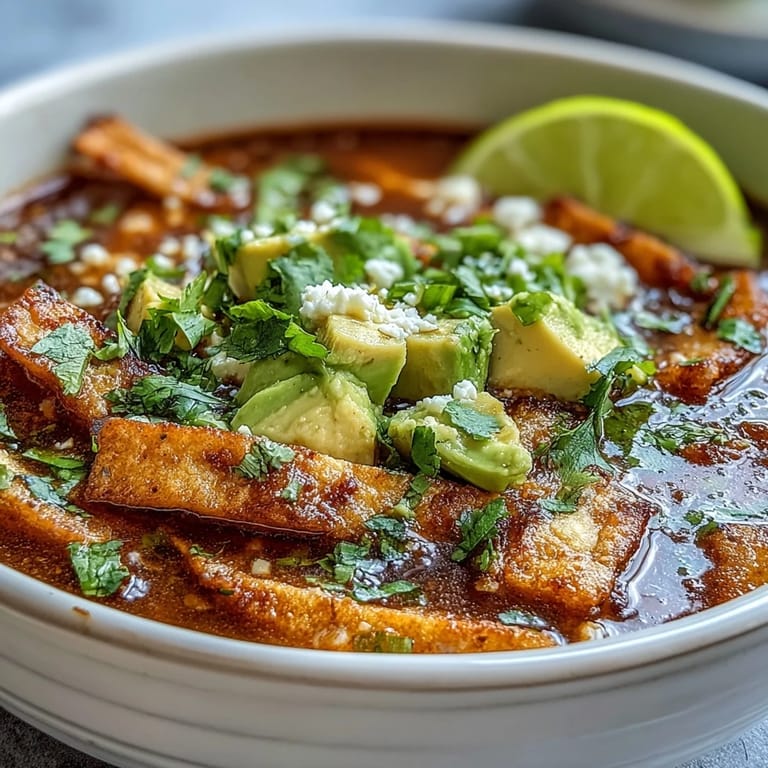
- Layer tortilla strips first in bowls, ladle hot broth over top, then crown everything with cheese, avocado, and cilantro. The heat from the broth will slightly warm and soften the toppings without destroying them.
 Pin This
 My cousin brought this soup to our family gathering right after moving back from Mexico City. People who hadn't seen each other in years ended up standing around the kitchen, bowls in hand, telling stories between spoonfuls. Food has this quiet power to bring people together without any announcement, and this soup seemed to understand that inherently.
The Smoke and the Sizzle
Cooking sopa azteca engages your senses in ways that feel almost theatrical. The chiles toast and release that distinctive toasty-earthy smell that fills your entire kitchen—suddenly your space feels intentional, like you're making something important. Then come the tortilla strips hitting hot oil, creating a sound that pulls everyone within earshot toward the stove. By the time you're ladling broth, you've already created an experience, not just a meal.
Timing and Temperature Matter
This soup rewards gentle attention to heat and timing. The broth needs a full fifteen-minute simmer so flavors knit together rather than sitting as separate ingredients pretending to be a team. Meanwhile, your tortilla strips need that quick, hot sizzle to achieve crispness—low or moderate oil temperature means they'll absorb oil instead of crisping up. Understanding these temperature zones transformed my soup-making entirely.
Making It Your Own
The beauty of sopa azteca is how forgiving it is once you understand its core structure. Add a chipotle if you want deeper smoke and heat. Layer in some shredded chicken if vegetarian isn't your lane. Use feta instead of panela if that's what you have gleaming in your fridge. The soup will shift and adapt while staying fundamentally itself.
- A squeeze of fresh lime right before eating brightens everything and cuts through the richness like a wake-up call.
- Make the broth a day ahead and fry tortillas fresh; your timing becomes infinitely easier and the flavors deepen overnight.
- Don't be precious about the garnishes being perfectly placed; the magic happens when people dig in and customize their own bowls.
 Pin This
 There's something about serving this soup that makes people slow down and actually taste their food. Maybe it's the layering of temperatures and textures, or maybe it's just that bright cilantro and creamy cheese reminding us to pay attention. Either way, you'll find yourself making it again.
Recipe Q&A
- → What makes Sopa Azteca authentic?
Authentic Sopa Azteca relies on dried pasilla and guajillo chiles toasted to develop smokiness, blended fresh tomatoes rather than canned, and corn tortillas fried until crispy. The combination of hot broth over crisp strips creates the signature texture contrast.
- → Can I make this ahead of time?
Prepare the broth up to 2 days in advance and refrigerate. Fry tortilla strips fresh before serving for optimal crunch. Store garnishes separately and assemble bowls just before eating.
- → What cheese works best?
Panela cheese is traditional for its mild flavor and melting properties. Queso fresco offers similar qualities, while feta provides a tangy alternative. Avoid strong cheeses that overpower the delicate broth.
- → How do I adjust the spice level?
Remove seeds and membranes from chiles for milder flavor. Add only one chile type initially, then taste and adjust. A chipotle in adobo adds smoky heat without overwhelming the balance.
- → Is this suitable for meal prep?
Store broth and garnishes separately. The broth actually develops deeper flavor after sitting. Reheat broth gently and assemble with fresh toppings when ready to serve for the best texture experience.
- → What's the secret to perfectly crispy strips?
Cut tortillas uniformly for even frying. Heat oil to medium-high—too cool makes them greasy, too hot burns them quickly. Drain immediately on paper towels and salt while warm for maximum crunch.