 Pin This
 The first time I tossed together this teriyaki salmon bowl, it was almost accidental—a quick dinner for two after a sweltering late afternoon walk, with fridge leftovers and a stubborn craving for something bright and unfussy. The fragrant steam rising from the rice joined forces with the caramelized sweetness of the sauce, instantly changing the mood of the kitchen. I remember the slight sizzle as the salmon hit the hot skillet and how the aroma drew my partner in from the next room. There was no grand plan, just curiosity about whether salmon and the simple glaze could transform tired summer veggies. Somehow, it felt like a small rebellion against bland weeknight meals.
One memorable night, I threw this bowl together for a couple of friends who arrived unexpectedly, trailing laughter and a bottle of wine. We crowded around the stove, eager for each step—one grabbed the cucumber, another hunted for sesame seeds. When the salmon glaze thickened and shimmered, someone dared to lick the spoon. That moment turned the dish from ‘just dinner’ into a group ritual, punctuated by lively kitchen banter and happy sighs between bites.
Ingredients
- Salmon fillets: Go for skinless to keep it simple—pat them dry for crisp edges and even cooking.
- Vegetable oil: A tablespoon is plenty; don’t crowd the skillet, so the salmon browns properly.
- Salt and pepper: Just a quick sprinkle—season just before cooking to avoid drying out the fillets.
- Soy sauce: Standard or low-sodium works; quality matters, so sample it first if you’re picky.
- Mirin: Adds mellow sweetness—dry sherry substitutes well, but mirin gives that classic depth.
- Honey: This lifts the glaze and balances the saltiness; gently warm if it’s thick.
- Rice vinegar: A dash brightens the sauce—don’t skip it, though lemon juice is your backup.
- Fresh ginger: Grate it finely for maximum zing; frozen ginger works in a pinch.
- Garlic: One clove, minced, tempers the sweetness and rounds out the flavor.
- Jasmine rice: Serving it hot gives structure to the bowl; leftover rice can be revived with a splash of water.
- Cucumber: Thinly slicing keeps things crisp and refreshing; pat dry for best texture.
- Carrot: Julienne or shred—both add crunch and fresh color.
- Avocado: Sliced at the last minute keeps it vivid and creamy.
- Scallions: Finely sliced for a gentle bite; soak briefly in cold water if they're too pungent.
- Toasted sesame seeds: Scatter these for nutty aroma—toast them yourself for a richer flavor.
Tired of Takeout? 🥡
Get 10 meals you can make faster than delivery arrives. Seriously.
One email. No spam. Unsubscribe anytime.
Instructions
- Mix the Teriyaki Sauce:
- In a small bowl, whisk soy sauce, mirin, honey, rice vinegar, ginger, and garlic together until glossy and fragrant.
- Prepare the Salmon:
- Heat vegetable oil in a non-stick skillet over medium-high, then season the fillets with salt and pepper as the skillet warms.
- Sear and Glaze:
- Place salmon in the hot pan, listening for the sizzle, and cook 2–3 minutes per side—then pour in the glaze and let it bubble, spooning sauce over until fillets are shiny and just cooked.
- Assemble the Bowls:
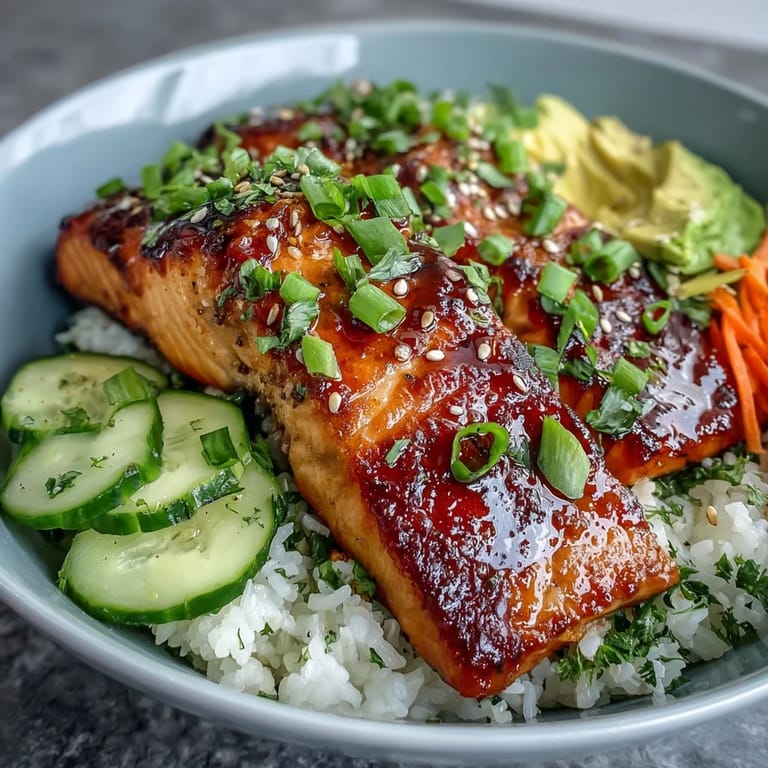
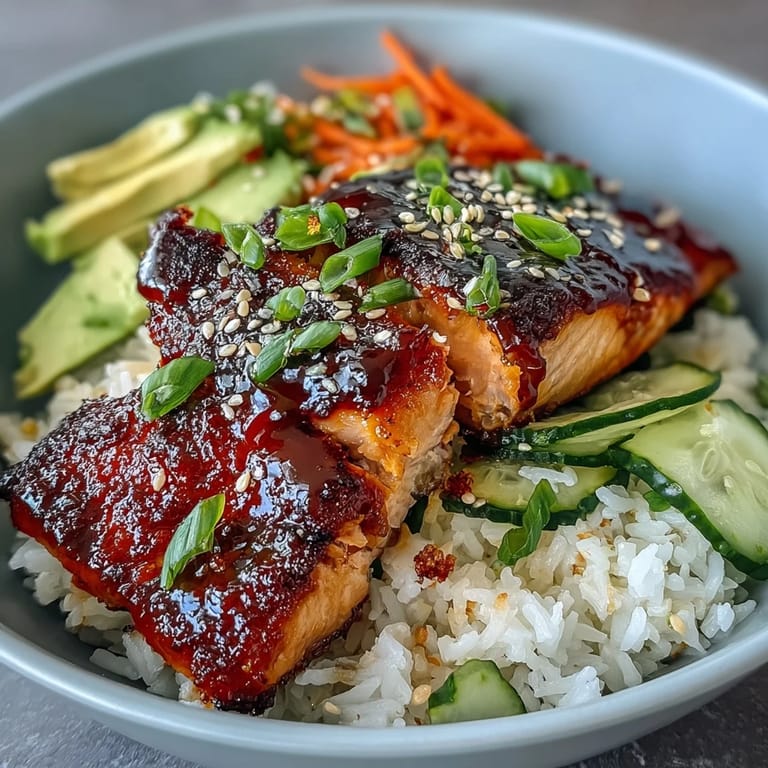
- Divide steaming rice between bowls; arrange cucumber, carrot, and avocado in neat piles, letting each color pop.
- Add Salmon and Final Touches:
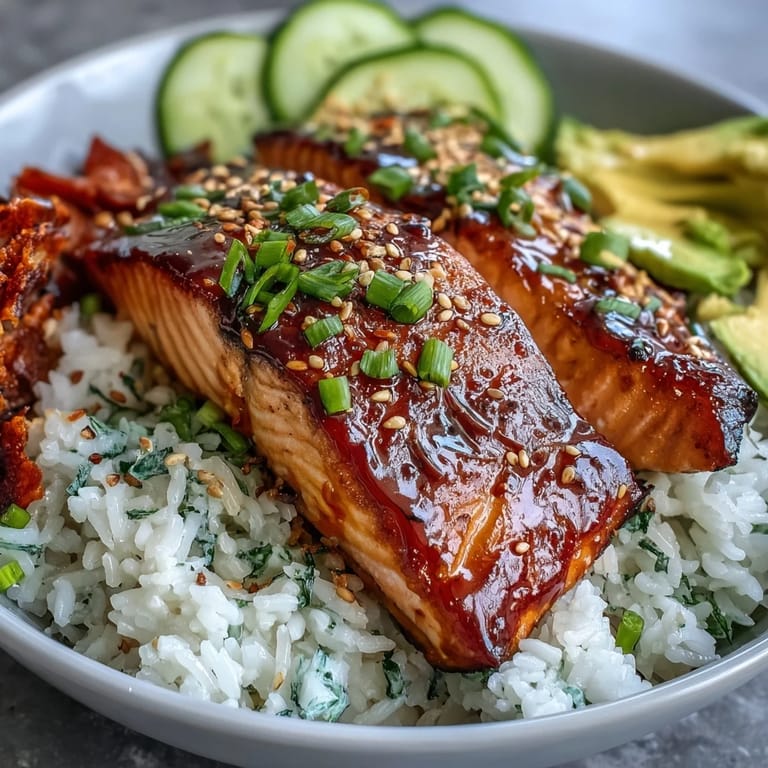
- Nestle a glazed salmon fillet in each bowl, drizzle over any remaining sauce, and sprinkle scallions and sesame seeds generously.
 Pin This
 The night my little brother cooked this for the first time, he mistakenly used double the honey, and it ended up sticky sweet—but the bowl was devoured anyway. That made me realize this recipe is forgiving, and sometimes little errors bring surprising joy. It’s become a go-to for casual gatherings, often starting with a flurry of rice steam and ending with quiet, satisfied smiles. Even quick, simple food can create a sense of occasion.
How to Customize Your Salmon Bowl
I love swapping in brown rice or even quinoa when I want something a bit earthier—it makes each bite deeper, and no one complains about changing things up. When I’m feeling bold (or have leftovers), pickled ginger or a handful of edamame go right on top. The veggies are endlessly adaptable; sometimes I toss in radishes or bell peppers for a crunchy twist. The recipe almost encourages improvisation.
Choosing and Cooking Salmon
One of the best lessons came from using salmon fillets that were uneven in thickness—the thicker end needed an extra minute, but that gentle searing meant it was still juicy while the thinner side crisped up beautifully. Always pat the fillets dry and let them reach room temperature before cooking so the skinless surface browns reliably. If possible, buy your salmon the same day for the cleanest flavor, but frozen works beautifully when defrosted slowly. Cooking with friends means swapping skills; I learned to check doneness by seeing tiny white beads form on the salmon’s surface.
Quick Bowls for Busy Nights
The true magic of this recipe has shown up most on rushed weekday evenings when food felt like a small comfort and not a chore. Sometimes the avocado isn’t quite ripe, or the rice is leftover, but the teriyaki sauce makes everything feel intentional and inviting. Kitchen mess and all, the bowl brings a little spark to an otherwise ordinary night.
- Drizzle any extra sauce over vegetables for extra flavor.
- If salmon isn’t available, shrimp or tofu work well, just adjust cooking time.
- Let everyone build their own bowl for a fun, interactive meal.
 Pin This
 Whether you’re making this for yourself or sharing with friends, the bowl is a speedy celebration of flavor and color. Try it once, and you’ll never look at a busy weeknight the same way again.
Recipe Q&A
- → What type of salmon works best?
Skinless fillets are ideal for quick searing and even glazing. Fresh or frozen both work well.
- → Can I substitute mirin?
Dry sherry is a good alternative if mirin is unavailable, retaining the sweet undertones of the sauce.
- → How can I make it gluten-free?
Replace soy sauce with tamari and check other condiments for hidden gluten sources.
- → What veggies complement this bowl?
Cucumber, carrot, and avocado provide freshness, but pickled ginger or edamame add variety and texture.
- → Can brown rice or quinoa be used?
Yes, swapping jasmine rice for brown rice or quinoa boosts whole grain content and adds nutty flavor.
- → How is the teriyaki sauce made?
Mix soy sauce, mirin, honey, rice vinegar, ginger, and garlic together for a sweet-savory glaze.