 Pin This
 The first time I made manti, I was standing in my friend's small kitchen in Istanbul, watching her grandmother fold these tiny dumplings with surprising speed and precision. She didn't measure anything, just pinched and sealed with her weathered hands while telling stories about making them for family gatherings. I went home that evening completely mesmerized by how something so delicate could hold so much flavor, and I've been chasing that memory ever since.
I made a batch for my sister's dinner party last spring, and I remember the quiet moment before everyone took their first bite, when I poured that golden spiced butter over the yogurt-dressed dumplings. Her husband said they tasted like nothing he'd ever had before, and everyone at the table went quiet—the kind of quiet that means good food is doing its job. That's when I knew this recipe was worth the careful folding.
Ingredients
- All-purpose flour: The foundation of your dough, and it needs to be soft enough to knead smoothly but sturdy enough to hold the filling without tearing when you boil it.
- Salt: Goes into both the dough and the yogurt sauce, but don't skip the resting time—it gives the dough time to relax and become more elastic.
- Egg: Acts as the binder that holds everything together and gives the dough its structure.
- Water: Add it gradually; you might need more or less depending on your flour and humidity.
- Turkish white cheese: Creamy, salty, and essential to the filling's character—feta works if you can't find it, but Turkish cheese has a gentler flavor.
- Ricotta cheese: Softens the filling and keeps it from being too sharp, making each bite tender and luxurious.
- Fresh parsley: Brightens the cheese filling with color and a subtle herbaceous note that prevents it from feeling heavy.
- Black pepper: A whisper of heat that wakes up the cheese without overwhelming it.
- Greek yogurt: Thick and tangy, it's the perfect sauce base—regular yogurt will work but won't coat as beautifully.
- Garlic: Just one clove minced fine; this isn't about garlic boldness, it's about a gentle aromatic warmth.
- Unsalted butter: The vehicle for spice, and using unsalted gives you control over the final salt level.
- Paprika and Aleppo pepper: These two create a spiced butter that's both warm and slightly sweet, with just enough heat to make your mouth tingle pleasantly.
Tired of Takeout? 🥡
Get 10 meals you can make faster than delivery arrives. Seriously.
One email. No spam. Unsubscribe anytime.
Instructions
- Make the dough come alive:
- Combine your flour and salt, then create a well in the center like you're building a little nest. Crack in your egg and pour the water slowly as you mix with a fork, gradually bringing the flour in from the sides until it becomes shaggy. Knead it on the counter for about five minutes until it's smooth and elastic—you'll feel when it's right, when it stops fighting back and becomes silky under your palms. Cover it with a bowl and walk away for twenty minutes; this rest is when the gluten relaxes and makes everything easier.
- Prepare your cheese filling:
- While the dough rests, crumble your cheeses together with the parsley and black pepper, stirring until it's evenly mixed. Taste it and adjust—this is your chance to make it your own.
- Mix the yogurt sauce:
- Combine yogurt, minced garlic, and salt in a bowl, stirring until completely smooth. The sauce should taste tangy with just a whisper of garlic, so taste as you go.
- Roll and cut the dough:
- Flour your work surface lightly and roll the dough as thin as you can manage—about the thickness of a dime. This is where patience matters; thinner dough means more delicate dumplings that cook evenly. Cut into 1.5-inch squares using a knife or pastry wheel, and try to keep your pieces consistent in size so they cook at the same speed.
- Fill and fold with care:
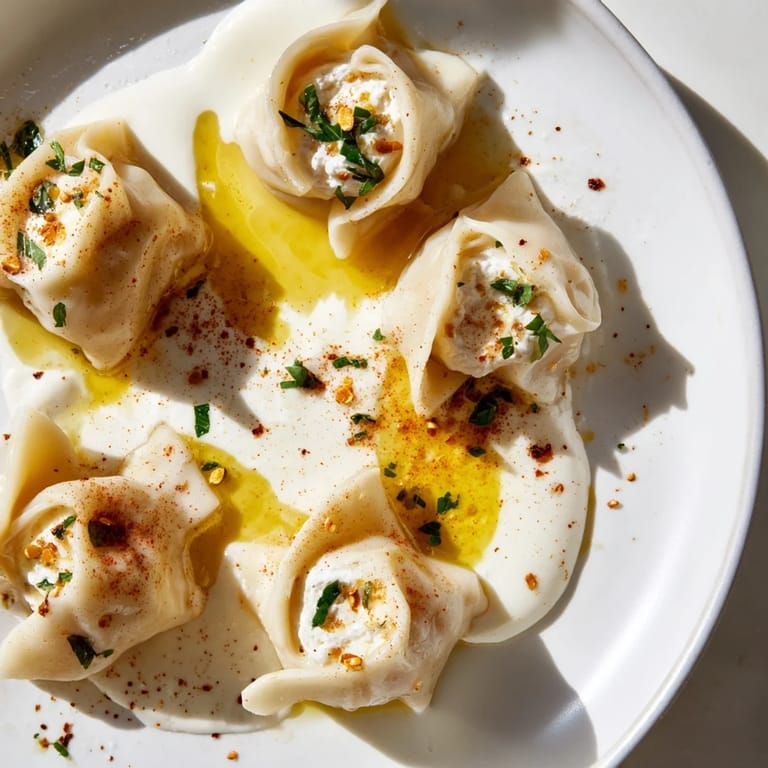
- Place a tiny amount of filling—about the size of a pea—in the center of each square. Pinch all four corners together to seal, making sure the edges are well-sealed so the filling doesn't escape during cooking. The shape should be tight and secure, like a little purse.
- Bring them to a boil:
- Fill a large pot with salted water and bring it to a rolling boil. Working in batches so you don't crowd the pot, carefully drop the manti in and give them a gentle stir so they don't stick together. They'll sink at first, then slowly float to the surface as they cook, usually in about five to seven minutes. That floating moment is your signal they're done—tender but not falling apart.
- Finish with warmth and color:
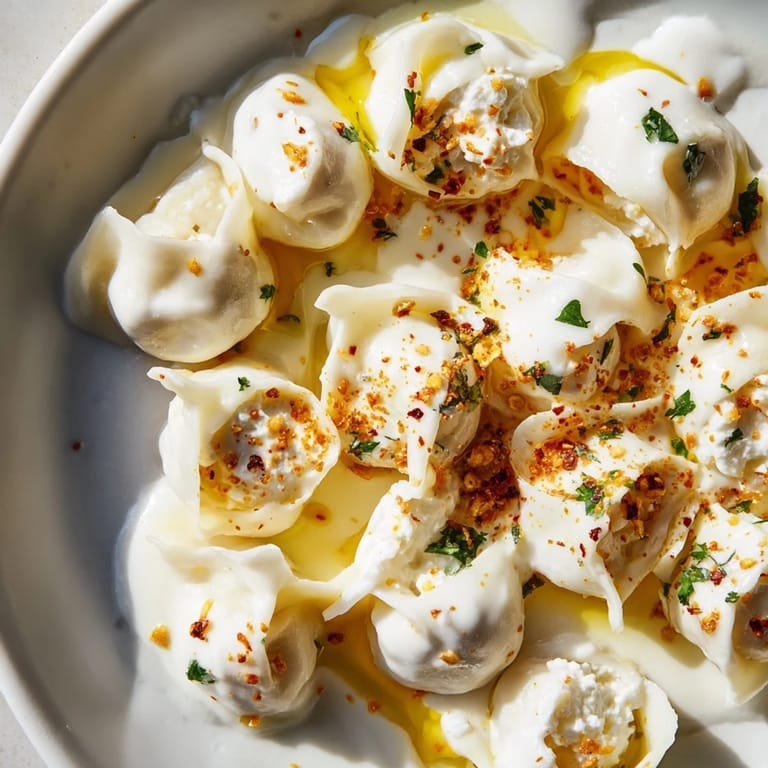
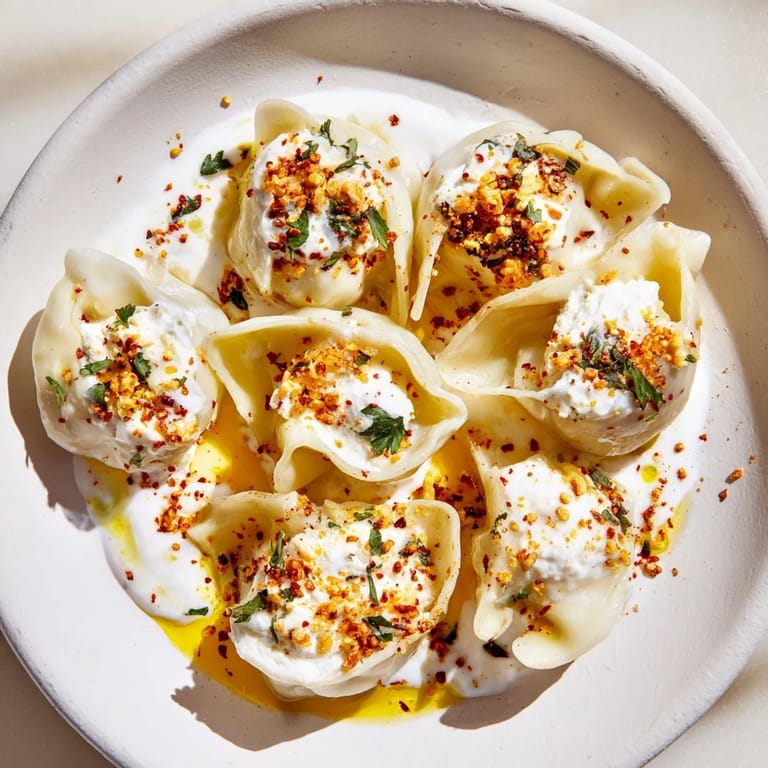
- While the manti cook, melt your butter in a small pan over medium heat and stir in the paprika and Aleppo pepper, letting it cook for just thirty seconds until it smells incredible. This brief toasting brings out the spice's warmth without burning it.
- Plate and dress:
- Arrange your drained manti on warm plates, spoon the yogurt sauce generously over top, then drizzle that glorious spiced butter across everything. A small garnish of fresh parsley adds a final touch of color and freshness.
 Pin This
 There's something almost meditative about standing at the counter, folding dumpling after dumpling, your hands eventually remembering the motion without thinking. The first batch always feels deliberate and slow, but by the final few, your fingers move with a confidence you didn't know you had, and somehow that makes the whole experience feel less like cooking and more like a conversation with the recipe itself.
The Cheese Choice and Why It Matters
Turkish white cheese has a creamy, mild character that feta, with all its saltiness and tang, can't quite replicate—but feta absolutely works if that's what's in your kitchen, and sometimes imperfect substitutions lead to your own favorite version. The ricotta is what keeps the filling from becoming grainy or too sharp; it's the bridge between the two cheeses that makes every bite feel cohesive and luxurious. If you've only ever had ricotta in desserts, this might surprise you with how beautifully it plays with salty cheese and fresh herbs.
The Sauce as the Soul of the Dish
The yogurt sauce isn't just a topping; it's the foundation that everything else builds on, and getting it right transforms the whole experience. A single minced garlic clove might seem timid, but it's deliberate—you want the garlic to whisper in the background, not shout over the delicate dumplings. The spiced butter that follows is where the drama happens, where warmth and color and aroma all meet together in a small pool of perfection.
Making It Ahead and Other Practical Wisdom
Once folded, these dumplings freeze beautifully for up to three weeks, which means you can have a fancy dinner on a Tuesday night with minimal effort. Freeze them on a sheet pan uncovered so they don't stick, then transfer to a container, and you can drop them straight into boiling water without thawing. The spiced butter and yogurt sauce should always be made fresh, but everything else can be done well ahead, which is why people who've discovered this recipe keep making it.
- If you're nervous about rolling thin dough, try rolling between two sheets of parchment paper to keep it from sticking.
- Fresh mint mixed into the yogurt sauce is a beautiful variation if you have it on hand and want something different.
- Leftover yogurt sauce is perfect on grilled vegetables or as a condiment for almost anything.
 Pin This
 Every time I make this, I'm transported back to that kitchen in Istanbul, to the patience and pride in that grandmother's hands. You don't need to have been there to feel that tradition now—it's in every careful fold and every spoonful of sauce.
Recipe Q&A
- → What type of cheese is best for filling?
A mix of Turkish white cheese or feta combined with ricotta creates a creamy and slightly tangy filling ideal for the dumplings.
- → How thin should the dough be rolled out?
Roll the dough very thin, about 2 mm, to ensure light and delicate dumplings that cook evenly and hold their shape.
- → What is the purpose of the spiced butter?
Spiced butter with paprika and Aleppo pepper adds a warm, smoky aroma and a touch of heat, enhancing the yogurt-sauced dumplings.
- → Can I substitute the yogurt sauce with something else?
While the garlic yogurt sauce complements the filling perfectly, a sour cream or labneh sauce can also provide a creamy contrast.
- → How do you know when the dumplings are cooked?
Cook the dumplings in boiling salted water until they float to the surface and feel tender when gently pressed with a spoon, about 5–7 minutes.
- → What tools are essential for preparing this dish?
A rolling pin, sharp knife or pastry cutter, large pot, slotted spoon, and mixing bowls are needed to roll, cut, cook, and serve the dumplings.