 Pin This
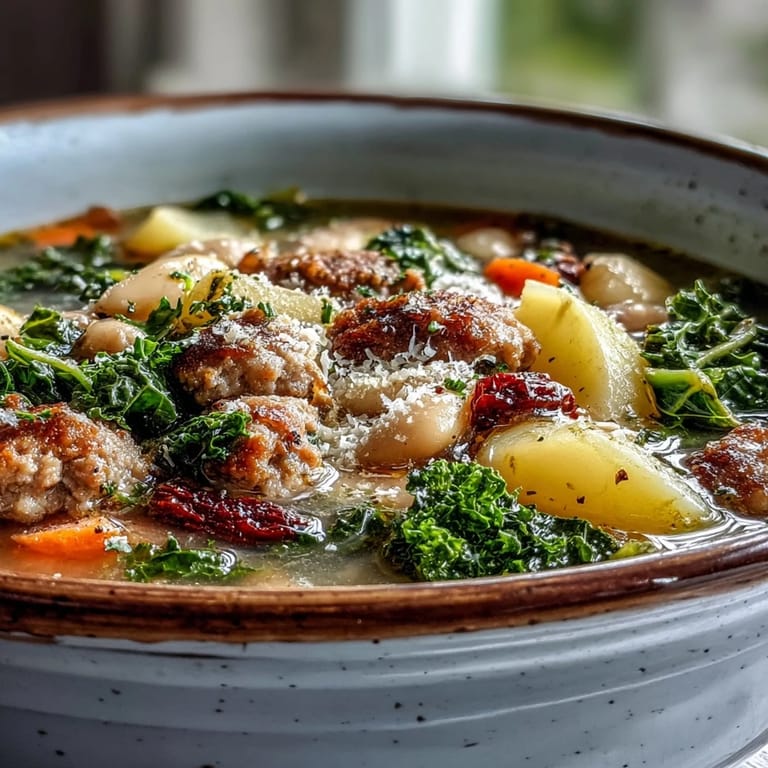
 There's something about a pot of Tuscan white bean sausage soup that turns an ordinary Tuesday into something worth remembering. My neighbor Maria practically forced me to taste hers one chilly October afternoon, and I've been making it ever since—her version with the kale slightly charred at the edges from a too-hot simmer, mine a little gentler. It's the kind of soup that fills your kitchen with such a welcoming aroma that people start drifting toward the stove before you've even finished cooking. What makes it special isn't any single ingredient, but how they all come together in that rich broth with a quiet confidence. This is comfort food that doesn't apologize for being simple.
I made this for a group of friends during a surprise snowstorm when nobody could leave—we were stuck, slightly panicked, and then I remembered I had everything on hand. Within the hour, we were passing bowls around the living room, the kind of moment where you forget about being snowed in and just feel lucky. That soup became the reason they still call me asking if I'll make it again. It taught me that the best meals aren't the fancy ones; they're the ones that arrive exactly when people need them.
Ingredients
- Italian sausage, 1 lb with casings removed: This is your backbone—choose mild if you want comfort, spicy if you want character, and don't skip browning it properly because that's where the flavor gets locked in.
- Yellow onion, carrots, and celery, diced: The holy trinity that teaches patience; don't rush the softenening or you'll miss that sweet moment when they become translucent and mellow.
- Garlic, 3 cloves minced: Add it after the vegetables soften or it'll burn and turn bitter—timing here matters more than you'd think.
- Kale, 2 cups chopped with stems removed: The stems are woody and will fight you, so take thirty seconds to pull them out because that small effort changes everything.
- Yukon Gold potatoes, 2 medium diced: Don't peel them if you don't want to; the skins add texture and nutrition, and honestly, nobody's judging.
- Diced tomatoes, 1 can optional: They add brightness, but the soup works beautifully without them if your pantry is bare.
- Cannellini beans, 2 cans drained and rinsed: Rinsing them is non-negotiable because canned bean liquid makes the broth cloudy and starchy.
- Chicken broth, 6 cups low-sodium: Use the good stuff because this soup has nowhere to hide; every ingredient speaks for itself.
- Oregano, basil, thyme dried, and red pepper flakes: Mix them in together rather than one by one so they distribute evenly and none gets lost in corners.
- Extra-virgin olive oil, 2 tablespoons: This is what carries the flavor of the sausage, so don't use the cheap bottle you hide in back.
- Parmesan cheese, freshly grated for serving: It's optional but transforms the soup from good to memorable—store-bought is fine, but freshly grated melts better and tastes cleaner.
Tired of Takeout? 🥡
Get 10 meals you can make faster than delivery arrives. Seriously.
One email. No spam. Unsubscribe anytime.
Instructions
- Brown the sausage:
- Heat olive oil in a large pot over medium heat and crumble the sausage in, letting it cook undisturbed for a minute so it gets color before you break it up. After about five or six minutes, when it's cooked through and smells like a proper Italian kitchen, transfer it to a plate but leave the fat behind because that's liquid gold.
- Build the aromatics:
- Add the onion, carrots, and celery to the same pot and let them sauté for five minutes, stirring now and then until they soften and start sweetening. Stir in the garlic and cook for just one minute—you want to smell its perfume without letting it turn dark.
- Combine everything:
- Return the sausage to the pot along with potatoes, beans, tomatoes if you're using them, broth, and all your herbs and spices, giving everything a good stir to marry the flavors. The kitchen will already smell like dinner before you bring it to a boil.
- Simmer until potatoes are tender:
- Turn the heat down after it reaches a boil, cover the pot, and let it simmer for about twenty minutes until you can pierce a potato chunk with a fork without resistance. This is when you can step back and do something else, knowing it's all happening on its own.
- Wilt the kale:
- Remove the cover and add the kale, stirring it into the hot broth where it will immediately begin to soften and change color. Let it simmer uncovered for five to seven minutes until it's tender and no longer feels raw between your teeth.
- Season and serve:
- Taste the soup and add salt and black pepper until it tastes like comfort in a bowl, then ladle it into bowls and top with Parmesan if the mood strikes. Serve it hot with crusty bread for soaking up every last drop.
 Pin This
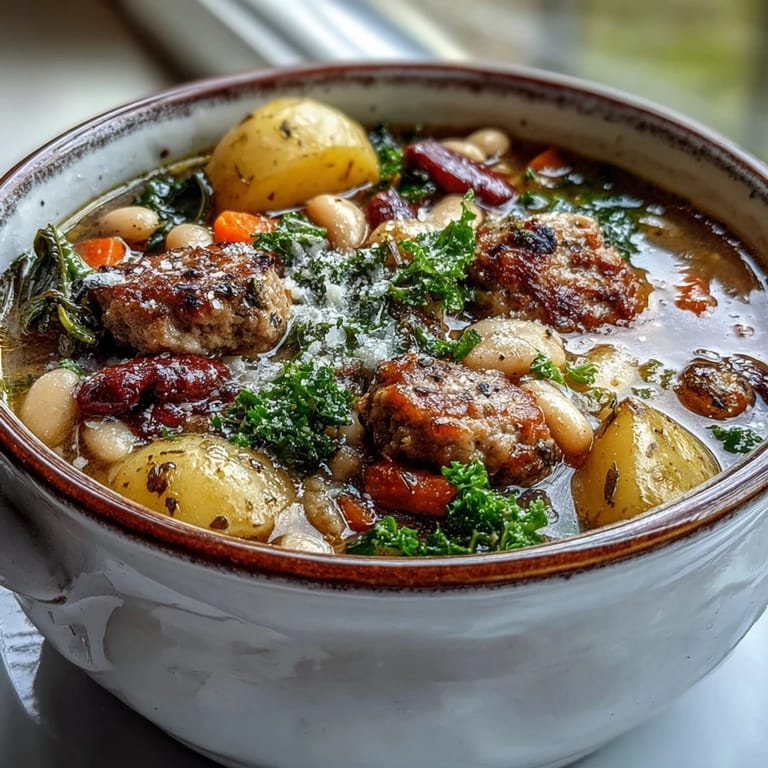
 Years ago, my daughter came home from school saying she didn't like vegetables, so I made this soup without telling her what was in it. She had three bowls and asked for the recipe—the kale was never mentioned, the potato was just "soft and good." That's when I understood that sometimes the most important thing a recipe can do is sneak nutrition and love onto a plate without announcement.
The Magic of Slow Simmering
This soup proves that patience isn't just a virtue in cooking—it's a strategy. When you let those vegetables soften slowly with the sausage fat before adding the broth, you're building layers of flavor that a fast boil never achieves. The difference between a pot you just throw everything into and one you tend to carefully is noticeable on the first spoonful. I learned this the hard way by trying to rush the process once, and the resulting soup tasted thin and disconnected, like all the ingredients were strangers sharing a bowl.
Why Kale Changes Everything
Kale gets added at the very end, and that timing is deliberate—if you add it too early, it becomes overcooked and mushy, losing both its color and its texture. By adding it in those final minutes, it stays tender but distinct, almost delicate in the way it floats in the broth. Watch it wilt and transform from raw and green to soft and slightly darker, and you'll see exactly what you were waiting for. It's not just nutritional strategy; it's about letting each ingredient have its moment.
Serving and Storing with Intention
This soup lives in a sweet spot between being eaten the day you make it and being even better the day after, when flavors have married and deepened.
- Leftover soup keeps refrigerated for up to three days, and honestly, it gets more delicious each day you reheat it gently.
- If you're making it ahead, add the kale the day you serve it rather than storing it in, because it will continue softening and lose its character.
- For a vegetarian version, swap in plant-based sausage and vegetable broth, and nobody will know the difference because the flavor comes from technique, not just meat.
 Pin This
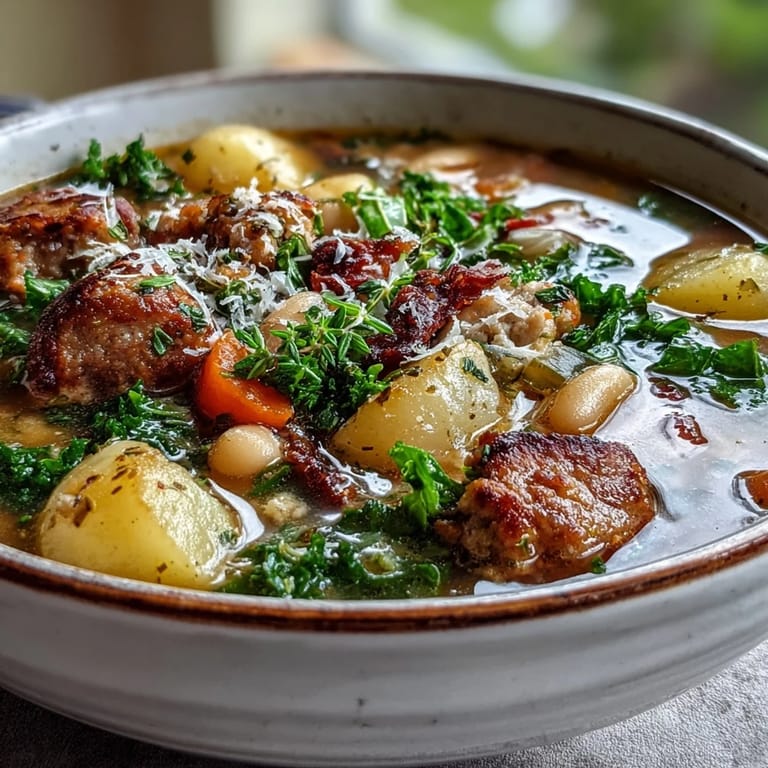
 This soup has become my answer to almost every kitchen question about how to cook something that tastes like home. It asks very little of you but gives back generously, which feels like the truest definition of a good recipe.
Recipe Q&A
- → Can I make this soup vegetarian?
Yes, substitute plant-based sausage for the Italian sausage and use vegetable broth instead of chicken broth. The result remains just as hearty and flavorful.
- → What type of sausage works best?
Italian sausage, either mild or spicy depending on your preference, works beautifully. Remove the casings before cooking to break the meat into small pieces throughout the soup.
- → How long do leftovers keep?
This soup stores well in the refrigerator for up to 3 days. The flavors actually develop and improve overnight, making it excellent for meal prep or making ahead.
- → Can I freeze this soup?
Yes, freeze for up to 3 months. Slight texture changes may occur with the potatoes and beans, but flavor remains excellent. Thaw overnight in the refrigerator before reheating.
- → What should I serve with this?
Crusty bread or garlic bread makes the perfect accompaniment for dipping. A simple green salad with vinaigrette balances the hearty soup nicely.
- → Can I use fresh herbs instead of dried?
Absolutely. Substitute 1 tablespoon fresh herbs for each teaspoon of dried. Add fresh herbs near the end of cooking to preserve their bright flavor.