 Pin This
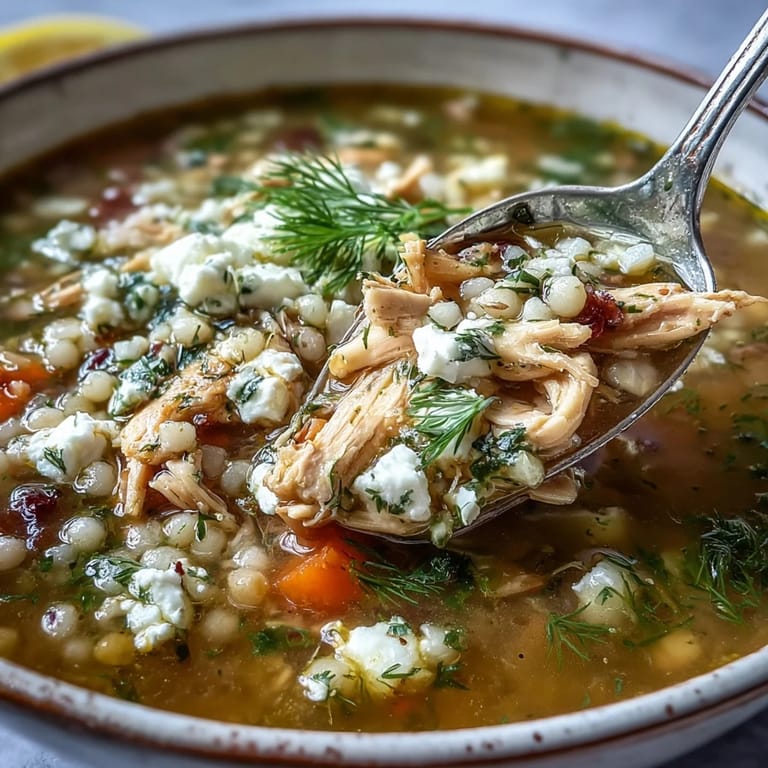
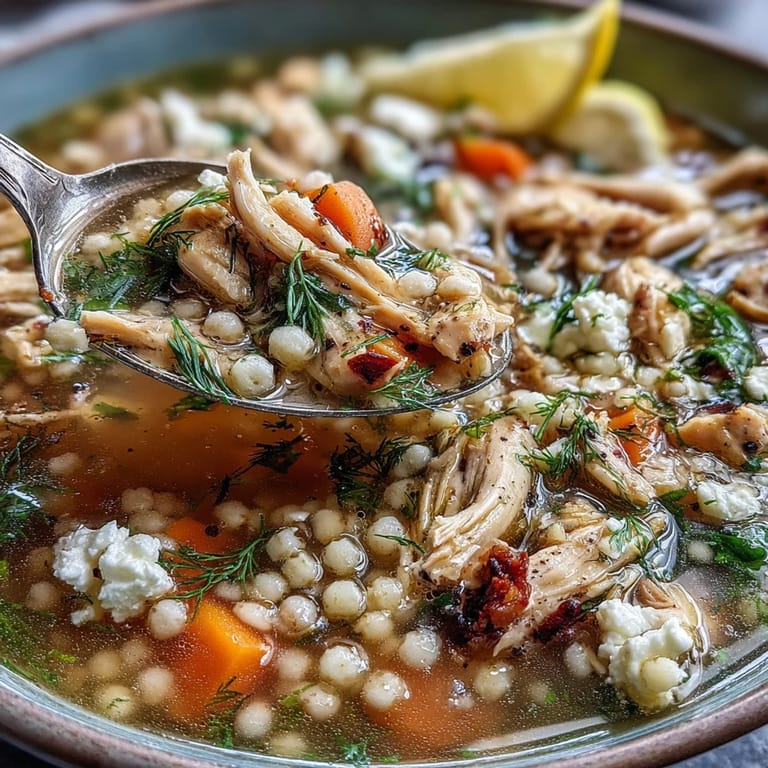
 There's something about a bowl of Greek chicken and pearl couscous soup that transports you somewhere warmer, even on the coldest afternoons. I discovered this particular version while standing in a friend's kitchen in Athens, watching her grandmother add lemon juice with the confidence of someone who'd done it a thousand times. She barely measured anything, just tasted and adjusted, and that's when it clicked for me—this soup isn't fussy or complicated, it's just honest. Now whenever I make it, I feel that same ease, like I'm cooking alongside someone who actually knows what they're doing.
I made this for my sister during one of those weeks where everything felt overwhelming, and she called me three days later just to ask for the recipe again. That's when I knew I had something worth keeping. There's comfort in the warmth of the bowl, the tender chicken, the little pearls of couscous that somehow taste better in broth than on their own—it all adds up to something that feels both nourishing and like a small act of care.
Ingredients
- Boneless, skinless chicken breasts (2, about 400 g): Choose breasts that are roughly the same thickness so they cook evenly; this is the protein anchor that keeps the soup hearty without weighing it down.
- Low-sodium chicken broth (1.2 liters / 5 cups): The foundation of everything—use good quality broth because there's nowhere for mediocrity to hide in a simple soup.
- Bay leaf (1): One leaf is all you need; it whispers in the background and makes the whole pot taste more intentional.
- Medium yellow onion, finely chopped (1): The sweetness builds as it softens, so don't skip the initial sauté or rush through it.
- Medium carrots, peeled and diced (2): Cut them into roughly the same size as your couscous will be so everything feels cohesive in the spoon.
- Celery stalks, diced (2): This trio of onion, carrot, and celery is the holy trinity—it's not just flavor, it's the structure of the soup.
- Garlic cloves, minced (3): Mince them right before you cook them; that minute between mincing and heat is when garlic goes from sharp to rounded and friendly.
- Extra virgin olive oil (2 tablespoons): Don't skimp here—the quality makes a real difference in how the aromatics develop.
- Pearl couscous (150 g / 3/4 cup): These little spheres have a firmer bite than regular couscous, which means they stay distinct in the broth instead of dissolving into paste.
- Lemon zest and juice (1 large lemon): Add the zest early so it infuses the broth, then the juice at the end for brightness that feels fresh and alive.
- Dried oregano (1/2 teaspoon): A measured hand with oregano keeps the soup tasting Mediterranean rather than overly herbal.
- Ground black pepper (1/4 teaspoon): Fresh cracked is always better, and you'll adjust this at the end anyway based on your taste.
- Salt, to taste: Add it gradually throughout cooking; rushing this step means you'll either oversalt or undersalt.
- Feta cheese, crumbled (80 g / about 3 oz): Cold feta against hot soup creates this beautiful textural contrast, and the saltiness brings everything into focus.
- Fresh dill, chopped (2 tablespoons): Add it just before serving so the herb flavor stays bright and doesn't fade into the warmth of the bowl.
- Lemon wedges, for serving: Let people adjust the acidity to their own preference—some will squeeze generously, others will use just one, and that's the beauty of it.
Tired of Takeout? 🥡
Get 10 meals you can make faster than delivery arrives. Seriously.
One email. No spam. Unsubscribe anytime.
Instructions
- Heat the oil and build your base:
- Pour the olive oil into a large pot and let it warm over medium heat until it shimmers slightly. Add your chopped onion, carrots, and celery all at once—the sizzle should be immediate and inviting.
- Sauté until softened:
- Stir occasionally for about 5 minutes; you're listening for the sound to quiet down as the vegetables release their moisture and begin to collapse into tenderness.
- Add the garlic:
- Once the vegetables look translucent and smell sweet, add the minced garlic and stir constantly for just 1 minute—any longer and it starts to brown, any shorter and it stays too sharp.
- Bring the broth to life:
- Pour in your chicken broth, add the bay leaf, and turn the heat up slightly until you see small bubbles breaking the surface; this is a gentle simmer, not an aggressive boil.
- Cook the chicken through:
- Slide the chicken breasts into the simmering broth and set a timer for 12 to 15 minutes; they're done when you cut into the thickest part and see no pink at all.
- Shred and return:
- Remove the cooked chicken and bay leaf to a cutting board; let the chicken cool just long enough to handle, then shred it into bite-sized pieces with two forks or your hands.
- Build the soup's body:
- Return the shredded chicken to the pot along with the pearl couscous, oregano, and lemon zest; stir once to distribute everything evenly, then simmer for 10 to 12 minutes until the couscous is tender but still has a slight bite.
- Finish with brightness:
- Remove from heat and stir in the lemon juice—taste it now, because this is your moment to adjust the salt and pepper until it feels exactly right to you.
- Serve with intention:
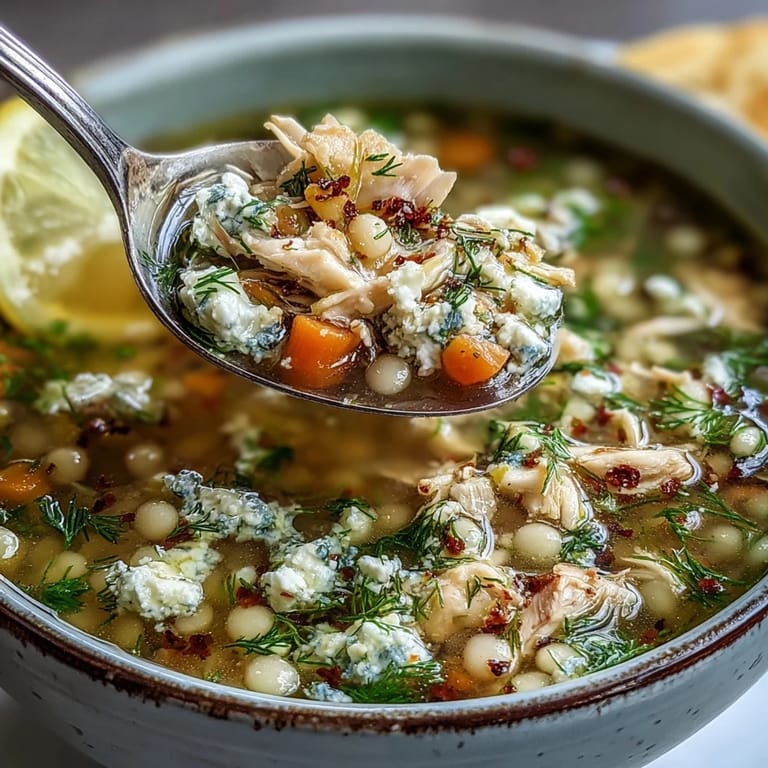
- Ladle the soup into bowls, top each one with crumbled feta and a scatter of fresh dill, and set a lemon wedge on the rim for anyone who wants to add more brightness.
 Pin This
 I realized something while eating this soup on a rainy evening with my partner—we barely talked, just ate and looked out the window together. Sometimes food does more than fill your stomach; it creates space for quiet moments that matter. That's what this soup does for me now.
The Magic of Lemon in Broth-Based Soups
Lemon is never just an afterthought in Greek cooking; it's the thing that makes everything taste like itself more intensely. I learned this the hard way by making a batch without it, and the soup tasted flat and one-dimensional. The acid wakes up every other flavor—the chicken becomes more chicken, the vegetables taste more vibrant, the feta tastes more salty and rich.
Why Pearl Couscous Works Better Than You'd Expect
Regular couscous in broth becomes mushy within minutes, but pearl couscous holds its shape and maintains a slight firmness that makes each spoonful satisfying. The first time I switched from regular to pearl, I wondered why no one had told me about this sooner. It's one of those small technical choices that transforms a dish from good to something you actually want to eat again.
Making This Soup Your Own
The beauty of this recipe is that it's flexible enough to bend toward what you have and what you love. Spinach or kale can go in during the last few minutes of simmering, or you can add a Parmesan rind while the broth simmers for deeper savory notes. Some people add diced tomatoes, others use bone-in thighs instead of breasts for richer flavor.
- If you want it more herbaceous, double the fresh dill or add mint alongside it.
- A crusty piece of bread or pita torn into the soup is the way some people eat it, soaking up all the broth.
- Leftovers taste even better the next day once all the flavors have had time to settle and get to know each other.
 Pin This
 This soup has become one of those recipes I turn to when I want something that feels both nourishing and effortless, like a hug in a bowl. Make it once, and you'll understand why it keeps calling you back to the kitchen.
Recipe Q&A
- → Can I make this soup ahead of time?
Yes, prepare up to 3 days in advance. Store in an airtight container in the refrigerator. The pearl couscous will continue absorbing liquid, so add extra broth when reheating.
- → What can I substitute for pearl couscous?
Orzo pasta, Israeli couscous, or small pasta shapes like ditalini work well. Adjust cooking time as different pastas may require longer simmering.
- → Is this soup freezer-friendly?
Freeze without the feta and dill garnish. Portion into freezer-safe containers for up to 3 months. Thaw overnight in the refrigerator and reheat gently.
- → How do I prevent the couscous from getting mushy?
Simmer just until tender, about 10-12 minutes. The pearls will continue softening in the hot liquid. If making ahead, cook slightly al dente.
- → Can I use rotisserie chicken instead?
Absolutely. Skip steps 4-5 and add shredded rotisserie chicken when you stir in the couscous. Reduce simmering time slightly since the meat is already cooked.
- → What vegetables can I add?
Spinach, kale, or zucchini work beautifully. Add leafy greens in the last 5 minutes, or diced zucchini when you add the couscous.