 Pin This
 My grandmother once told me that Hoppin John was about more than luck on New Year's Day—it was about making something feel rich and satisfying without pretense. When I decided to honor that spirit with a fully plant-based version, I wanted to keep that smoky, deep comfort while letting the black-eyed peas and vegetables shine. The smoked paprika became my secret weapon, bringing warmth that felt almost meaty, and after the first spoonful, I knew this Southern classic didn't need tradition to be complete.
The first time I made this for my neighbor who'd just gone vegan, I was nervous about whether it would feel "special" enough. But watching her come back for seconds, eyes closed while she ate, made me realize that good food isn't about restriction—it's about intention. She's asked for the recipe three times since.
Ingredients
- Olive oil: Start with just one tablespoon—it's enough to kiss the vegetables and carry the flavors without making the dish heavy.
- Onion, green bell pepper, and celery: This holy trinity of aromatics is non-negotiable; they build the flavor foundation, so don't rush sautéing them.
- Garlic: Three cloves minced fine, added after the vegetables soften so it doesn't burn and turn bitter.
- Black-eyed peas: Two cans, drained and rinsed thoroughly to remove excess sodium and starch.
- Smoked paprika: The star ingredient that replaces traditional meat smokiness with genuine depth and warmth.
- Thyme, oregano, and cumin: This spice trio works together to build complexity; don't skip any of them.
- Cayenne pepper: Optional, but a pinch transforms the dish from comforting to slightly thrilling.
- Bay leaves: Two whole leaves that you'll fish out at the end, but they quietly season everything as it simmers.
- Vegetable broth and soy sauce: Together they create a savory backbone that makes the peas taste meaty and substantial.
- Fresh parsley or cilantro: Don't treat this as an afterthought; the brightness lifts the whole dish and makes it feel finished.
- Green onions and lemon wedges: Final touches that add freshness and a subtle acid to balance the earthiness.
Tired of Takeout? 🥡
Get 10 meals you can make faster than delivery arrives. Seriously.
One email. No spam. Unsubscribe anytime.
Instructions
- Build your flavor base:
- Heat olive oil in your pot over medium heat, then add the diced onion, bell pepper, and celery. Let them soften for 5 to 6 minutes, stirring occasionally—you want them tender and beginning to turn golden at the edges. You'll notice the kitchen starting to smell like a warm Southern kitchen, which means you're right on track.
- Wake up the garlic:
- Stir in the minced garlic and let it sit for just one minute, long enough for it to become fragrant but not so long it scorches. This brief moment changes everything, turning those vegetables into something more aromatic and alive.
- Toast the spices:
- Add smoked paprika, thyme, oregano, cumin, cayenne if using, black pepper, and salt all at once. Stir everything together so the spices coat the vegetables evenly and their oils release into the oil—this step is worth the 30 seconds it takes. You should smell smoke and earth rising from the pot.
- Bring it together:
- Pour in your drained black-eyed peas, vegetable broth, soy sauce, and toss in the bay leaves. Stir until everything is combined and the liquid comes up to just cover the peas. This is your moment to check that nothing is sticking to the bottom of the pot.
- Let it simmer and meld:
- Bring the mixture to a gentle simmer, then reduce the heat to medium-low and cook uncovered for 20 to 25 minutes, stirring occasionally. As it cooks, the liquid will reduce and thicken slightly, and the flavors will marry together into something richer than the sum of its parts. By the end, you should have something thick and clingy, not soupy.
- Taste and adjust:
- Fish out those bay leaves and take a spoonful to taste. Does it need more salt, more heat, more depth? This is your kitchen, so trust your instincts and adjust as needed.
- Serve with intention:
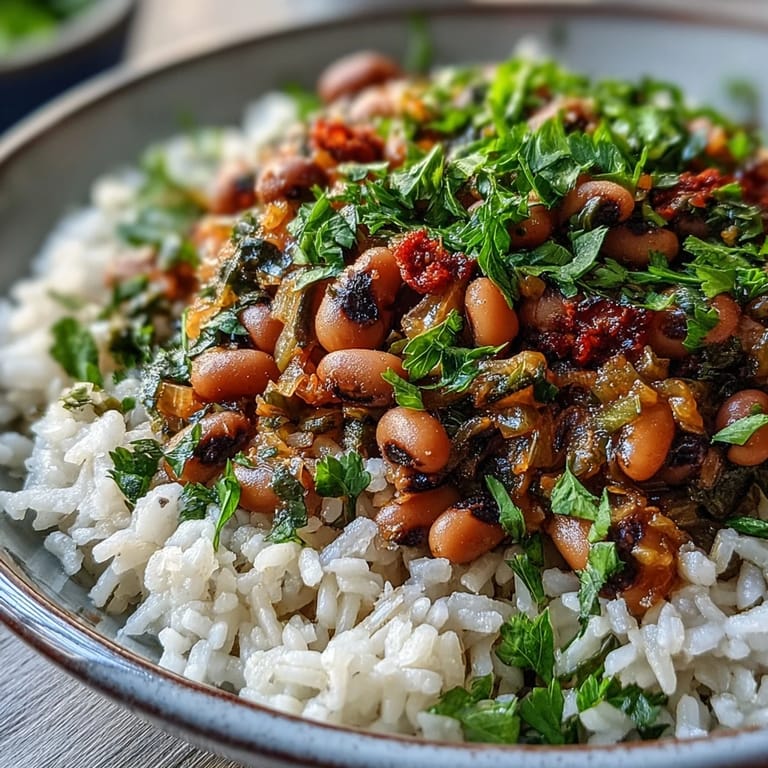
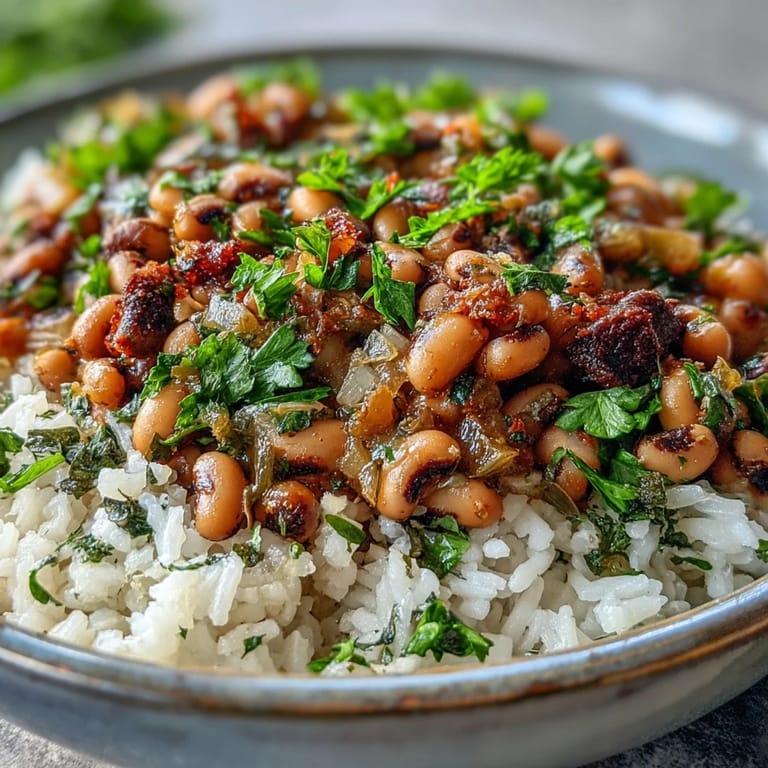
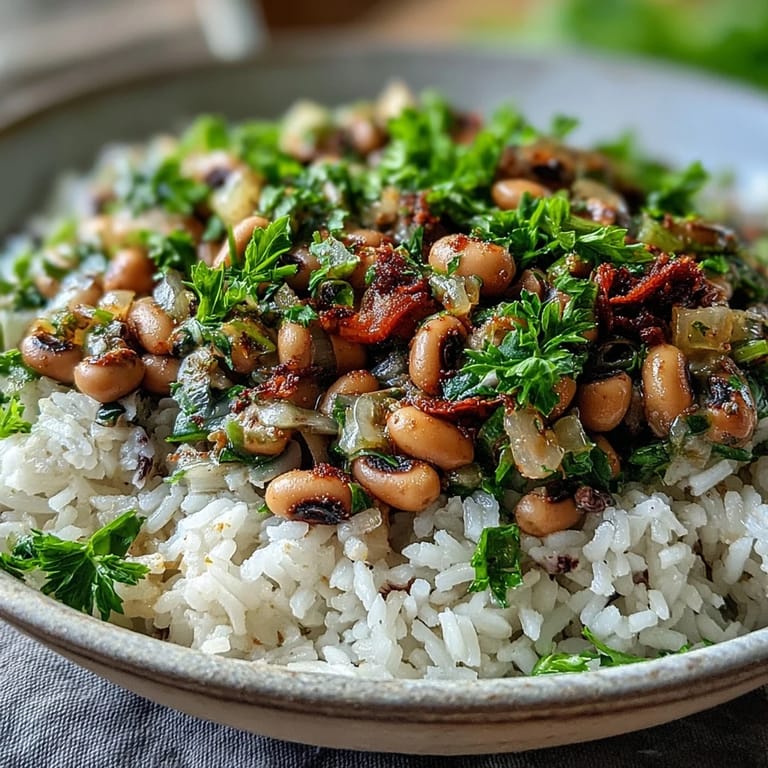
- Spoon the Hoppin John generously over warm rice, then scatter fresh parsley or cilantro across the top, add a small handful of green onions, and squeeze a lemon wedge over everything if you have it. The brightness of the lemon juice or fresh herbs is what transforms a good dish into a memorable one.
 Pin This
 There's something about spooning Hoppin John over rice that feels ceremonial, even when you're eating alone on a Tuesday night. It's the kind of food that tastes like someone cared, whether that someone is a grandmother from generations back or you, choosing to slow down and cook something real.
Why This Works as Plant-Based
The traditional version of Hoppin John relies on smoked meat for its signature depth, but black-eyed peas are naturally earthy and savory on their own. By layering smoked paprika, soy sauce, and a blend of warm spices, you're building complexity the same way the original recipe does—just without any animal products. The result is a dish that feels complete because it actually is.
Flexibility and Swaps
This recipe welcomes improvisation without falling apart. If you're out of black-eyed peas, pinto beans or kidney beans work beautifully and bring slightly different personalities to the plate. Some people love adding diced tomatoes or a splash of hot sauce at the end, while others stir in a handful of leafy greens during the last five minutes of cooking. The best version is the one that makes sense for your kitchen and your hunger.
Storing and Serving Suggestions
Hoppin John actually tastes better the next day, after the flavors have settled together overnight in the refrigerator. Reheat it gently in a pot with a splash of broth if it seems thick, and always taste before serving because flavors can become muted after cooling. It keeps beautifully for up to four days and freezes well for up to three months, making it ideal for meal prep or unexpected dinner guests.
- Serve alongside collard greens or a sharp, acidic slaw to cut through the richness.
- Pair with hot sauce on the side for anyone who wants more heat and brightness.
- Top with a fried egg or crispy tofu if you want to add another dimension of texture and protein.
 Pin This
 This Hoppin John has become the kind of recipe I make without thinking, the one that proves you don't need to complicate things to make them memorable. It's a quiet way to honor tradition while building something entirely your own.
Recipe Q&A
- → What makes this dish vegetarian?
This version replaces traditional pork with smoked paprika and soy sauce for savory depth, while vegetable broth provides the cooking liquid instead of meat-based stocks.
- → Can I use dried black-eyed peas instead of canned?
Yes, soak dried peas overnight, then simmer for about 45-60 minutes until tender before adding to the vegetables. You may need to adjust the broth amount slightly.
- → How long does this keep in the refrigerator?
Store in an airtight container for up to 5 days. The flavors continue to develop, making it even more delicious the next day. Reheat gently with a splash of water or broth.
- → Can I make this spicy?
Absolutely. Increase the cayenne pepper to 1 teaspoon or add diced jalapeño with the vegetables. You can also serve with hot sauce for custom heat at the table.
- → What rice works best?
Long-grain white rice provides the traditional fluffy texture, but brown rice adds nuttiness and extra fiber. Just adjust cooking time accordingly for your chosen rice variety.
- → Is this gluten-free?
Yes, when using tamari or certified gluten-free soy sauce. Always check your vegetable broth label to ensure it's certified gluten-free as well.