 Pin This
 The first time I made these egg crepes, I wasn't trying to reinvent breakfast—I just wanted something quick that didn't require flour or a complicated cleanup. I cracked four eggs into the blender, added a splash of milk, and hit the button. Within seconds, the mixture turned into this silky, cloud-like froth that somehow felt both simple and elegant. When that first crepe hit the hot skillet and began to set, I realized I'd stumbled onto something special: a crepe so delicate it barely needed anything more than a handful of fresh herbs and a few slices of salmon.
I made these for my partner on a lazy Sunday when we had nothing but eggs and whatever was lingering in the fridge. He bit into the first one and actually looked surprised at how light it was, how the crepe had that almost custardy tenderness. We ended up eating them warm, standing at the counter, and somehow that simple moment—no fuss, no plating—became one of those meals we still talk about. It taught me that the best recipes aren't the fancy ones; they're the ones that taste like someone cared enough to make something just for you.
Ingredients
- Eggs (4 large): These are your crepe. Choose eggs at room temperature if you can, as they blend more smoothly and cook more evenly than cold ones.
- Water or milk (2 tablespoons): This loosens the egg mixture and creates that airy, frothy texture. Dairy or non-dairy both work beautifully.
- Salt and black pepper: A pinch of each is all you need to season the crepe itself; your fillings will carry most of the flavor.
- Olive oil or butter (1 teaspoon): Use just enough to prevent sticking without making the crepe greasy. Butter gives a richer taste; oil keeps things light.
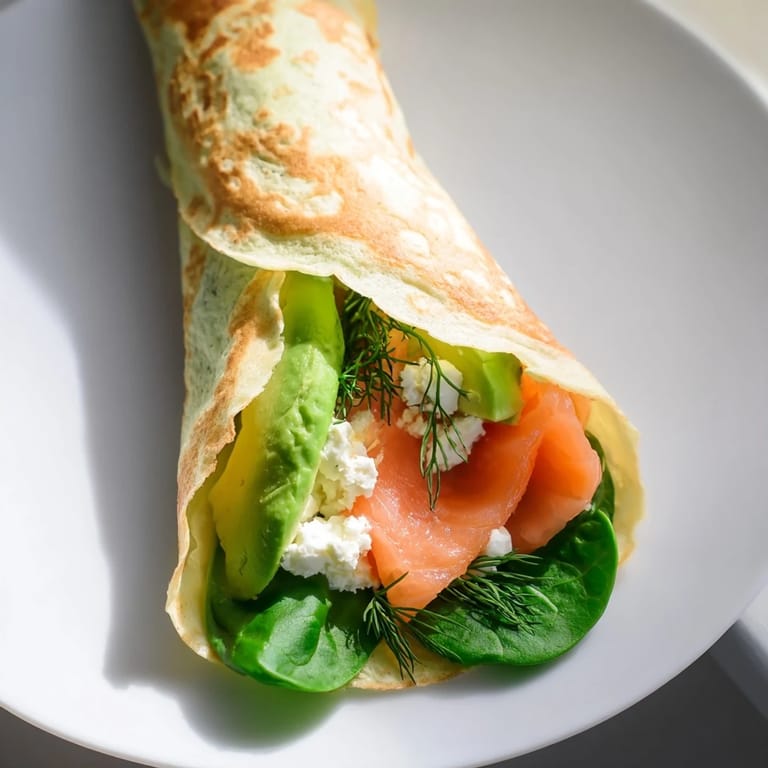
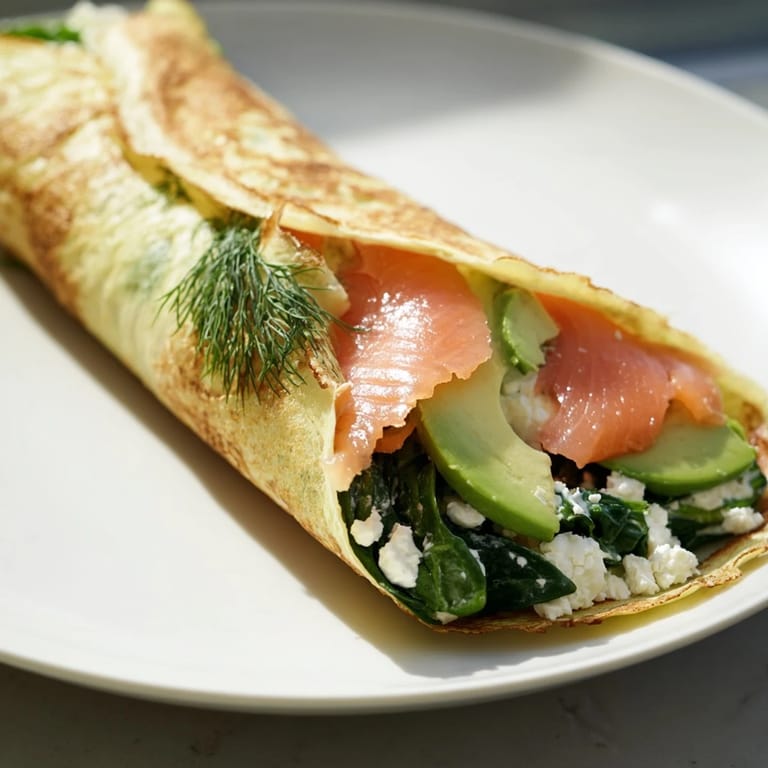
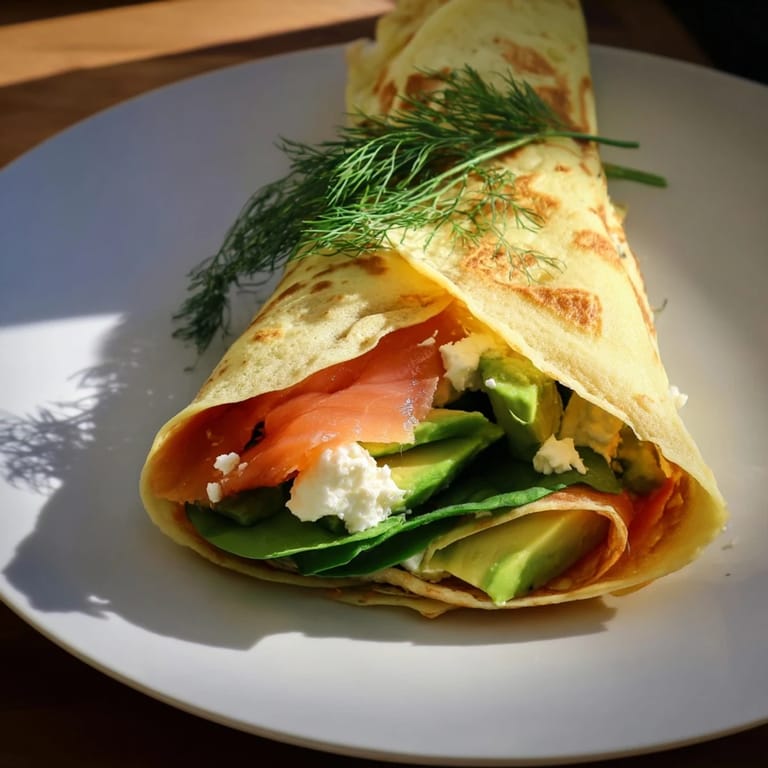
- Fillings (fresh spinach, smoked salmon, feta, tomato, avocado, herbs): Choose what calls to you, or mix textures—creamy avocado with crispy herbs, salty salmon with fresh dill.
Tired of Takeout? 🥡
Get 10 meals you can make faster than delivery arrives. Seriously.
One email. No spam. Unsubscribe anytime.
Instructions
- Blend until clouds form:
- Crack your eggs into the blender with water or milk, salt, and pepper. Blend on high for 30 to 45 seconds until the mixture looks almost fluffy, like a cloud you could float on. This frothiness is what makes the crepe tender instead of dense.
- Heat and butter your pan:
- Set your non-stick skillet over medium heat and give it a minute to warm through. A light brush of oil or butter is all it takes; you're not making a fried egg.
- Pour and tilt:
- Pour half the egg mixture into the center of the skillet and immediately tilt the pan in gentle circles so the batter spreads thin and even. It should cover most of the bottom in one thin layer.
- Cook with patience:
- Let it sit for 1 to 2 minutes until the edges begin to lift away from the pan and the bottom feels set when you gently push it with a spatula. The top will still look slightly wet, which is perfect.
- Flip for the finish:
- Slide your spatula underneath and flip carefully. Cook the other side for just 30 seconds—you're not looking for color, just a hair more set. Transfer to a plate and repeat with the second crepe.
- Fill and fold:
- Arrange your chosen fillings in a line down the center of each warm crepe. Fold one side over, then roll or fold the ends to seal. Serve immediately while still warm.
 Pin This
 There was a morning when I burned the edges of a crepe trying to rush breakfast. My initial frustration melted when I realized I could simply fill it anyway—the burnt bits added a slight nuttiness and my guest never noticed the imperfection. That's when I truly understood that these crepes aren't precious; they're forgiving. They're the kind of dish that meets you where you are, whether you're calm and precise or moving fast and learning as you go.
Sweet or Savory: Your Crepe, Your Rules
The beauty of this crepe is that it doesn't come with an opinion about what should go inside. On weekday mornings, I build mine with spinach, salmon, and a squeeze of lemon. On Sunday brunch, I've scattered fresh berries and a dollop of whipped cream across the same crepe base. Once, I even made a simple scrambled egg version as a filling because we had leftover eggs and it felt like the right move. The crepe is just waiting for you to decide what matters today.
Timing and Temperature Tricks
If your first crepe doesn't spread evenly, don't start over—just adjust: lower the heat slightly and tilt a bit longer next time. I learned that warming your fillings ever so slightly (especially if they're cold from the fridge) makes them feel more cohesive with the warm crepe. Room-temperature eggs also make a difference; if you pull them from the fridge, let them sit for five minutes while you gather fillings.
Stretching a Simple Meal into Something Special
Pair these crepes with a small green salad dressed in lemon vinaigrette, or add a cup of good coffee and fresh fruit on the side. The crepe is light enough that it never feels like the whole meal, but rich enough in protein that it can carry you through the afternoon. These little moments of intentionality—choosing quality fillings, plating with a tiny bit of care, eating without your phone nearby—are what turn a quick breakfast into something worth remembering.
- If you're batch-cooking for guests, stack the cooled crepes between parchment paper so they don't stick together, then reheat gently in a dry skillet before serving.
- Crepes taste best served warm, so time your filling prep so everything comes together at once.
- Leftover crepes keep in the fridge for two days, though they're most tender eaten fresh.
 Pin This
 These crepes taught me that the most satisfying meals don't announce themselves loudly. They slip into your morning quiet, taste like someone understood exactly what you needed, and leave you feeling nourished in a way that goes beyond the protein count. Make them once and they become yours to reinvent.
Recipe Q&A
- → How do I achieve a frothy egg mixture?
Blend eggs with water or milk on high speed for 30–45 seconds until light and frothy, ensuring a delicate texture.
- → What fillings work best for these wraps?
Try baby spinach, smoked salmon, feta, avocado, and fresh herbs for savory options, or berries and yogurt for a sweet twist.
- → How thin should the crepes be cooked?
Pour just enough egg mixture to coat the skillet bottom in a thin, even layer for quick cooking and easy folding.
- → Can I use dairy-free alternatives?
Yes, substitute water or non-dairy milk in the egg blend and choose fillings accordingly for dairy-free preparation.
- → What tools are needed to make these wraps?
A blender for the egg mixture and a non-stick skillet for cooking are essential. A spatula helps with flipping and folding.