 Pin This
 I'll never forget the first time I hosted a book club at my apartment. I'd spent the morning frantically Googling "impressive appetizers," and that's when I discovered the magic of a thoughtfully arranged cheese and charcuterie board. What started as my nervous attempt at looking sophisticated became the unexpected star of the evening—guests lingered around that platter long after we'd settled into our discussion of the month's novel. I realized then that food has this incredible power to bring people together, not through complexity, but through care and intention. That night, I learned that the best entertaining happens when you've done the thinking for your guests, removing the stress and leaving only the joy.
A few years later, I hosted my book club's wine and cheese night, and I arranged three distinct sections, each with its own personality and wine pairing. As people arrived, I watched them instinctively gravitate toward different corners of the board—someone heading straight for the aged cheddar section, another reaching for the delicate goat cheese. By the end of the evening, the baguette was gone, the crackers were depleted, and the conversation had spiraled into the most delightful tangents about food, travel, and memories tied to these flavors. That's when I understood: a well-organized platter isn't just about feeding people. It's about creating pathways for connection.
Ingredients
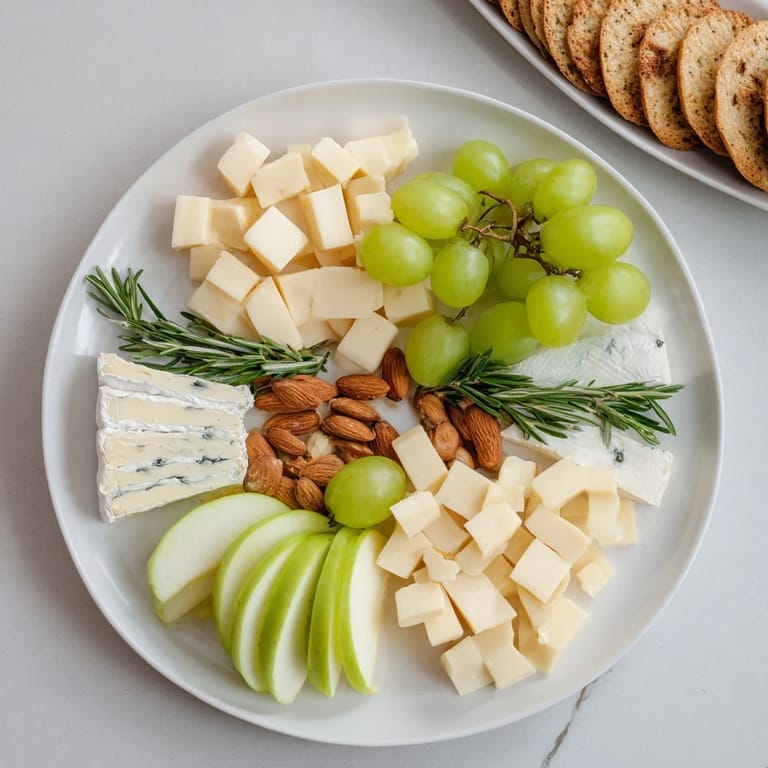
- Triple-cream brie (100 g): This is your luxurious anchor for the white wine section—it's creamy, buttery, and absolutely melts on your tongue. Slice it just before serving so it stays fresh and beautiful.
- Gruyère cheese (100 g): The nuttiness cuts through richness perfectly. Cube it into bite-sized pieces; it becomes almost creamy as it warms slightly from your hand.
- Green grapes (1 small bunch): Fresh, crisp, and slightly tart—they're your palate cleanser. The juiciness next to the cheese is exactly what makes this section sing.
- Crisp apple (1, sliced): I always use Honeycrisp or Granny Smith because they stay firm and won't brown too quickly. The tartness echoes the wine beautifully.
- Marcona almonds (50 g): These aren't regular almonds—they're buttery and almost delicate. They feel like a luxury, and honestly, they are.
- Aged cheddar (100 g): Look for something with real age to it, something sharp. Cube it boldly; this is where you can taste years of flavor.
- Smoked gouda (100 g): The smokiness pairs gorgeously with red wine and brings depth to the red wine section. Slice it thin enough to be elegant.
- Prosciutto (70 g): Thinly sliced, draped slightly so it catches the light. It's salty, it's elegant, it disappears fast.
- Salami (70 g): Choose something with good marbling and complexity. This isn't the time for mild—go for character.
- Cherry tomatoes (1 cup): Leave them whole; they add color, sweetness, and acidity that grounds the richness of the red wine section.
- Herbed goat cheese (100 g): Form it into a small log shape—it's almost like sculpture, and it signals care. The herbs should be visible; they're part of the charm.
- Dried apricots (70 g): They're naturally sweet with a subtle tartness. They partner with sparkling wine in ways fresh fruit can't quite manage.
- Roasted pistachios (50 g): The slight salt enhances the sparkle of the wine and the delicate flavors of the goat cheese. Their color is beautiful too.
- Mixed olives (1/2 cup): Choose a mix of colors and flavors if you can—Castelvetrano, Kalamata, something peppery. Olives bring sophistication and saltiness that sparkles with rosé.
- Cucumber (1/2, sliced): Crisp, clean, slightly hydrating. It's the fresh element in this lighter section.
- Baguette (1, sliced): A day-old baguette is actually better—it has more structure and won't get soggy as quickly. Slice it at an angle for elegance.
- Assorted crackers (1 box): Choose a variety—some mild, some nutty, some seeded. Different textures mean different experiences with the same cheese.
- Fresh rosemary sprigs (3–4): These do more than divide sections; they're aromatic anchors. You'll catch their scent all evening, making the whole experience feel more thoughtful.
- Honey or fig jam (optional): A small drizzle of honey on the brie, or a spoon of fig jam on the goat cheese—these are the finishing touches that make people ask for your secrets.
Tired of Takeout? 🥡
Get 10 meals you can make faster than delivery arrives. Seriously.
One email. No spam. Unsubscribe anytime.
Instructions
- Choose your canvas:
- Spread out your large platter or board on a clear, stable surface—ideally someplace where people will naturally gather. This is where the magic happens, so give it space and light.
- Create your divisions with rosemary:
- Take your fresh rosemary sprigs and arrange them into three distinct pathways across the board. Let them guide the eye; they're both beautiful and functional. You'll catch their fragrance as you work, and it should make you smile.
- Build Section 1—the Chardonnay side:
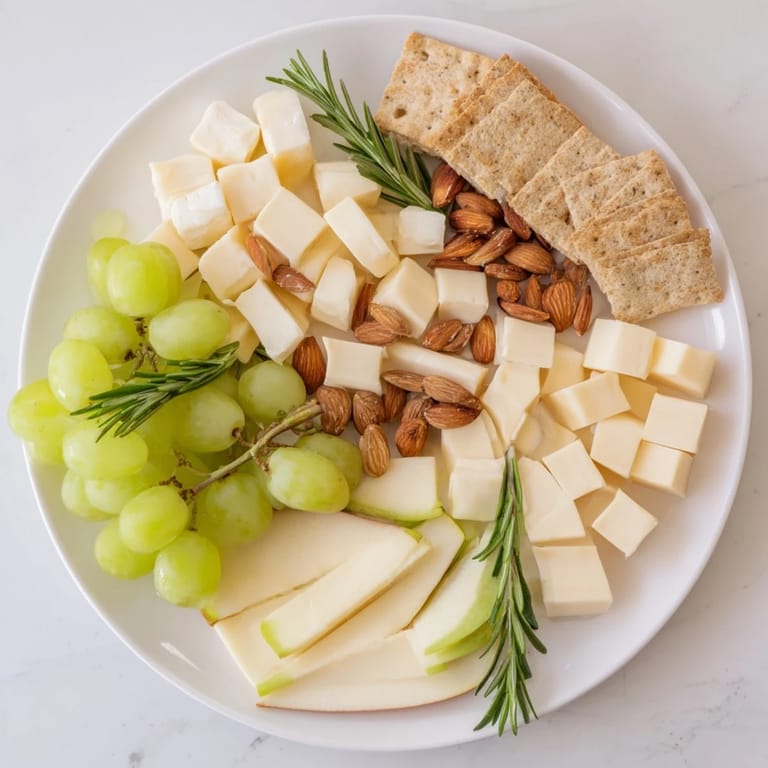
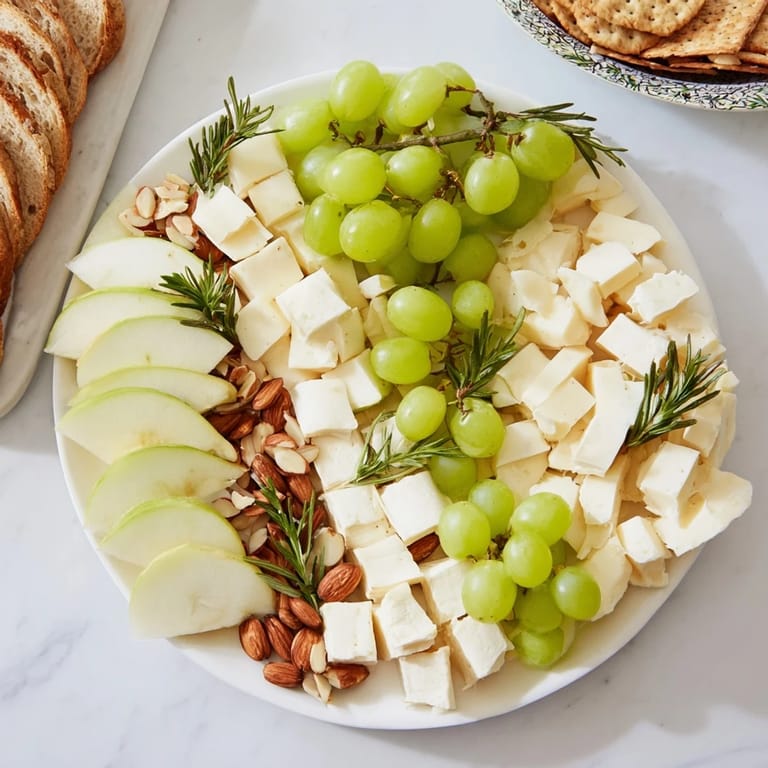
- Start with your brie in the center of one section, then surround it with cubed Gruyère. Scatter your green grapes in clusters—let them nestle naturally. Fan your apple slices so they look intentional and fresh. Finish with Marcona almonds scattered throughout. Step back and look; does it feel balanced? There should be a sense of movement, a rhythm to it.
- Build Section 2—the Pinot Noir corner:
- This is your darker, richer section. Place aged cheddar and smoked gouda first, leaving little gaps you'll fill. Arrange your prosciutto so it has dimension—let some drape, let some fold. Layer your salami in overlapping fans. The cherry tomatoes go last; their brightness should pop against the deeper tones. This section should feel bold and inviting.
- Build Section 3—the Sparkling Wine section:
- Here, create an elegant presentation. Your goat cheese log becomes a centerpiece. Arrange dried apricots in a gentle curve around it. Add pistachios in small clusters. Scatter olives throughout for visual interest and salty moments. Lay cucumber slices flat or standing slightly upright. This section should feel light, bright, almost ethereal.
- Fill the spaces thoughtfully:
- Now comes the assembly that feels like art. Place baguette slices and crackers in the gaps between sections, using them as visual bridges and practical vessels. Leave some breathing room; crowded boards feel anxious, while organized ones feel generous.
- Add your finishing touches:
- Set out small bowls—one with honey, one with fig jam if you're using them. These are optional, but they're the moment where someone takes a bite and their eyes go wide. Place cheese knives on the board so people feel invited to serve themselves.
- Step back and admire:
- Before anyone arrives, take a moment to look at what you've created. Check that your rosemary divisions are clear, that each section has its own personality, that the whole board feels balanced and intentional. Make small adjustments until it feels right.
- Serve with intention:
- When you present this platter, let it be a moment. Mention the wine pairings casually—it gives context without pressure. Watch how people navigate the sections; they'll find their favorites. Enjoy the quiet satisfaction that comes from creating something beautiful that brings people together.
 Pin This
 I remember one particularly memorable evening when a guest—someone I'd always thought of as "not a cheese person"—spent the entire book club discussion standing near the board, working his way through different combinations: aged cheddar with fig jam, goat cheese with an apricot, a delicate pairing of brie and honeycrisp apple. By the end of the night, he'd become an unexpected advocate for the white wine section. What I realized is that a board like this doesn't just feed people; it creates moments of discovery. It gives people permission to explore, to try combinations they might not have thought of on their own, to find flavors that speak to them personally.
The Art of Wine Pairing Without Pretension
Here's the secret about wine pairing that took me years to understand: you don't need to be an expert to do it well. The combinations in this platter follow natural rules that feel intuitive once you know them. Chardonnay loves buttery, creamy things—hence the triple-cream brie. Pinot Noir wants richness and complexity—the aged cheddar and smoked gouda deliver exactly that. Sparkling wine and rosé want brightness, delicate flavors, and a touch of tartness—which is why dried apricots and olives sit so happily in that section. What matters is that you can explain the logic to your guests casually, as if you've always known it. They'll feel educated without feeling lectured, and that's where the real magic happens at a gathering.
Creating Boards That Feel Personal
The most memorable boards aren't the ones that follow rules perfectly—they're the ones that reflect the person who made them. After that first book club night, I started thinking about boards differently. I realized I could swap cheeses based on what I'd discovered that month, add nuts from travels, include cured meats from local producers. The structure stays the same, but the personality changes. Your guests will notice. They'll taste your intention in every ingredient choice. That's what transforms a cheese board from something functional into something that people remember and talk about afterward.
Hosting with Ease and Confidence
One of the greatest gifts a host can give their guests is the feeling that everything is effortless and under control. A well-organized board does exactly that. Because you've done the thinking—you've chosen the pairings, arranged the sections, created the visual flow—your guests can simply relax and enjoy. There's no chaos, no crowding at one corner of the board, no confusion about what goes with what. Everything invites exploration and combination. That sense of ease radiates outward, setting the tone for a gathering where people can actually connect instead of worrying about the logistics. And honestly, isn't that what entertaining is really about?
- Prepare everything except the baguette and apple slices up to 2 hours ahead, then assemble just before guests arrive for maximum freshness
- Keep a damp kitchen towel nearby to wipe your hands as you arrange—fingerprints on cheese and fruit matter more than you'd think, and a clean presentation shows respect for your effort
- If you're serving this at a standing gathering, position the board at chest height so people can lean in comfortably without hunching, and they'll stay engaged longer
 Pin This
 A good cheese board is an invitation—to taste, to explore, to linger, to connect. This one is ready to welcome your guests into a moment of simple pleasure.
Recipe Q&A
- → What is the purpose of rosemary sprigs on the platter?
Rosemary sprigs act as aromatic dividers between sections, enhancing presentation and adding a subtle herbal scent.
- → Can this platter accommodate vegetarian preferences?
Yes, meats can be omitted and replaced with additional nuts or roasted vegetables to maintain balance and variety.
- → How should the platter be arranged for best effect?
Arrange ingredients in three distinct sections separated by rosemary, balancing cheeses, fruits, nuts, and cured meats to create visual appeal and flavor contrast.
- → What breads or crackers work well alongside this platter?
Sliced baguette and assorted crackers provide great texture contrasts and serve as ideal vessels for the cheeses and accompaniments.
- → Are there recommended pairings to enhance flavors?
The platter sections are designed to complement specific wines: crisp whites, light reds, and sparkling or rosé, enhancing the tasting experience.