 Pin This
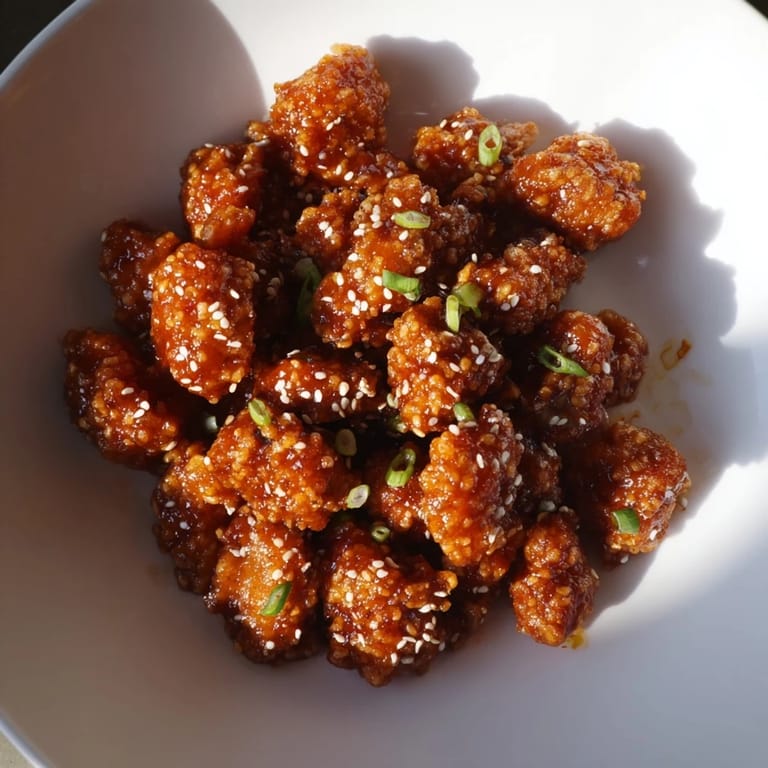
 I discovered these chicken bites by accident one weeknight when I had leftover buttermilk and a craving for something with heat. A friend had left a bottle of Sriracha on my counter weeks before, and I finally understood why she raved about it when I watched the honey and spice create this impossibly sticky glaze. The first batch came out too dark, the second batch was perfect, and by the third I realized I'd invented something I'd be making forever. These bites have that rare quality of feeling fancy enough for guests but easy enough for a lazy Thursday.
I made these for my brother's poker night, tripling the batch because I underestimated how many people would eat their weight in them. He tried one, closed his eyes like he was in a trance, and didn't say a word for three bites. When he finally spoke, he just asked for the recipe, and I knew I'd nailed something real.
Ingredients
- Boneless, skinless chicken breasts (500 g): Cut them into honest 1-inch cubes—too small and they dry out, too big and the inside stays raw while the outside burns.
- Buttermilk (2 tablespoons): This is the secret to tenderness; the mild acid breaks down the protein and keeps everything impossibly juicy, even if you fry a beat too long.
- Garlic powder and onion powder (1 teaspoon each): These aren't optional flavor filler—they build umami into the marinade itself so every bite tastes seasoned from the inside out.
- All-purpose flour and cornstarch (100 g and 50 g): The cornstarch is what creates that shattering crust; flour alone won't give you that crackling texture.
- Paprika and cayenne (1 teaspoon and ½ teaspoon): Paprika adds warmth and color, cayenne gives heat without bitterness—adjust the cayenne down if you're cooking for people who flinch at spice.
- Vegetable oil (500 ml): Use a neutral oil with a high smoke point; anything less and you're basically steaming your chicken in oil.
- Honey-Sriracha sauce components: The honey tempers the Sriracha's sharp edges, soy sauce adds depth, butter makes it glossy, and garlic rounds everything out—none of these can be skipped.
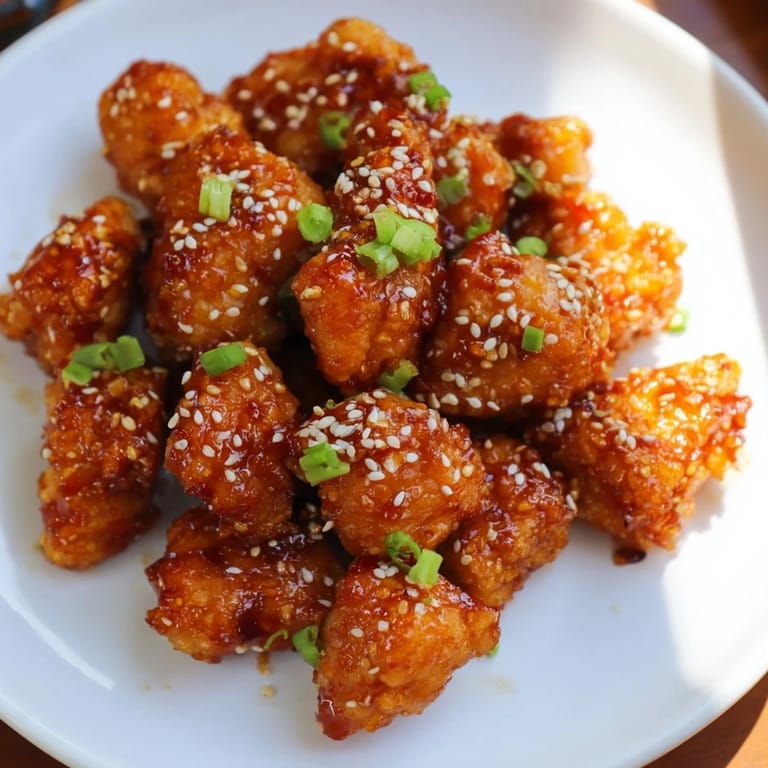
- Sesame seeds and chives (for garnish): These aren't decoration; they add texture and brightness that make the difference between good and memorable.
Tired of Takeout? 🥡
Get 10 meals you can make faster than delivery arrives. Seriously.
One email. No spam. Unsubscribe anytime.
Instructions
- Marinate the chicken gently:
- Toss your cubed chicken with buttermilk and the dried spices in a bowl, and let it sit at least 15 minutes—this sounds quick, but the acid is already working, softening the protein fibers. If you have 30 minutes, even better, but don't go past an hour or the buttermilk starts to over-tenderize and the texture becomes mushy.
- Build your breading station:
- Mix flour, cornstarch, paprika, cayenne, and salt in a shallow dish. Having this ready means you won't fumble with wet chicken hands reaching for containers—everything should be within arm's reach.
- Heat the oil carefully:
- Get your oil to 175°C (350°F) using a thermometer, not guessing. Too cool and the chicken absorbs oil and turns greasy; too hot and the outside burns before the inside cooks through.
- Coat each piece thoroughly:
- Lift each buttermilk-soaked chicken piece and roll it in the flour mixture, pressing gently so the coating sticks. The wet marinade helps the dry mixture cling, so you'll get an even, bumpy crust that fries up gorgeously.
- Fry in patient batches:
- Don't crowd the pan—fry maybe 8 to 10 pieces at a time so the oil temperature stays steady. Golden brown takes 4 to 5 minutes, and you'll know it's done when a piece drains on a paper towel without leaving a grease ring.
- Make the sauce while chicken rests:
- Combine honey, Sriracha, soy sauce, butter, rice vinegar, and minced garlic in a small saucepan over medium heat. Stir for 2 to 3 minutes until the butter melts and everything turns glossy and slightly thickened—this sauce should coat a spoon.
- Toss while the chicken is still warm:
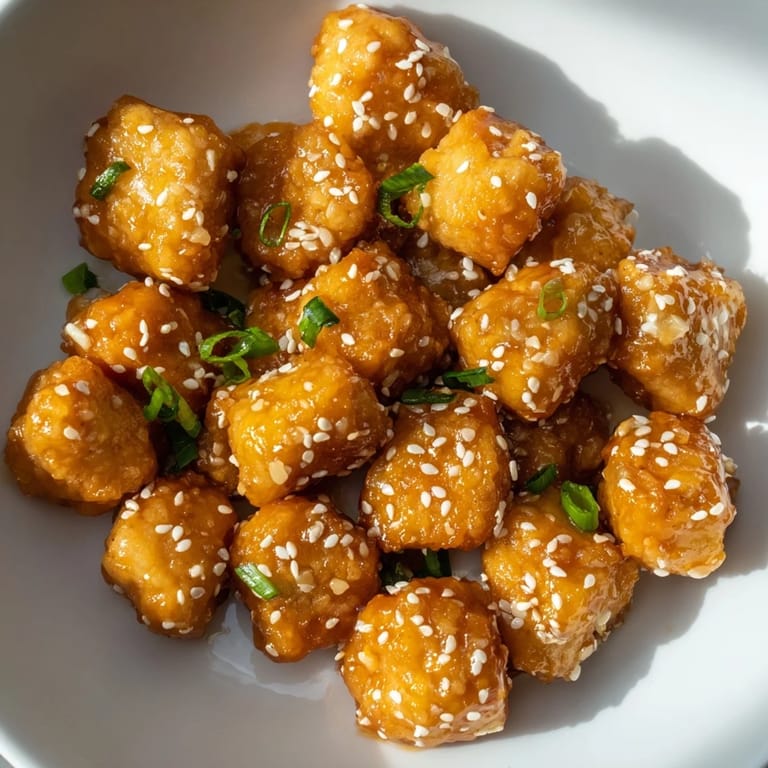
- Hot chicken soaks up the sauce like a sponge, creating this sticky, clingy coating that cools into a lacquered finish. If your chicken has cooled, warm it for 30 seconds before tossing so the sauce adheres properly.
- Finish with restraint:
- Transfer to a serving platter and sprinkle with sesame seeds and chives right before eating—add these too early and they'll wilt into nothing.
 Pin This
 These chicken bites became the thing I made whenever I felt like I needed to prove something in the kitchen, which is embarrassing and wonderful all at once. They disappeared so fast at a casual dinner party that I found myself frying a second batch at 10 p.m., laughing at myself, and realizing I'd stumbled onto something honest and good.
The Double-Dip Secret
If you want maximum crunch—the kind that makes people actually gasp when they bite into one—dip your marinated chicken back into buttermilk after the first flour coating, then coat again with the flour mixture before frying. This sounds excessive until you taste that extra-craggy, shatteringly crispy exterior that stays golden even as it cools. The double layer creates pockets of air that fry up impossibly light, so you get crispy without dense, which is the whole game.
Playing With the Heat Level
Sriracha has personality, and not everyone likes the same intensity. If you're cooking for people who find heat intimidating, start with half a tablespoon of Sriracha and taste the sauce before you commit all of it—you can always add more, but you can't take it out. I've also found that a tiny squeeze of lime juice into the finished sauce doesn't change the heat but makes it feel brighter and more sophisticated, like the spice has more dimension. If you go this route, add it after plating so it doesn't evaporate.
Serving and Storage Wisdom
These are best eaten the moment they're coated and still warm, when the sauce is glossy and the coating is crisp. If you need to make them ahead, fry the chicken and store it uncovered in the fridge—it'll stay crispier than if you stack it covered—then warm the sauce and toss them together just before serving. Leftovers are honestly fine eaten cold the next day, though they lose some of that shattering quality.
- Serve with cool ranch, blue cheese dip, or a lime-cilantro mayo for balance.
- These work beautifully over steamed jasmine rice if you want to turn them into a meal instead of an appetizer.
- Make sure your oil is actually 175°C before the first batch, or you'll be upset with yourself the whole time.
 Pin This
 These chicken bites are proof that the simplest recipes—marinade, fry, coat in sauce—can feel like magic when you pay attention to temperature and timing. Make them once, and they'll become the thing you turn to whenever you need something that tastes like you tried harder than you actually did.
Recipe Q&A
- → What is the best way to get crispy chicken bites?
Coat the marinated chicken evenly in a flour and cornstarch mixture, then fry in hot oil (175°C/350°F) until golden brown. Double-dipping in buttermilk and flour can enhance crispiness.
- → How can I adjust the spiciness of the glaze?
Modify the amount of Sriracha sauce in the honey glaze to your preferred heat level. Adding less will reduce spice, while more increases the kick.
- → Can I prepare the chicken bites ahead of time?
Marinate the chicken in advance to enhance flavor. For best texture, fry and glaze just before serving to keep them crispy.
- → What garnishes complement these chicken bites?
Sprinkle toasted sesame seeds and chopped fresh chives or green onions for added flavor and texture contrast.
- → Are there any substitutions for dietary restrictions?
Use gluten-free flour and tamari sauce in place of soy sauce for gluten-free needs. Choose oil carefully to avoid allergen contamination.