 Pin This
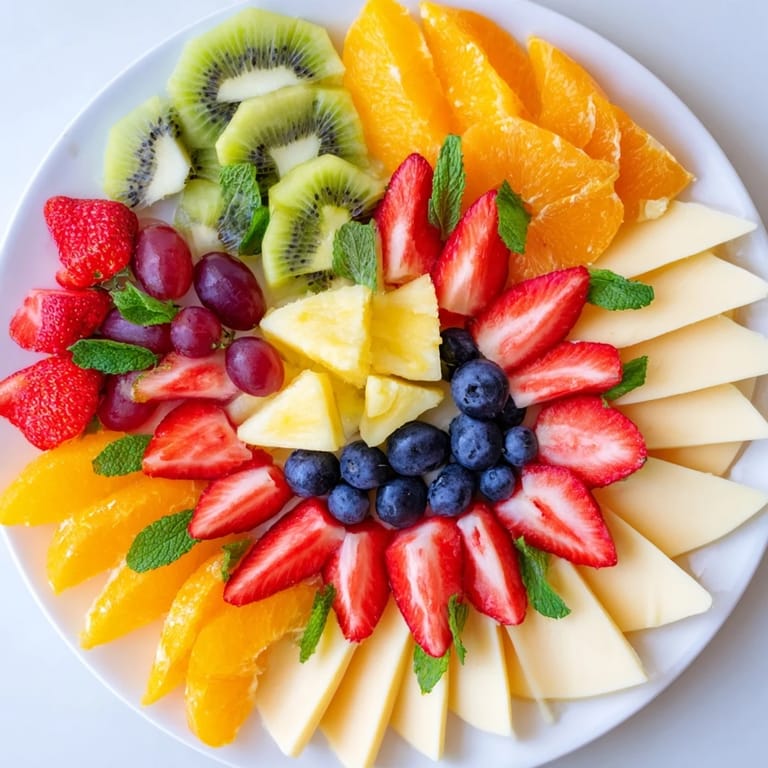
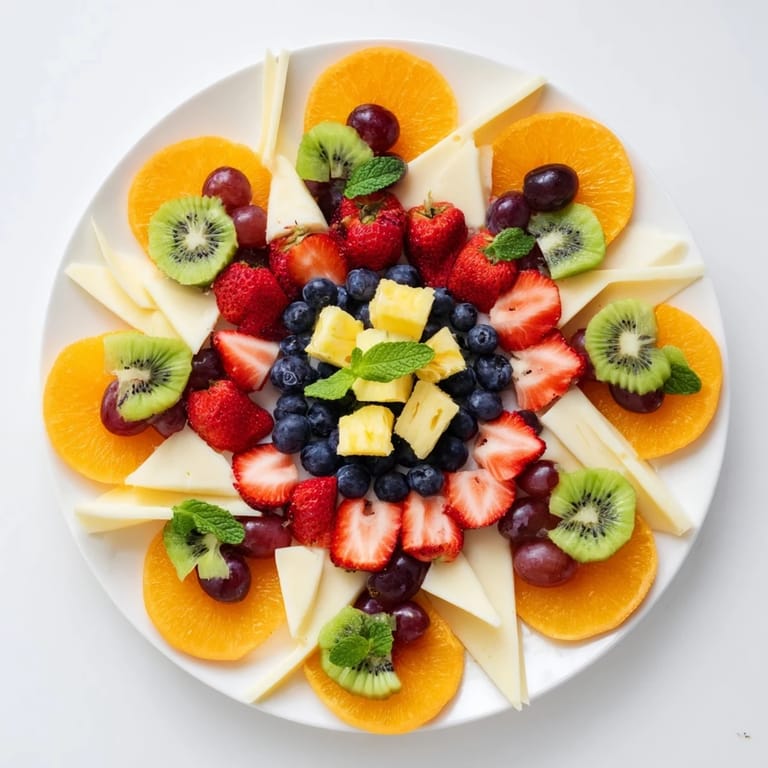
 There's something about arranging food in circles that makes you slow down. I was setting up for a dinner party when I realized I'd been staring at a round platter for five minutes, imagining how the colors could speak to each other—ruby grapes next to gold cheese, then those bright kiwi wedges catching the light. That's when the kaleidoscope idea took shape, and suddenly it wasn't just a cheese and fruit board anymore. It became this living, breathing pattern that guests couldn't stop photographing before they even tasted anything.
I made this for my sister's engagement party, and watching my niece trace her finger along the pattern without eating anything for a solid minute—that's when I knew I'd nailed it. Someone said it looked like stained glass, and honestly, I've been chasing that compliment ever since.
Ingredients
- Red grapes: These stay plump and glossy throughout the platter's life, giving you that jewel-like quality that makes the whole thing shimmer.
- Strawberries: Halve them just before arranging so the fresh pink interior stays bright and doesn't oxidize into something sad-looking.
- Kiwi: The acid in these actually helps keep everything looking fresh, and those green seeds catch light beautifully.
- Pineapple: Cut into small, manageable wedges so each bite feels intentional, not accidental.
- Blueberries: Nature's perfect fill-in-the-gaps fruit—they nestle into awkward spaces and add depth to the color story.
- Orange: Peeled and segmented, these add brightness that reads from across the room.
- Aged cheddar: The deep orange-yellow provides that warm anchor color that makes everything else pop.
- Manchego: Pale, delicate, slightly nutty—it's the bridge color between your bright fruits and your white cheeses.
- Brie: Creamy, pale, and forgiving if anyone pokes it (they will), it softens everything around it.
- Goat cheese: Slice it into rounds so it feels contemporary and also gives people a clear stopping point when they're plating their bite.
- Mint leaves: Fresh, not dried—these aren't just garnish, they're aromatic punctuation marks that complete the sensory experience.
Tired of Takeout? 🥡
Get 10 meals you can make faster than delivery arrives. Seriously.
One email. No spam. Unsubscribe anytime.
Instructions
- Prepare your fruit with intention:
- Wash everything, then cut each fruit into uniform wedges or segments. The uniformity is what makes your eye believe the pattern is deliberate, not random.
- Slice cheese into matching shapes:
- If your fruit wedges are triangles, cut your cheese the same way. This consistency is what creates that hypnotic, repeating effect that makes people stop and stare.
- Start at the edge of your platter:
- Place your first fruit wedge at the outer ring, then directly beside it, add a cheese. You're creating a conversation between flavors, so every pairing matters.
- Build outward with rhythm:
- Continue your pattern around the circle, repeating the same sequence. If you have space, create a second ring inside the first, then a third. This is meditative work—let your hands do the thinking.
- Fill the gaps strategically:
- Blueberries and grapes nestle into the spaces between wedges, adding color and eliminating any sense of emptiness. They're the glue that holds the composition together.
- Finish with mint:
- Scatter fresh mint leaves across the platter just before serving. The green adds visual pop and reminds people this is alive with flavor.
- Serve or hold it:
- Bring it out immediately for maximum visual impact, or cover and refrigerate for up to a few hours. The longer it sits, the more condensation will cloud the platter, so don't get too far ahead.
 Pin This
 A friend asked if I'd gone to culinary school when she saw this, and I realized that's the real magic of patterns—they feel like evidence of expertise, even when they're really just patience and a steady hand. That moment made me understand why people have always arranged food in circles and spirals. It's not pretentious; it's actually the most honest compliment you can pay to both your ingredients and your guests.
The Geometry of Flavor
This platter works because you're not just feeding people, you're giving them permission to be visual about food. The kaleidoscope arrangement means someone might taste goat cheese before cheddar, or pineapple before strawberry, and that order changes how their palate perceives the flavors. Every seat around your table gets a slightly different experience, which is oddly beautiful when you think about it.
Seasonal Shifts
In summer, I load this with stone fruits and add white cheddar to the rotation. In winter, I reach for pear, apple, and pomegranate arils to create that jeweled look even when fresh berries are expensive or disappointing. The bones of the pattern stay the same, but the platter tells you what season you're in, what's at the peak of quality at your market.
When This Becomes Something More
I started making these for people during hard times—when someone needed brightness on their table, or when a celebration felt fragile and needed something beautiful to anchor it. There's something about a thoughtfully arranged platter that says I was thinking about this, about you, that words sometimes can't reach.
- Make this the centerpiece of your table, not an afterthought on the side—it deserves to be seen and discussed.
- If you're nervous about the pattern, sketch it lightly on paper first, then translate it to the platter; muscle memory takes over quickly.
- Serve with sparkling wine or rosé, and watch how people's eyes travel the platter before they ever reach for a plate.
 Pin This
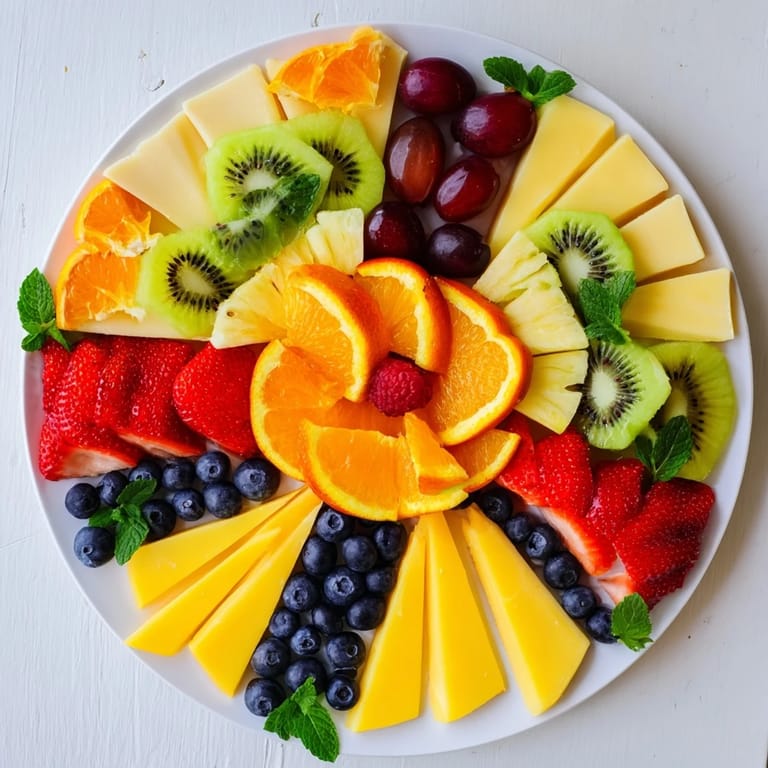
 This platter is proof that the most elegant things are often the simplest, and that taking time to arrange something carefully is never wasted. Serve it, watch people's faces, and know you've made something that nourishes more than just hunger.
Recipe Q&A
- → How do I achieve the kaleidoscope effect?
Slice fruits and cheeses into uniform wedges or shapes, then arrange them in alternating colorful segments around a round platter to create symmetry.
- → Can I substitute different fruits or cheeses?
Yes, seasonal fruits or your favorite cheeses can be swapped in to customize the colors and flavors while maintaining the pattern.
- → What garnishes enhance the platter's appearance?
Fresh mint leaves add a pop of green and a refreshing aroma, complementing the vivid colors of the fruits and cheeses.
- → Is any cooking required for this platter?
No cooking is needed. Preparation involves washing, peeling, slicing, and arranging the ingredients artistically.
- → How should the platter be served or stored?
Serve immediately for best freshness and visual appeal, or cover and refrigerate until ready to serve without drying out the components.