 Pin This
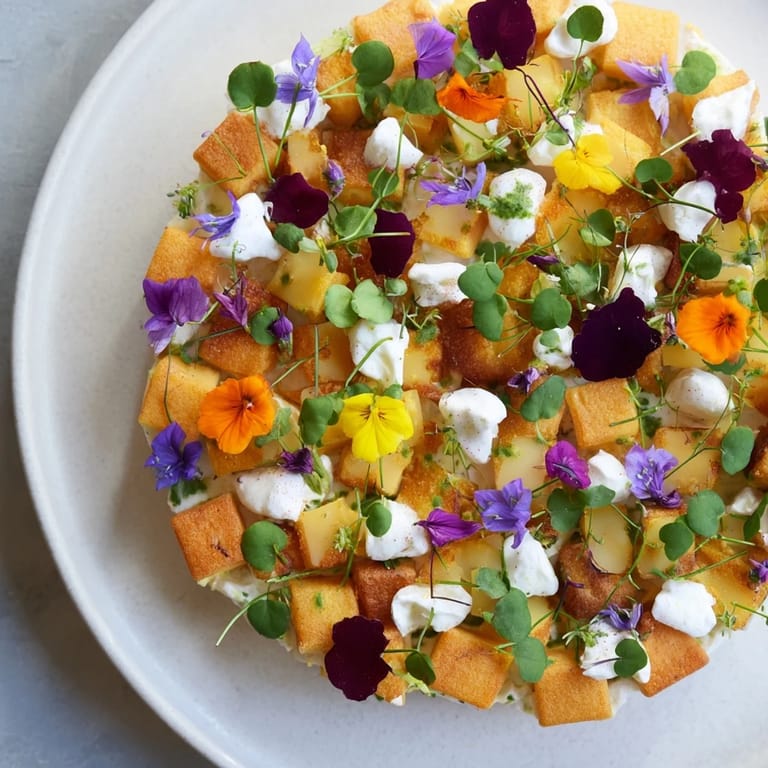
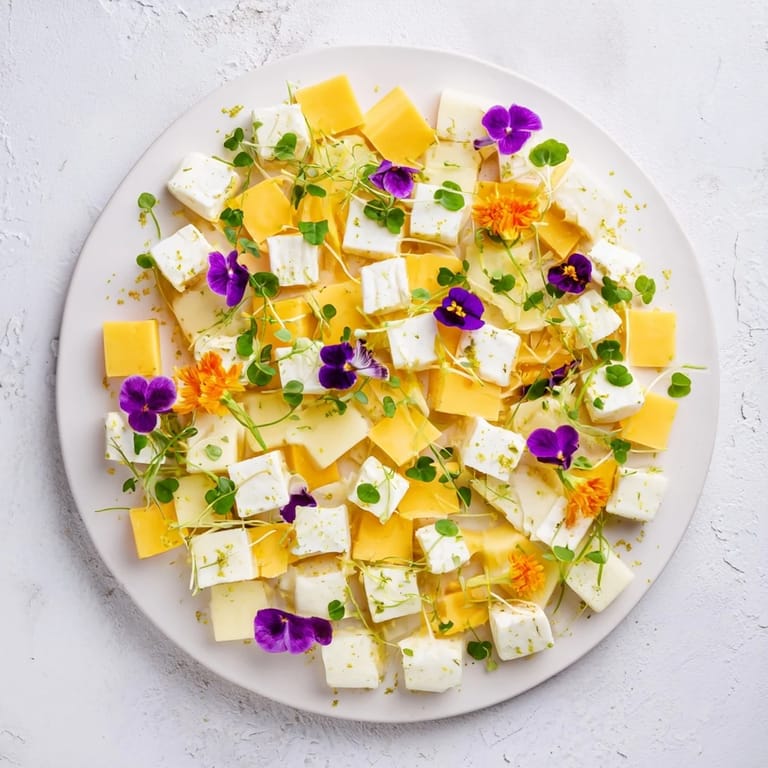
 The first time I served this was at a dinner party where someone's sophisticated aunt was visiting, and I was nervous about impressing her. I'd spent hours worrying about what to make until I realized the magic wasn't in complexity—it was in invitation. Arranging those cheese cubes under a canopy of edible flowers felt like creating a tiny landscape for people to discover, and watching her lean in with delight, searching through the microgreens like a child at an Easter egg hunt, I understood that food doesn't always need to shout to be memorable.
What surprised me most was how this dish changed the energy of a gathering. Usually people stand around awkwardly with small plates, but with this one, they naturally huddle together, pointing out hidden treasures and laughing about which cheese cube they're hunting for. A quiet Tuesday night became something people still mention months later.
Ingredients
- Aged Cheddar (100g, cubed): The sharp backbone of this board, its crystalline bite cuts through the delicate flowers and grounds everything in real flavor.
- Goat Cheese (100g, cubed): Creamy and tangy, it's the contrast player that makes people pause and say "oh, that's different" with every bite.
- Gruyère (100g, cubed): Nutty and complex, it adds depth and makes the whole arrangement feel intentional rather than random.
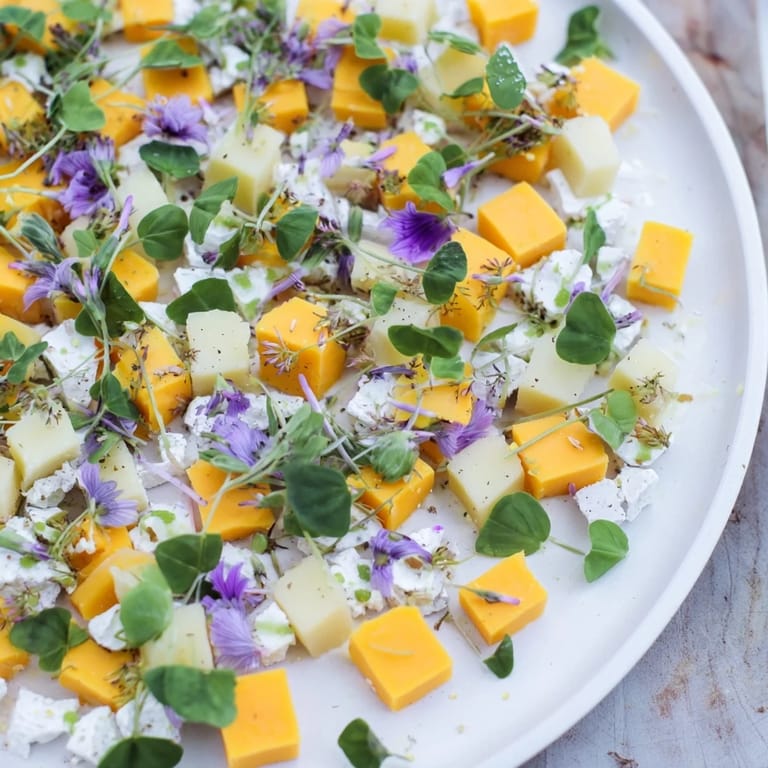
- Microgreens (75g, mixed varieties): These aren't just decoration—pea shoots have a subtle sweetness, radish greens bring peppery snap, and they're the camouflage that makes the hunt work.
- Edible Flowers (1 cup, variety): Nasturtiums taste peppery, pansies are mild and pretty, violets add an unexpected floral note, and borage brings subtle cucumber notes that tie everything together.
- Extra Virgin Olive Oil (1 tbsp, optional): A light drizzle adds richness and helps the flowers stay vibrant looking longer.
- Flaky Sea Salt and Black Pepper: These finish the dish with intention, making every element taste more like itself.
Tired of Takeout? 🥡
Get 10 meals you can make faster than delivery arrives. Seriously.
One email. No spam. Unsubscribe anytime.
Instructions
- Prep Your Cheese Thoughtfully:
- Cut your cheeses into roughly the same size cubes—about half an inch works perfectly. Make sure your knife is sharp so the cheddar doesn't crumble and the goat cheese stays clean-looking, then arrange them across your board with some breathing room between each type so guests can actually distinguish them.
- Create the Microgreen Base:
- This is where the magic happens—scatter those microgreens generously over and around the cheese cubes, leaving just hints of color peeking through. Think of it less like tidying and more like nature's own imperfect garden.
- Arrange the Flowers Like You Mean It:
- Tuck edible flowers among the greens, mixing colors and types so no two sections feel identical. Step back and look at the whole board—you want it to feel inviting, not chaotic.
- Finish With the Optional Extras:
- If you're using olive oil, drizzle it very lightly so the flowers don't wilt or look greasy. A whisper of flaky salt and a few grinds of fresh black pepper over everything brings all the flavors into focus.
- Serve With Anticipation:
- Bring it to the table and explain the concept—watch people's faces light up as they understand they get to forage. The joy is half the point.
 Pin This
 The real moment for me came when my nephew, who usually pushes vegetables aside, spent five minutes carefully moving microgreens to find "the fancy one" he'd been told was hidden underneath. He ate all three cheese types without complaint because he'd discovered them himself. That's when I realized this dish does something most food can't—it makes people curious about what they're eating.
Why This Works as Theater
Food that asks something of your guests is food they remember. This board doesn't assault anyone's palate or require you to eat something you didn't choose—it invites exploration. The edible flowers add visual drama without tasting overwhelming, the microgreens provide gentle flavor and actual substance, and the cheese does the heavy lifting of real taste. It's sophisticated without being pretentious, which is genuinely harder to pull off than it looks.
Cheese Pairing Philosophy
I chose these three cheeses specifically because they tell a story together. The cheddar is bold and familiar, grounding the plate in something people already trust. The goat cheese is the conversational piece—sharper, creamier, the one that makes people say "interesting." The Gruyère is the sophistication, the one that lingers. Together they create a narrative arc from comfort to complexity, and when you hide them, people taste them in whatever order they find them, creating different experiences for different guests. That's intentional design masquerading as whimsy.
The Edible Flower Mystery
I used to think edible flowers were purely decorative until I actually tasted the difference they make. Nasturtiums have this peppery burn that wakes up your mouth before the cheese, violets add something almost perfume-like that shouldn't work but does, and borage tastes subtly like cucumber water, cooling everything down. They're not an afterthought—they're flavor partners that most people never notice because they're too busy looking at them. The secret is choosing flowers that enhance rather than fight the cheese, and scattering them densely enough that every cheese cube has at least one flower nearby to create a complete bite.
- Source your flowers from trusted suppliers or specialty markets, never from online sites you can't verify.
- Keep flowers cool until the last possible moment so they stay perky and don't wilt under the microgreens.
- If you can't find certain flowers, stick with what's available rather than settling for wilted or questionable specimens.
 Pin This
 This dish taught me that sometimes the most elegant thing you can offer isn't about how much you know—it's about making space for someone else to discover something beautiful. Serve it with confidence and watch what happens.