 Pin This
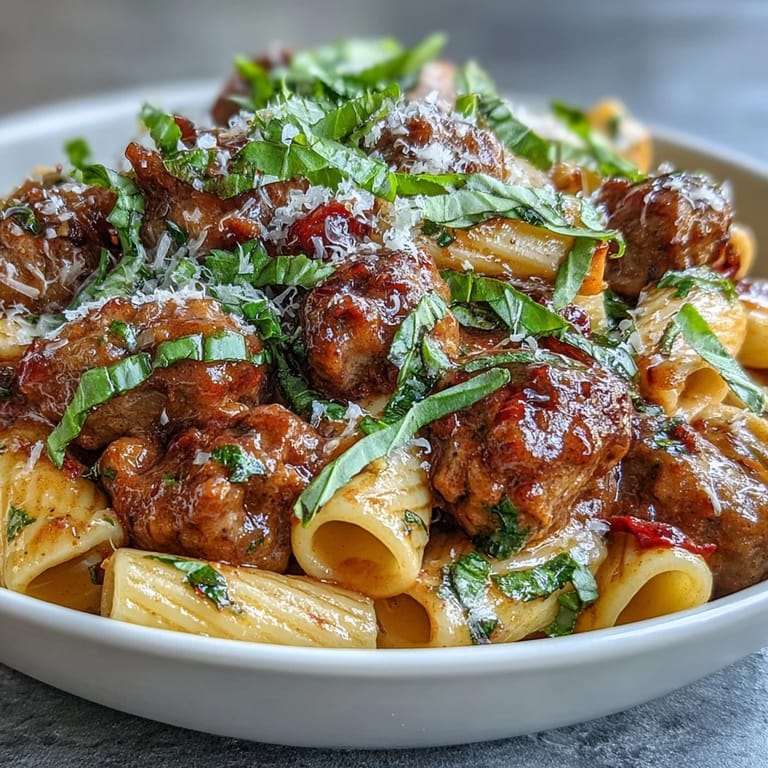
 There's a particular magic that happens when you throw everything into one pot and walk away—no complicated steps, no juggling multiple pans, just the smell of sausage browning and wine reducing filling your kitchen. My neighbor stopped by one rainy Tuesday evening just as I was stirring this together, and the aroma alone convinced her to stay for dinner. That's when I realized this dish has a quiet confidence about it; it doesn't need to shout to impress.
I made this for my partner one night when he was stressed about work, and he ate two bowls before even looking up from his plate. That's not exaggeration—he was genuinely lost in the creaminess and the way the sausage flavored every bite. It became our Tuesday night ritual without us ever officially deciding it.
Ingredients
- Italian sausage (400 g): Remove the casings and let it break apart as it browns; the rendered fat becomes your flavor foundation.
- Onion, garlic, and red bell pepper: These three are your aromatic base—chop them fine so they melt into the sauce rather than stay chunky.
- Canned chopped tomatoes (400 g): Don't drain them; that liquid is liquid gold for the sauce.
- Short pasta (300 g): Penne, rigatoni, or fusilli all catch the sauce beautifully; avoid long thin pasta that gets lost.
- Dry red wine (120 ml): Use something you'd actually drink, not cooking wine with added salt.
- Chicken or vegetable broth (700 ml): Low-sodium matters here because you're controlling the salt yourself.
- Heavy cream (120 ml): This goes in at the end to transform the dish from tangy to silky.
- Parmesan cheese (40 g): Grate it fresh if you can; pre-grated cheese sometimes separates weirdly in the heat.
- Soy sauce (2 tbsp): This small amount adds umami depth that makes people ask what your secret ingredient is.
- Dried oregano, chili flakes, black pepper, salt: Build seasoning layers as you go rather than dumping everything in at once.
- Fresh basil or parsley: The fresh herb at the end cuts through the richness and adds brightness.
Tired of Takeout? 🥡
Get 10 meals you can make faster than delivery arrives. Seriously.
One email. No spam. Unsubscribe anytime.
Instructions
- Brown the sausage first:
- Heat your pot over medium heat and add the sausage without any oil—it'll release its own fat. Break it apart with a spatula as it cooks, listening for it to start sizzling properly, about 5-6 minutes until it's no longer pink and the edges are caramelized.
- Build the aromatic base:
- Toss in your chopped onion, garlic, and red pepper into the rendered sausage fat and let them soften for 3-4 minutes. You'll notice the kitchen smells completely different at this point—richer, more alive.
- Deglaze with red wine:
- Pour in the wine and scrape the bottom of the pot with your spoon to lift up all those browned flavorful bits. Let it bubble for 2 minutes and reduce slightly; you're cooking off the harshness and concentrating the flavor.
- Add the wet ingredients and seasonings:
- Stir in the canned tomatoes with their juice, the broth, soy sauce, oregano, chili flakes if using, and black pepper. Give it a good stir so everything gets distributed evenly.
- Cook the pasta in the pot:
- Add your uncooked pasta directly to the pot, pushing it down so most of it's submerged. Bring to a gentle boil, then lower the heat to medium-low, cover, and stir occasionally for 12-15 minutes until the pasta is tender but still has a little resistance and most of the liquid has been absorbed.
- Finish with cream and cheese:
- Stir in the heavy cream and grated Parmesan off the heat, letting them meld into the sauce for 2-3 minutes uncovered. The pasta will coat beautifully and everything takes on this luxurious creamy texture.
- Taste and adjust:
- Give it a taste and add a pinch of salt if needed—remember the soy sauce already brought saltiness, so taste before you add more.
- Serve with fresh herbs:
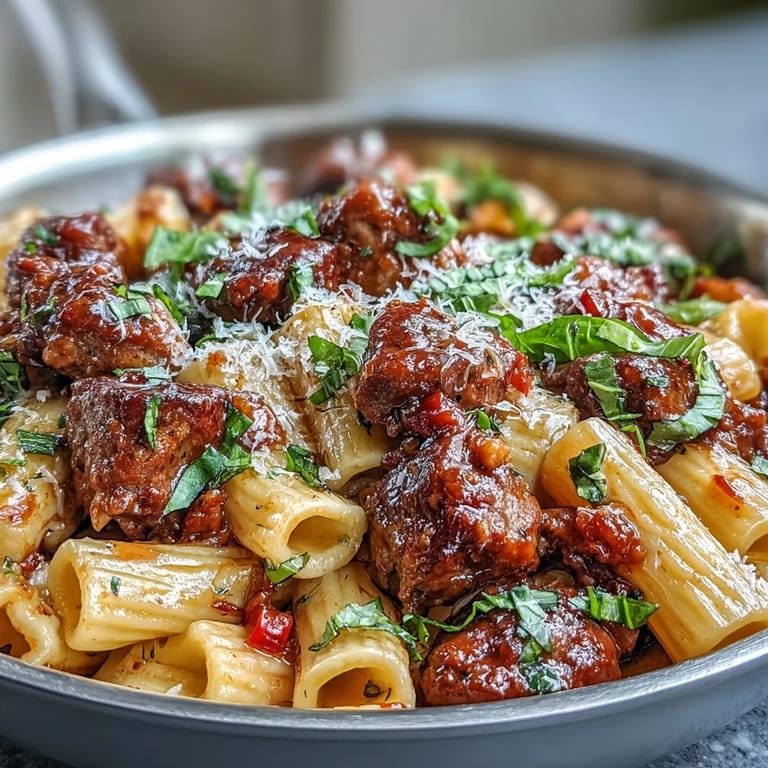
- Ladle it into bowls and top with chopped fresh basil or parsley to brighten up all those rich flavors.
 Pin This
 My mother tried this once at our house and immediately asked for the recipe, which surprised me because she's the type who usually makes things from scratch. She said it felt like comfort and sophistication happening at the same time, and I realized that's exactly what this dish does—it feels like you're treating yourself to something special while barely lifting a finger.
The Red Wine Choice Matters
I learned this the hard way by using a cheap cooking wine once, and the sauce tasted flat despite having all the same ingredients. Now I choose a dry red wine I'd actually drink—something like a Pinot Noir or Chianti—because you taste it in every spoonful. The wine reduces and concentrates, so its character becomes the backbone of the sauce.
Why One-Pot Works Here
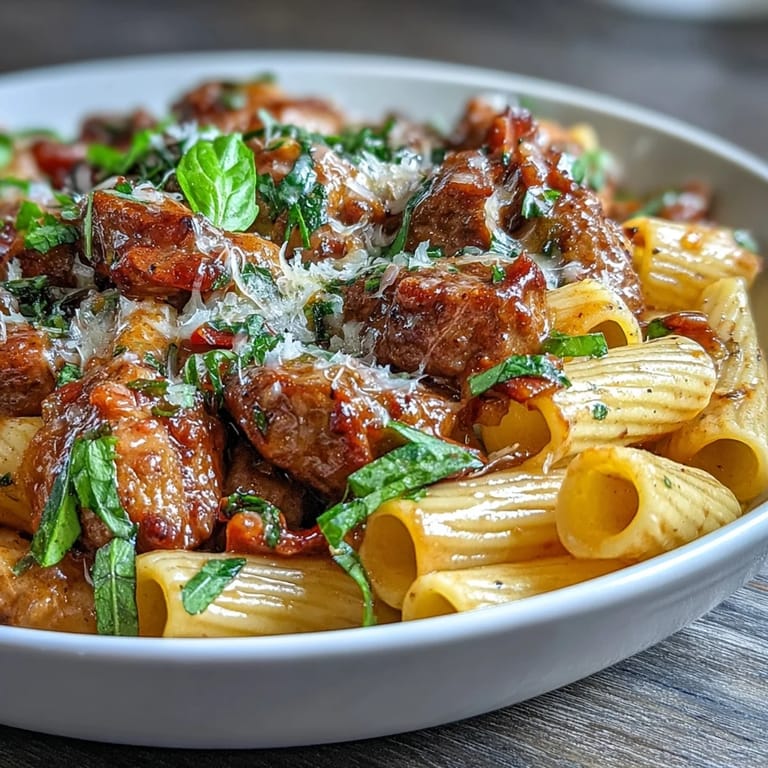
The genius of cooking pasta directly in the sauce instead of separately is that it absorbs all those flavors while it softens. Every strand gets seasoned from the inside out, and you're not diluting the sauce by draining starchy pasta water—that starch actually helps create a silkier sauce naturally. Plus, you're left with one pot to clean instead of a colander, a separate pasta pot, and a sauce pan.
Customizing Without Losing the Soul
I've played with this recipe more times than I care to admit, and it holds up beautifully to substitutions. Turkey sausage works if you want something lighter, or you can use plant-based sausage and vegetable broth for a vegetarian version—the soy sauce and wine still create that depth. If you're cream-averse, you can reduce it to a few tablespoons and add a splash of pasta water instead, though the creaminess is part of why people love this.
- Fresh thyme added with the oregano brings an earthier note if that's your preference.
- A pinch of red pepper flakes can go in at any point, so taste as you go and adjust heat to your liking.
- Leftover pasta actually tastes better the next day once the flavors have had time to marry, so don't hesitate to make extra.
 Pin This
 This dish taught me that sometimes the best meals are the ones that don't require you to be a skilled cook—just someone willing to pay attention for thirty minutes. It's become my answer when people ask what to make for a weeknight dinner that feels like an occasion.
Recipe Q&A
- → Can I use different pasta shapes?
Absolutely. Short pasta varieties like penne, rigatoni, fusilli, or even macaroni work beautifully. The key is choosing shapes that hold sauce well and cook evenly in the liquid.
- → Is the red wine flavor overpowering?
Not at all. The wine mellows during cooking, adding subtle depth and richness rather than an alcoholic taste. If preferred, substitute with additional broth.
- → Can I make this ahead?
This dish tastes even better the next day as flavors develop. Store in the refrigerator and reheat with a splash of cream or broth to restore creaminess.
- → What type of sausage works best?
Italian sausage is ideal, either mild or spicy depending on your preference. Remove casings before cooking for easier browning and better distribution throughout the pasta.
- → Can I freeze leftovers?
Yes, freeze for up to 3 months. Note that cream-based sauces may separate slightly when reheated—stir well and add a touch of fresh cream to restore texture.