 Pin This
 Last summer, a friend showed up to my place with this gorgeous spread she'd assembled in about fifteen minutes, and I watched people gravitate toward it like moths to a flame. No reheating, no stress, just thoughtful arrangement and suddenly everyone was happy. That's when I realized the power of a board done right—it's less about cooking and more about creating a moment where people can actually enjoy themselves without you stuck at a stove.
I made one for a work lunch once when I was tired of sad desk salads, and it completely changed how my coworkers approached food at the office. People actually lingered, actually talked, actually ate vegetables without pretending. That's the secret these boards hold—they make eating well feel like a choice, not a chore.
Ingredients
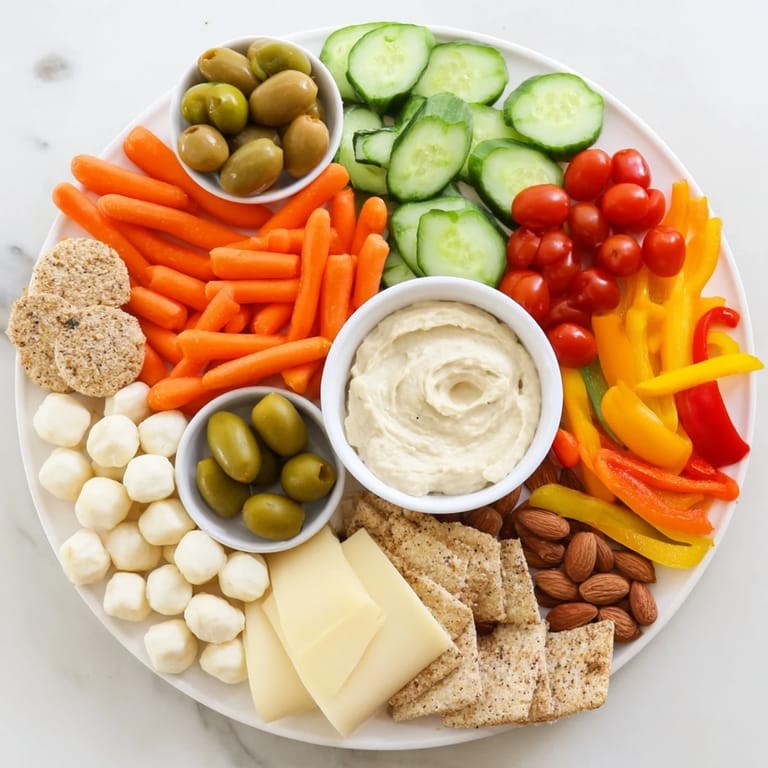
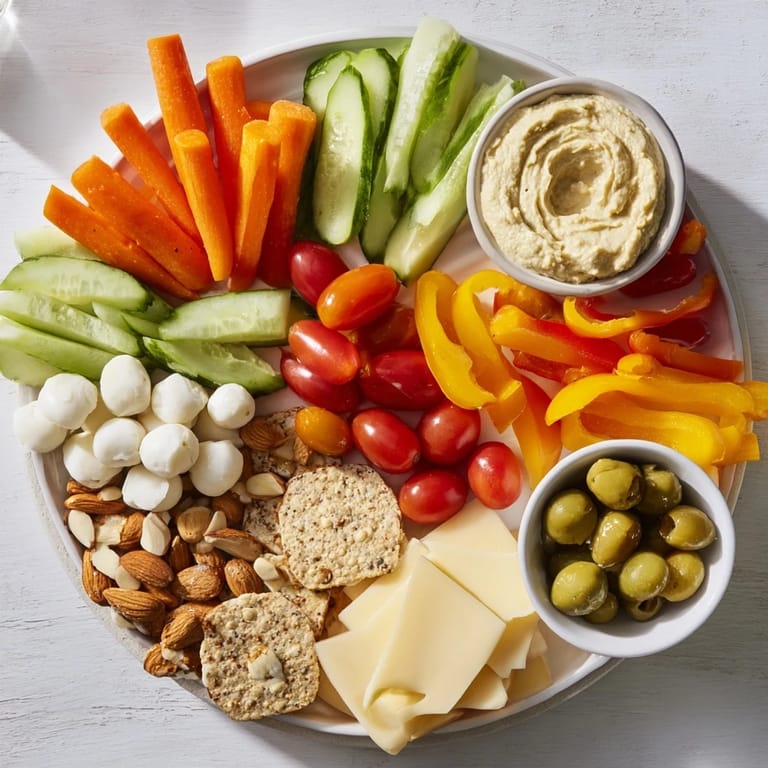
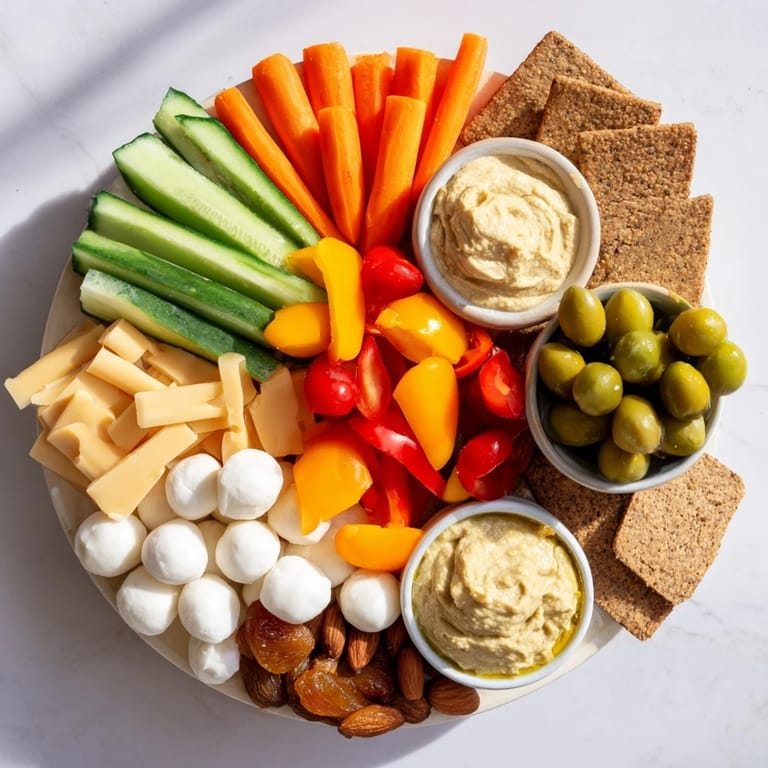
- Baby carrots: Buy the pre-cut ones if you need to save time; their natural sweetness is a quiet anchor for salty cheeses and tangy dips.
- Cucumber slices: Cut them thick enough that they hold their crunch and won't disappear into the board's landscape.
- Cherry tomatoes: Pick ones that feel firm; the soft ones water-log your board and slide around.
- Bell pepper strips: Mix your colors intentionally because visual variety is half the appeal here.
- Sugar snap peas: These are the unexpected hero—they're naturally sweet and satisfying in a way other vegetables aren't.
- Hummus: Good hummus, not the stuff that tastes like regret; this deserves a little quality investment.
- Ranch or Greek yogurt dip: The dip is permission to eat vegetables, so don't skimp on flavor.
- Cheddar cheese cubes: The bold one that everyone reaches for first.
- Mozzarella balls: These roll around and add visual interest; they're basically the playful child of the cheese section.
- Gouda or Swiss cheese: Slice it thick enough to actually taste it, thin enough that it's not a whole snack by itself.
- Whole grain crackers: They need enough character to hold up next to everything else without being bland.
- Roasted nuts: Almonds are safe, cashews are indulgent, walnuts are earthy; choose based on your mood.
- Olives: The bridge ingredient that makes this feel sophisticated instead of just snacky.
- Dried fruit: Apricots and cranberries add a subtle sweetness that keeps things interesting.
Tired of Takeout? 🥡
Get 10 meals you can make faster than delivery arrives. Seriously.
One email. No spam. Unsubscribe anytime.
Instructions
- Prepare everything first:
- Wash and pat your vegetables completely dry—water sitting on the board makes everything soggy and sad. Slice your cucumbers and peppers, arrange nuts in a small bowl so they don't scatter, and have your dips in their serving bowls before you even touch the board.
- Start with structure:
- Place your dips first, anchoring them in one or two spots; they're your board's foundation. Build sections around them, leaving the biggest spaces for vegetables because they're what actually fill you up.
- Layer in color and texture:
- Group similar vegetables together but vary the heights slightly so nothing looks flat. A carrot standing upright next to a cucumber laid down creates visual rhythm without any extra effort.
- Cluster the cheese:
- Don't scatter it randomly; create little islands of cheese so people know where to find them. A pile of cubes next to a few mozzarella balls next to a slice of gouda is more elegant than spreading it all out.
- Fill the gaps with personality:
- Crackers, nuts, and dried fruit are your textural finishers; they fill empty spaces and add crunch. Nestle them between vegetables and cheese so it feels intentional, not like you're just using filler.
- Serve or refrigerate:
- If people are coming soon, serve it immediately while everything is at its crispest. If you're making it ahead, cover it loosely with plastic wrap and let it sit for up to four hours; beyond that, the vegetables start giving up their water.
 Pin This
 I remember watching my kid actually eat bell peppers because they were arranged on a board instead of on a plate, and it hit me that presentation isn't shallow—it's permission. It's saying this matters, this moment matters, and you're worth a little thought.
Building Your Board Like You Mean It
The best boards feel abundant without looking chaotic, and that's a skill worth developing. Start by thinking about who you're feeding and what they actually like, then build from there instead of following some template. A board made for your people will always land better than a board that looks perfect but tastes like a compromise.
The Customization Game
This is where boards get fun—they're infinitely adaptable to what you have on hand or what you're craving. Add hard-boiled eggs sliced in half for extra protein, throw on some deli turkey or prosciutto if you want richness, use dairy-free cheese and cashew cream if that's what your crowd needs. The structure stays the same; everything else is negotiable.
- Experiment with different dips: white bean, tzatziki, or even a good salsa changes everything.
- Swap vegetables seasonally so your board feels fresh and not like you're repeating yourself.
- Taste everything before it goes on the board because you're not a vending machine; you're curating an experience.
Why This Works as Actual Food
Boards get dismissed as just snacking, but there's real nutrition here if you build them thoughtfully. You've got vegetables for fiber, cheese and nuts for protein and healthy fat, crackers for carbs—it's actually a complete meal dressed up to look casual. People eat more vegetables this way because they're not thinking about it as a side; they're just reaching for whatever looks good.
 Pin This
 These boards are permission to feed people without burning yourself out, which might be the most important meal hack there is. Make one and watch what happens.
Recipe Q&A
- → What vegetables are best for the snack board?
Fresh, crisp veggies like baby carrots, cucumber slices, cherry tomatoes, bell pepper strips, and sugar snap peas provide great texture and flavor.
- → Which cheeses complement the vegetables well?
Cheddar, mozzarella balls, and gouda or Swiss cheese offer a creamy and mild contrast that pairs nicely with fresh produce.
- → How can I make the board gluten-free?
Use gluten-free crackers and verify nut or dip ingredients to ensure all items meet gluten-free standards.
- → What dips work well on the board?
Classic choices like hummus and ranch dressing or Greek yogurt dips enhance the flavors and add creamy textures.
- → Can this board be customized for different dietary needs?
Yes, swapping cheeses for dairy-free alternatives and selecting plant-based dips can make the board vegan-friendly.