 Pin This
 My kitchen smelled like toasted cumin for three days after my neighbor brought over a container of her family's dhal, and I couldn't stop thinking about how to make it at home. The first batch was too watery, the second too thick, but somewhere around attempt four, I realized the magic wasn't in perfection—it was in that moment when the mustard seeds crackle in hot oil and the whole dish suddenly smells alive. Adding roasted cauliflower was my way of making it feel less like copying and more like creating something that was mine.
I made this for my sister on a Tuesday night when she was stressed about work, and watching her slow down between spoonfuls reminded me why I cook. There's something about dhal that just makes people exhale, like the warm spices and creamy lentils do the work your nervous system can't.
Ingredients
- Red lentils: They dissolve into creaminess without any help, which is the whole secret—rinse them first so you're not cooking starch into sludge.
- Coconut milk: Full-fat if you want richness, light if you want to keep it bright; either way, it balances the spice without overwhelming.
- Cauliflower florets: Bite-sized pieces work best because they roast evenly and don't get lost in the dhal.
- Cumin seeds and ground cumin: Two different forms doing two different jobs—the seeds pop and crackle, the powder deepens everything.
- Mustard seeds: They're essential, not optional; that sizzle is where the flavor story begins.
- Fresh ginger and garlic: Minced fine because you want them distributed through the oil before anything else joins, not sitting in chunks.
- Vegetable broth: Good quality matters because it's half your liquid base and it'll show up in every spoonful.
- Garam masala: Add it early so it blooms in the oil and becomes part of the foundation, not an afterthought.
Tired of Takeout? 🥡
Get 10 meals you can make faster than delivery arrives. Seriously.
One email. No spam. Unsubscribe anytime.
Instructions
- Prepare and preheat:
- Get your oven to 220°C and line a tray with parchment—you want the cauliflower to roast, not steam. This takes two minutes and saves you from scrubbing later.
- Coat the cauliflower:
- Toss those florets until every piece is glossy with oil and spices, then spread them in a single layer so they have room to breathe and brown. If they're crowded, they'll steam instead of roast.
- Roast until golden:
- Twenty-five to thirty minutes, turning halfway—you're looking for edges that are dark and crispy, not pale and soft. The color is where the flavor lives.
- Toast the mustard seeds:
- Heat oil in your pot, add the seeds, and listen for them to pop and dance—that thirty seconds of sizzling is the backbone of your dhal. Don't skip this step or walk away; it's quick and it matters.
- Build your base:
- Add the onion and cook until it's soft and just starting to turn golden, then layer in the garlic, ginger, and chili. This creates a foundation of flavor that the rest of the dish sits on.
- Bloom the spices:
- Ground cumin, coriander, turmeric, and garam masala all go in for one minute in that hot oil—your nose will tell you when it's right because the smell will suddenly deepen and shift. Trust that signal.
- Add lentils and liquid:
- Stir in the rinsed lentils, coconut milk, and broth, then bring it all to a boil before dropping the heat to a gentle simmer. Watch it for the first minute to make sure nothing sticks to the bottom.
- Simmer gently:
- Twenty to twenty-five minutes, stirring now and then, until the lentils have completely softened and the whole pot looks creamy and thick. If it's too thick, add more broth a splash at a time; if it's too thin, just let it simmer a bit longer.
- Finish and taste:
- Squeeze in the lemon juice, taste it, and adjust salt if needed—lemon brings everything into focus. This is your last chance to decide if it needs more heat, salt, or spice.
- Serve with flair:
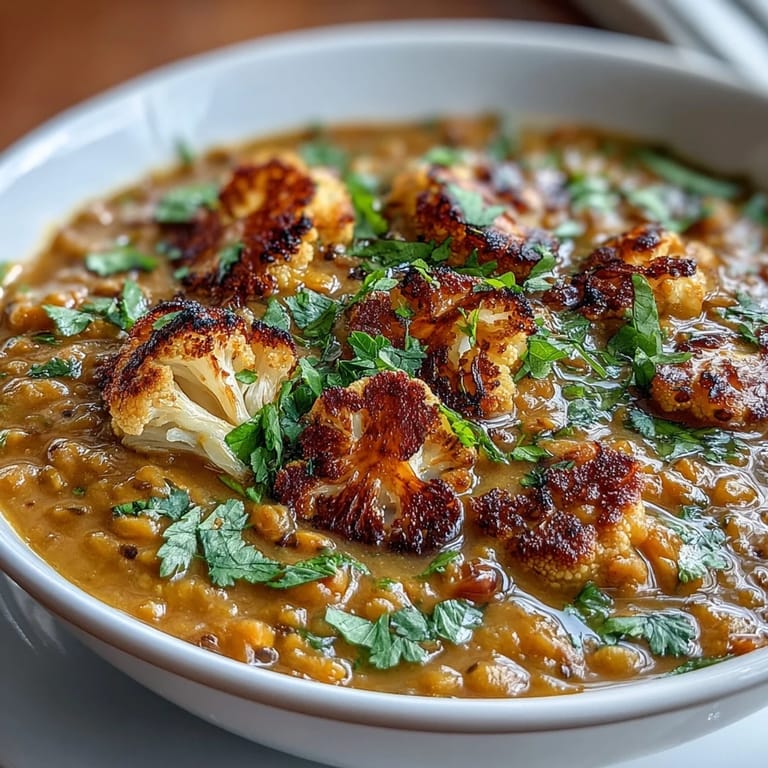
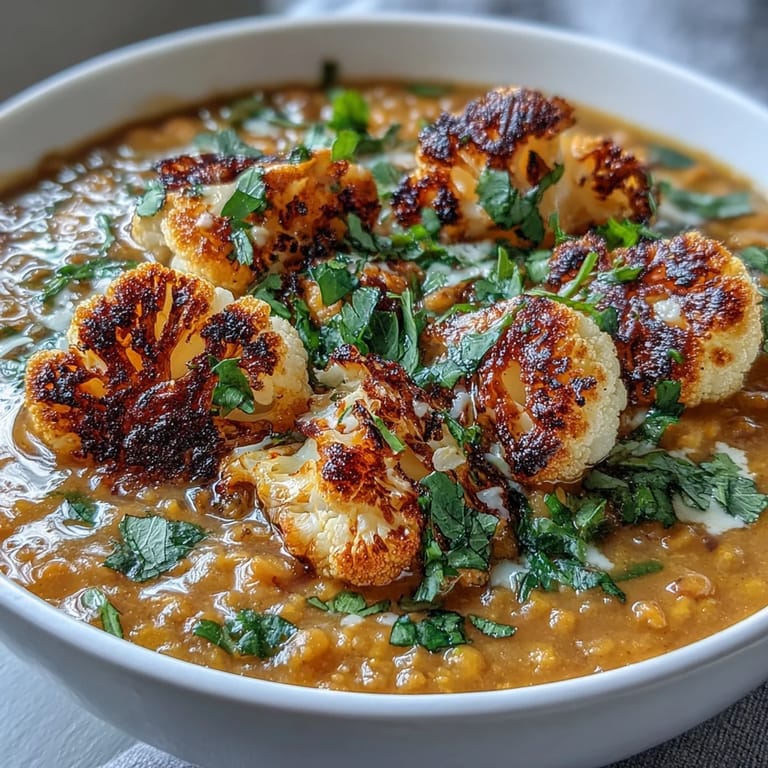
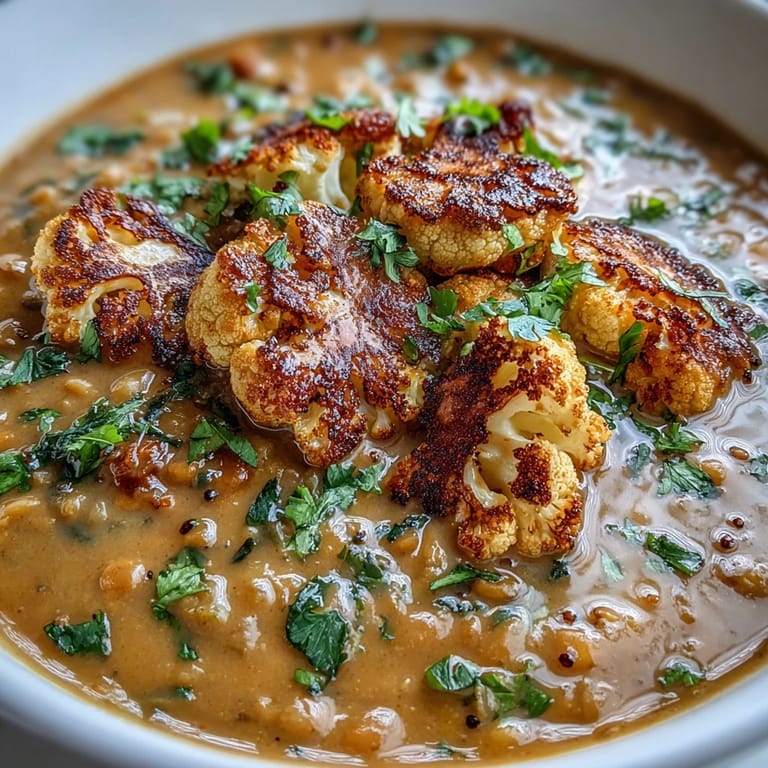
- Spoon the dhal into bowls, crown it with the golden cauliflower, and scatter cilantro on top like you meant to make something beautiful.
 Pin This
 There's a moment about halfway through cooking when your kitchen stops smelling like individual ingredients and starts smelling like dinner, and that's when you know you're on the right track. That smell is what makes people want to stay at your table.
The Roasting Game
The cauliflower is where texture lives in this dish, and I learned this the hard way by undercooking it my first time and wondering why it felt so bland. Roasting at a high temperature with cumin seeds scattered through coaxes out the natural sweetness and creates those crispy, caramelized edges that make you want to keep eating even when you're full. The key is turning the tray halfway through so nothing burns while some pieces stay pale—even heat and a little patience give you golden cauliflower that tastes like it was meant to be there.
The Dhal Balance
Getting the dhal to that perfect creamy-but-not-mushy stage took me more tries than I want to admit, but now I know it's all about attention and timing. You're cooking red lentils, which dissolve naturally, so twenty-five minutes is usually the sweet spot, but your stove, your pot, and your altitude all have opinions. The best move is to start checking around the twenty-minute mark and taste one—if it falls apart between your tongue and the roof of your mouth, it's done, and if it still has a tiny bite, give it another few minutes.
Serving and Pairing
This dhal is wonderful on its own, but basmati rice or warm naan turns it into a meal that feels complete and satisfying. The dhal soaks into the rice and coats every grain, while naan becomes your edible spoon, and either way you're building something with your hands and your mouth that tastes and feels generous.
- Toast some cashews or pumpkin seeds and scatter them on top for a nutty crunch that nobody will expect but everyone will love.
- A dollop of yogurt on the side adds cool creaminess if you're serving this to people who aren't vegan.
- Make a double batch and freeze half, because dhal tastes even better the next day when the spices have had time to get to know each other.
 Pin This
 This dish has become my go-to when I want to cook something that feels special but doesn't stress me out, and that's maybe the highest compliment a recipe can get. Make it once and you'll know why you'll make it again.
Recipe Q&A
- → How do I store leftover dhal?
Store cooled dhal and roasted cauliflower separately in airtight containers. Refrigerate for up to 4 days or freeze for 3 months. Reheat gently on the stove, adding splashes of water or broth to restore creaminess. Crisp the cauliflower in a warm oven before serving.
- → Can I use other lentils instead of red lentils?
Red lentils cook quickly and break down beautifully, creating that signature creamy texture. Yellow lentils work similarly well. Brown or green lentils hold their shape better but require longer cooking and won't achieve the same silky consistency.
- → What can I serve with this dhal?
Fluffy basmati rice soaks up the spiced coconut broth perfectly. Warm naan or roti bread works wonderfully for scooping. For a lighter option, try quinoa or simply serve with a side of roasted vegetables and crisp cucumber raita.
- → How can I adjust the spice level?
The green chili provides adjustable heat—leave it out entirely for mild warmth, include seeds for medium spice, or add a second chili for bold heat. You can also serve with fresh yogurt or coconut cream to temper the spices.
- → Can I make this oil-free?
Substitute the oils with a splash of vegetable broth for sautéing the aromatics. Roast the cauliflower using just the spices and a light coating of aquafaba (chickpea liquid) or broth spray instead of olive oil.
- → Why do mustard seeds pop in hot oil?
Mustard seeds release their nutty, aromatic flavor when they hit hot oil and begin to sizzle or pop. This technique, called tempering, is common in Indian cooking and infuses the oil with essence before adding other ingredients.