 Pin This
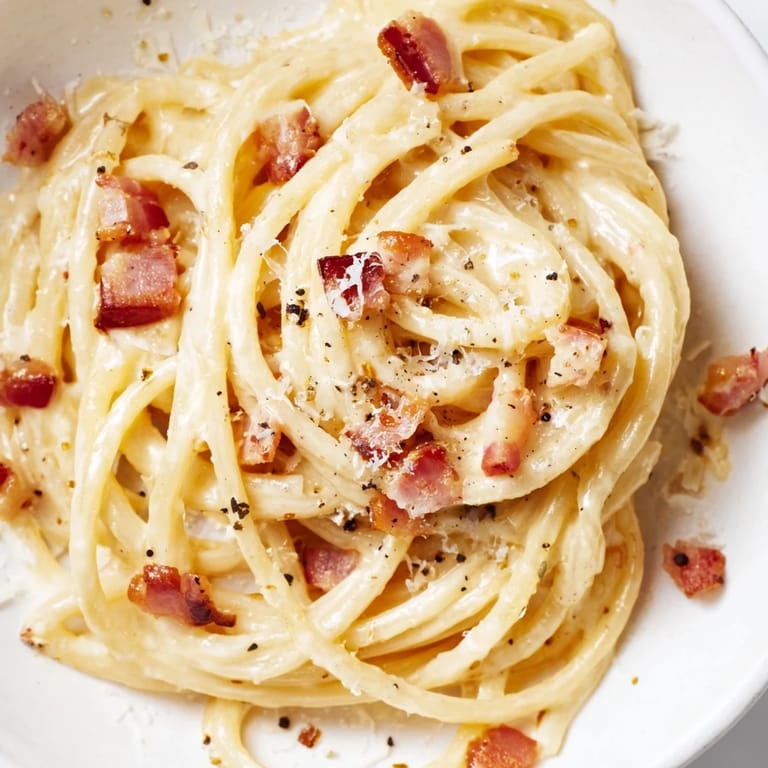
 There's a reason carbonara has survived centuries in Roman kitchens: it's basically magic in a pan. The first time I nailed it, I was tired, hungry, and had maybe twenty minutes before everything fell apart. I threw spaghetti on to boil, whisked eggs with cheese while the bacon sizzled, and when I tossed it all together off the heat, something clicked—the pasta's warmth turned those eggs into the silkiest, creamiest sauce without a drop of cream in sight. Now it's my go-to when I need to prove to myself that simple ingredients, when treated with respect, can taste like you've been cooking all day.
I made this for my partner on a Tuesday night when neither of us felt like thinking, and he asked me why I'd never made it before—which is the highest compliment a weeknight dinner can get. Since then, it's been our secret weapon, the meal we cook when we want to feel fancy without the fuss, or when we need something warm and satisfying before heading out again.
Ingredients
- Spaghetti: 200 g dried spaghetti holds the sauce perfectly; al dente is non-negotiable here because overcooked pasta will turn mushy and steal the show.
- Eggs: Two large eggs are the magic ingredient—they create the sauce when combined with heat and pasta water, so use good ones if you can.
- Parmesan cheese: Freshly grated makes all the difference; pre-grated loses its texture and doesn't melt as smoothly into the eggs.
- Bacon or pancetta: 100 g diced and cooked until crispy provides salty, savory depth that anchors the whole dish.
- Black pepper: Freshly ground pepper is essential—it's not just seasoning, it's a supporting character in the flavor story.
- Pasta water: Reserve about 80 ml; this starchy liquid is crucial for turning eggs into silky sauce without scrambling them.
Tired of Takeout? 🥡
Get 10 meals you can make faster than delivery arrives. Seriously.
One email. No spam. Unsubscribe anytime.
Instructions
- Get the pasta going:
- Bring a large pot of generously salted water to a rolling boil—it should taste almost like the sea. Drop in the spaghetti and cook until al dente, which usually means a minute or two before the package says, because you want a slight bite.
- Whisk the egg mixture:
- In a bowl, whisk together eggs, freshly grated Parmesan, and black pepper until completely combined and smooth. This mixture is your sauce base, so don't skip the whisking.
- Crisp the bacon:
- While pasta cooks, heat a large skillet over medium heat and add diced bacon. Let it sizzle and pop for 3–4 minutes until the edges turn golden and it smells incredible—that's when you know it's ready.
- Toss off the heat:
- Drain the pasta but save that pasta water first. Add hot spaghetti to the bacon skillet (off the heat now—this is key), then pour in the egg mixture and toss vigorously with tongs. Add reserved pasta water slowly as you toss, watching the eggs transform into creamy sauce instead of scrambling.
- Serve immediately:
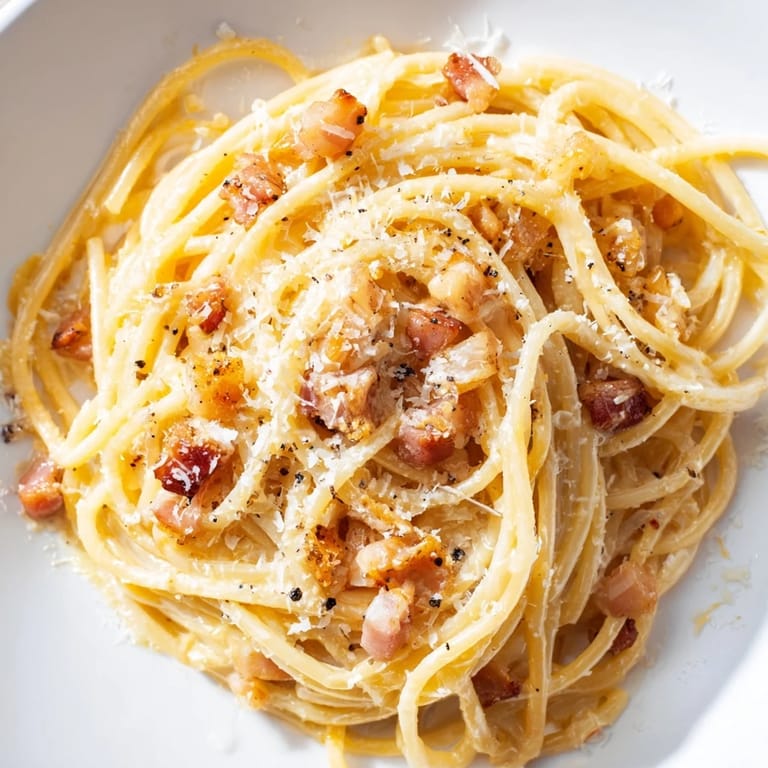
- The whole thing comes together in under a minute once you start tossing. Plate it right away, top with extra Parmesan and a crack of fresh pepper, and eat while it's still steaming.
 Pin This
 The moment I understood carbonara was the moment I stopped trying to make it with cream and started respecting what it actually was—peasant cooking elevated by perfect technique. It taught me that sometimes the simplest combinations, when you get the method right, beat anything fussier.
The Science of the Sauce
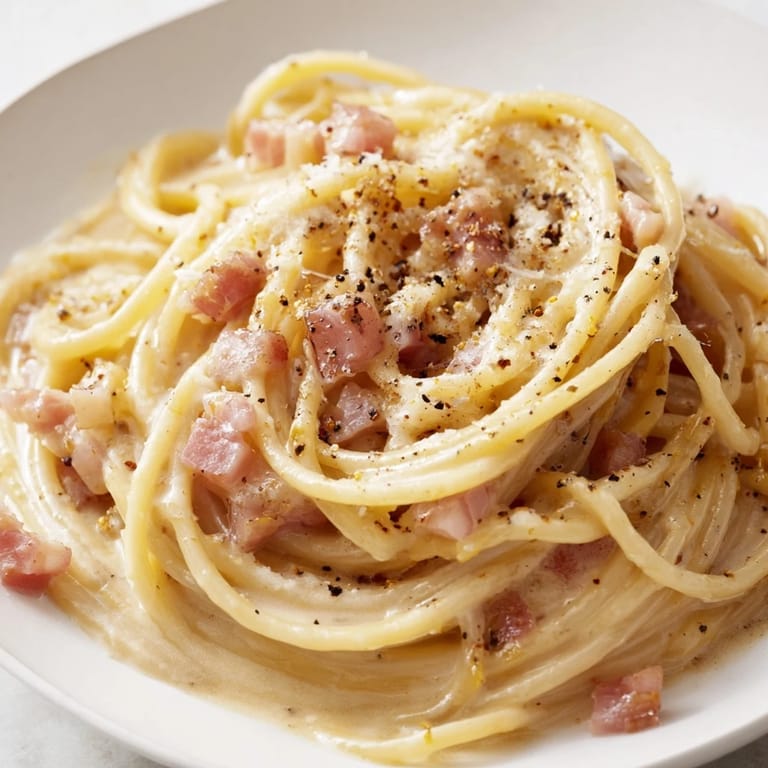
What looks like cream is actually the emulsion of egg yolks, cheese, and starchy pasta water—no dairy involved. The heat from the hot pasta and skillet gently warms the eggs just enough to thicken them while staying silky, and the starch keeps everything smooth and clinging to each strand. Understanding this changed how I approach the dish: it's not magic, it's just chemistry that happens to taste incredible.
Variations and Flavor Upgrades
The classic version is perfect as written, but a small minced garlic clove cooked with the bacon adds a subtle savory depth that whispers in the background. Some people swear by Pecorino Romano instead of Parmesan for a sharper, more authentically Roman bite. I've even seen versions with a pinch of nutmeg stirred into the eggs, which sounds odd until you taste how it softens and enriches the whole thing.
Making It Your Own
Carbonara is forgiving once you understand the basics, which means it's perfect for experimenting once you've nailed the original. I've added a handful of fresh peas, a splash of white wine to the bacon, even a crack of Aleppo pepper for a subtle heat. The rule I follow is: respect the egg mixture and the timing, and everything else is flexible.
- Cook the pasta until it has a slight bite—al dente is non-negotiable for texture.
- Keep the skillet off heat while tossing to prevent the eggs from scrambling into chunks.
- Eat it the moment it's plated, because carbonara waits for no one.
 Pin This
 Carbonara is proof that you don't need hours in the kitchen or a long ingredient list to create something that tastes like love. Make it tonight, and it might become your favorite weeknight meal too.
Recipe Q&A
- → How do I keep the eggs from scrambling?
Remove the pan from heat before adding the egg mixture and toss quickly, adding reserved pasta water gradually to create a smooth, creamy sauce.
- → Can I substitute bacon with another cured meat?
Pancetta works well as a substitute, providing similar texture and flavor. Avoid overly smoky or thick-cut options for best results.
- → What type of cheese complements this dish best?
Freshly grated Parmesan delivers a nutty, salty flavor. For authenticity, Pecorino Romano is a great alternative with a sharper profile.
- → Is it necessary to reserve pasta water?
Yes, reserved pasta water helps loosen the sauce and enhances its silkiness, allowing the cheese and egg mixture to coat the spaghetti evenly.
- → Can garlic be added during cooking?
Adding a clove of minced garlic while frying bacon infuses subtle aroma. Remove before combining with pasta to avoid overpowering the dish.